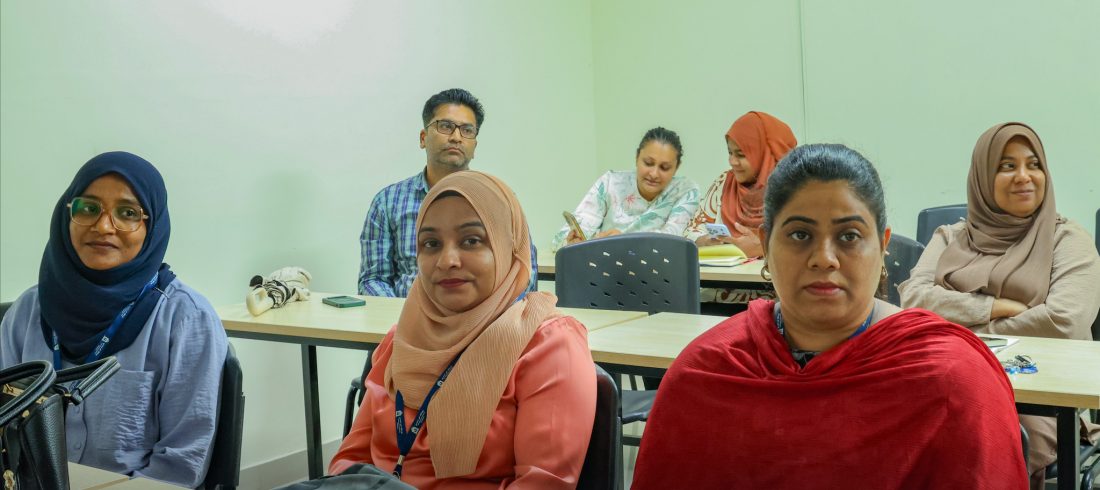
The Maldives National University (MNU) has continued its efforts to enhance teaching quality and student achievement through an additional batch of its “Assessment and Evaluation in Higher Education” training programme, focusing on fair assessment practices, meaningful feedback, and inclusive approaches to evaluating student learning.
Designed for academic staff, the programme highlighted the role of assessment as more than a means of measuring academic performance. It emphasized how effective evaluation can help lecturers identify learning gaps, understand students’ progress, and make informed teaching decisions that support continued improvement.
A central focus of the training was the importance of providing useful feedback that enables students to recognize their strengths and identify areas requiring further development. By connecting assessment outcomes with constructive guidance, the programme encouraged approaches that make evaluation an active part of the learning process.
The training also addressed the need to recognize differences in students’ learning experiences, abilities, and educational needs. Academic staff were encouraged to reflect on how assessment practices can provide fair opportunities for students to demonstrate their knowledge and skills while maintaining appropriate academic standards.
Consistency and fairness in assessment decisions formed another key emphasis of the programme. Through reflection on existing evaluation approaches, the training sought to strengthen lecturers’ professional judgement and promote assessment practices that are transparent, reliable, and aligned with intended learning outcomes.
The programme further highlighted the connection between assessment quality and effective teaching. Understanding where students encounter difficulties can help educators reconsider instructional strategies, provide more targeted academic support, and create learning experiences that respond to students’ needs.
By offering an additional batch of the training, MNU extended opportunities for academic staff to engage in professional learning and strengthen their assessment competencies. The initiative reflects the university’s recognition that continuous educator development is essential to maintaining teaching standards and improving the overall student experience.
The training also reinforced the wider importance of inclusive assessment in higher education. When evaluation practices are designed to recognize diverse learning needs and provide meaningful opportunities for improvement, they can contribute to stronger student engagement, academic confidence, and educational progression.
Aligned with priorities of quality education, inclusive and equitable learning, lifelong learning, professional capacity development, fair evaluation, academic accountability, and continuous educational improvement, the programme reflects MNU’s ongoing commitment to strengthening assessment quality and supporting student success across its academic programmes.