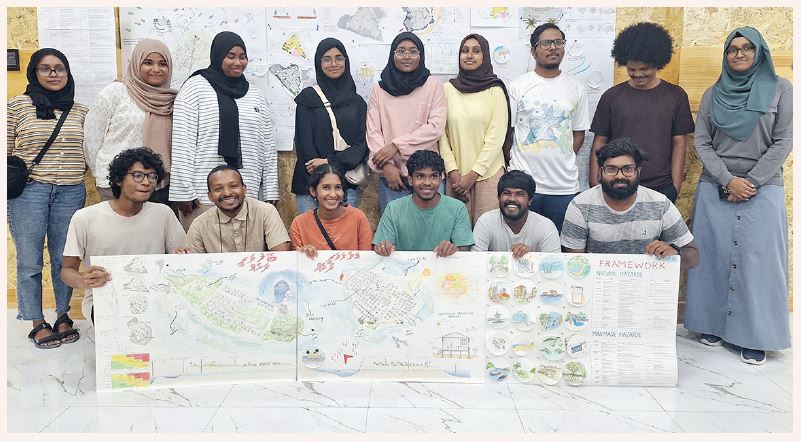
ARC305 students undertook a field trip from 25th February to 02nd March 2024, to North Ari Atoll as part of their design studio project. The main aim of Field trip is to study the existing context of the Island of Aa. Mathiveri, exploring architectural design and resilience.
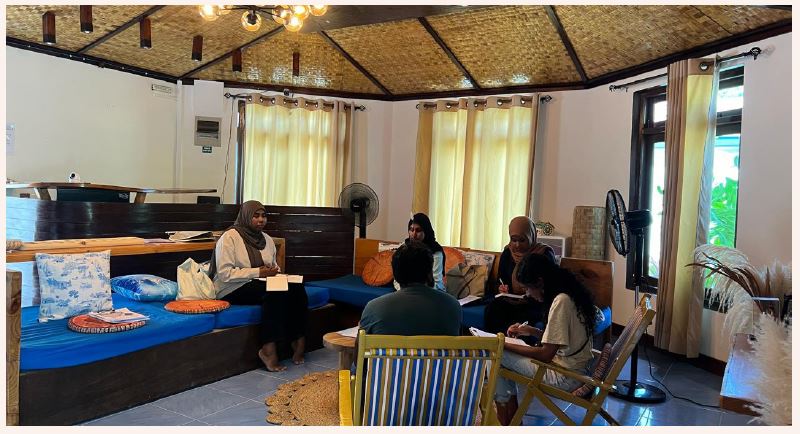
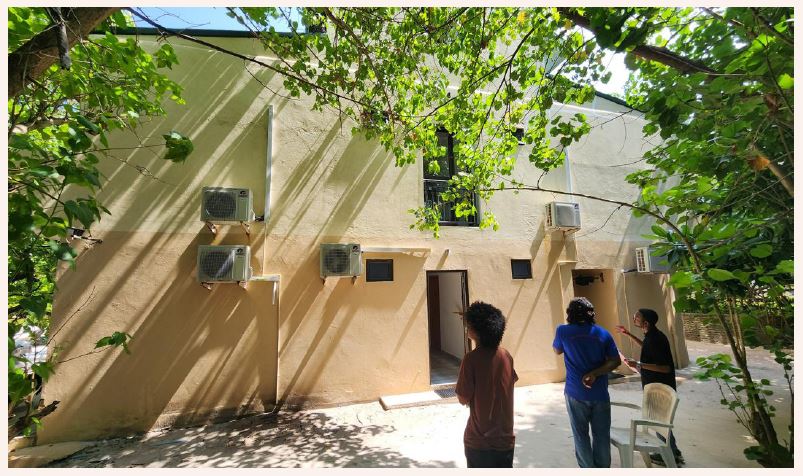
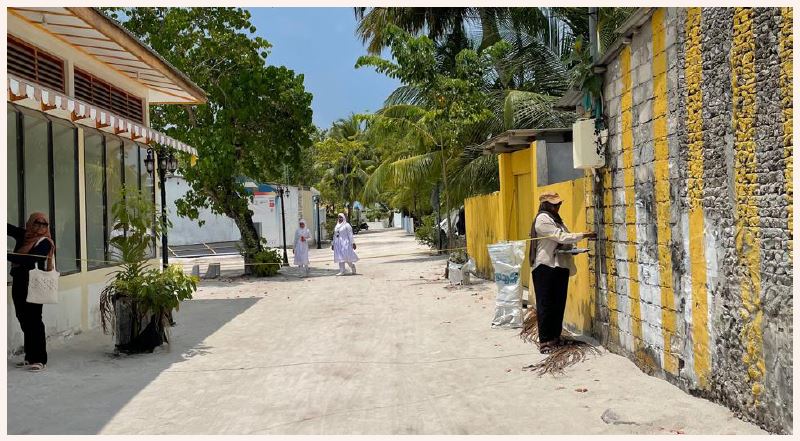
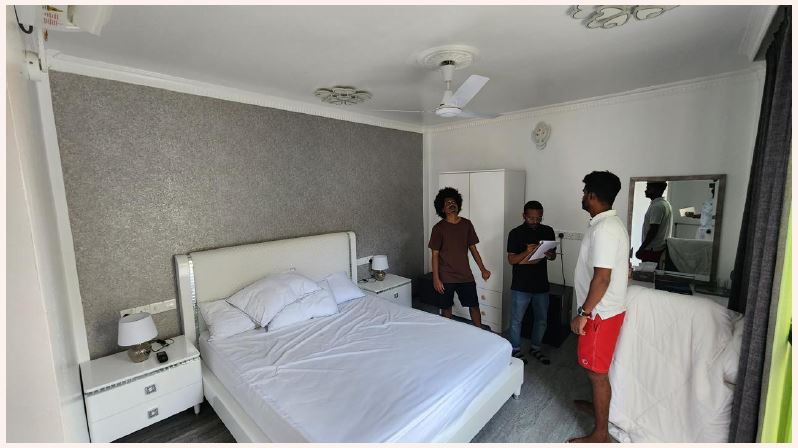
over the subsequent days , students collected data from Aa. Mathiveri, including the study of the existing natural and built environment, zoning, infrastructure, amenities, cultural and social attributes of the island. Additionally, the students focused on an in-depth study and documentation of several aspects of existing guesthouses and their infrastructure as well as their vulnerability to disasters and climate change effects. Interviews with relevant stakeholders provided valuable information with respect to the challenges as well as perceptions towards resilient designs. This was followed by a trip to the neighboring island of Aa.Bodufolhufhoo for a comparison study of guesthouses and tourism establishments in the island and collected relevant data for analysis.
A key highlight of the trip included a visit to the one-of-a-kind, Nika Island Resort, one of the very first resorts in Maldives, built in 1983. The island has to be considered as a piece of cultural heritage, thanks to its collection of vernacular architectural masterpieces which still survive to date. The visit provided valuable insights into traditional practices of using the local environment, climate and passive design techniques to ensure sustainability of both the built and natural environment.
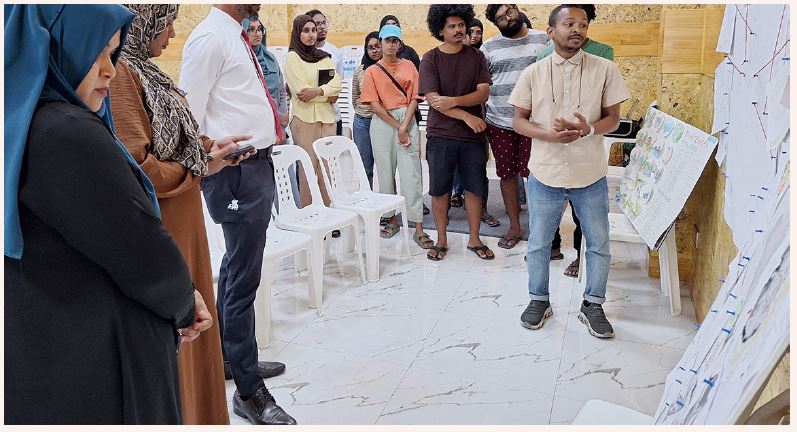
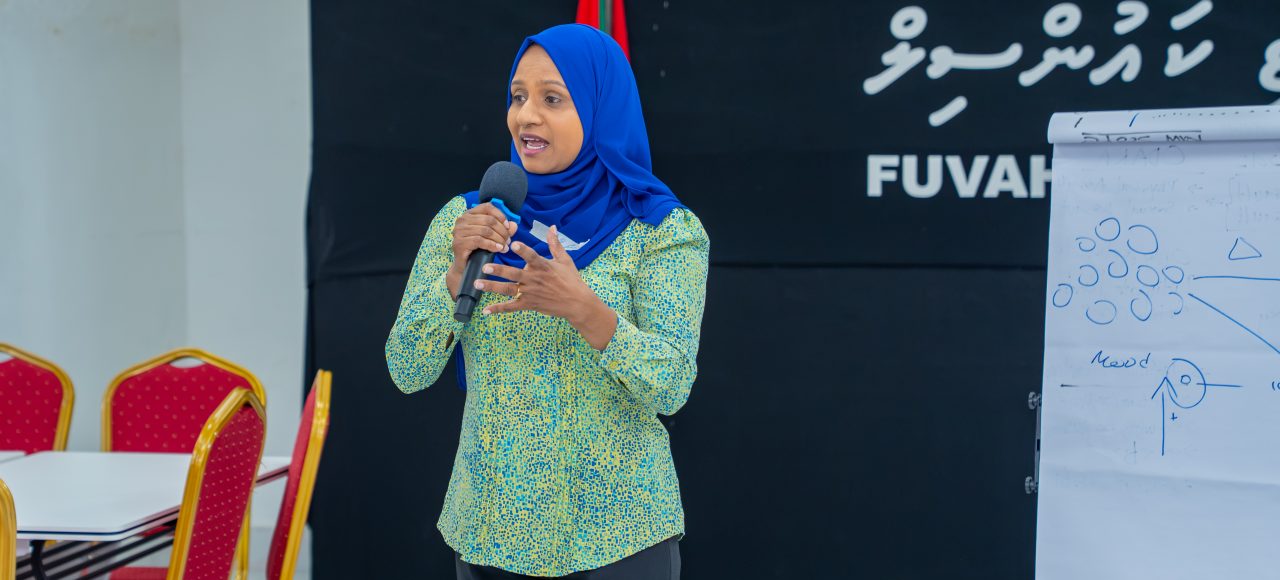
In the final stage of the trip, the preliminary findings and ideas were presented to the island council to get their feedback and additional knowledge which the students will use in developing proposals for resilient designs.
The ARC305 field trip aligns with SDG 4 (Quality Education) by providing students with hands-on learning, field research, stakeholder engagement, and practical experience in resilient architectural design. It supports SDG 9 (Industry, Innovation and Infrastructure) by exploring innovative and context-sensitive approaches to infrastructure, tourism facilities, and climate-resilient design. The activity contributes to SDG 11 (Sustainable Cities and Communities) through the study of sustainable island development, community needs, cultural heritage, and resilient built environments. It advances SDG 13 (Climate Action) by assessing vulnerabilities to climate change and disasters and incorporating climate adaptation and passive design strategies into students’ proposals. The fieldwork supports SDG 14 (Life Below Water) by increasing awareness of the relationship between island development, coastal environments, and the protection of marine ecosystems. Finally, it contributes to SDG 17 (Partnerships for the Goals) through collaboration with island councils, local stakeholders, tourism establishments, students, and academic staff to support knowledge sharing and resilient community development.