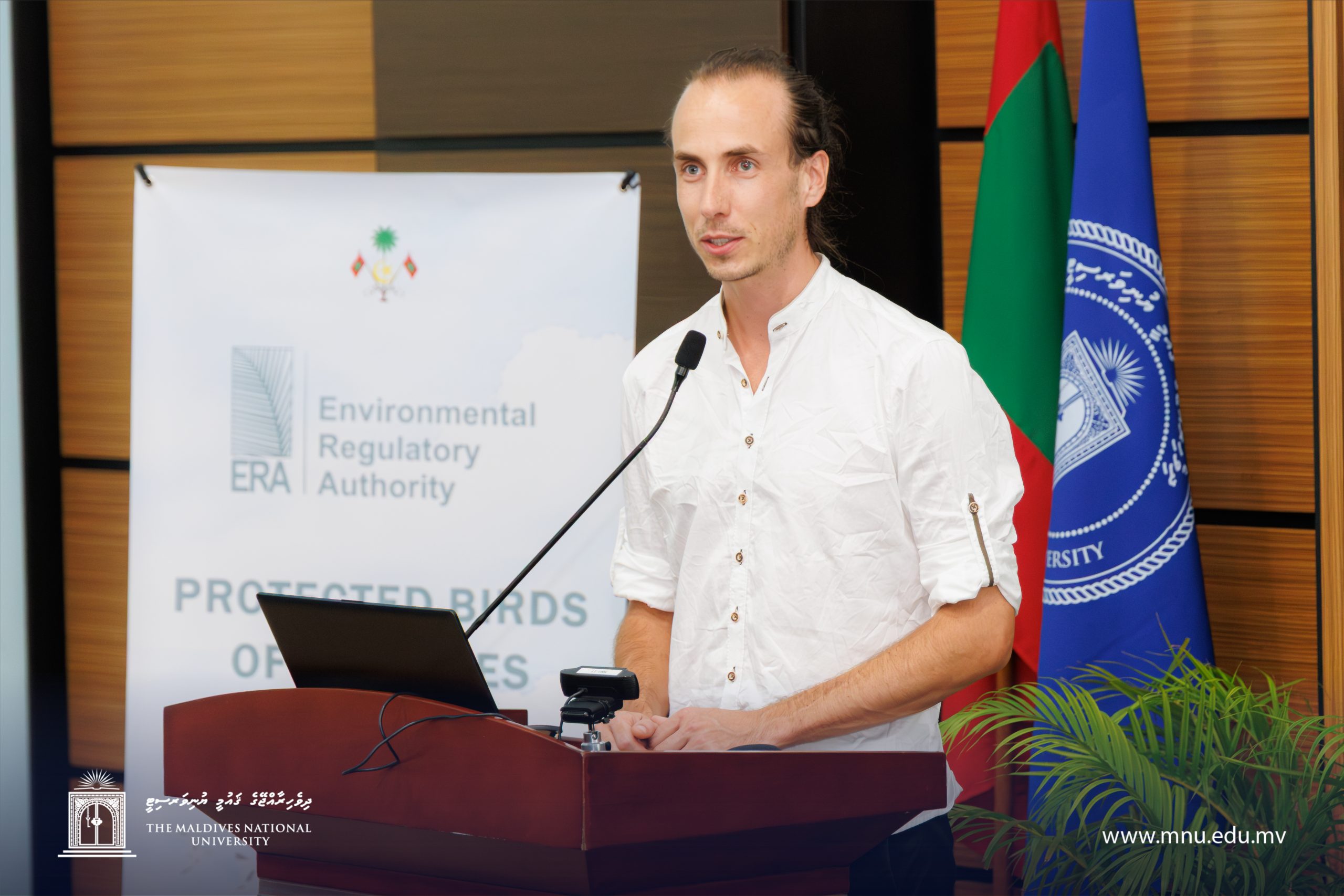
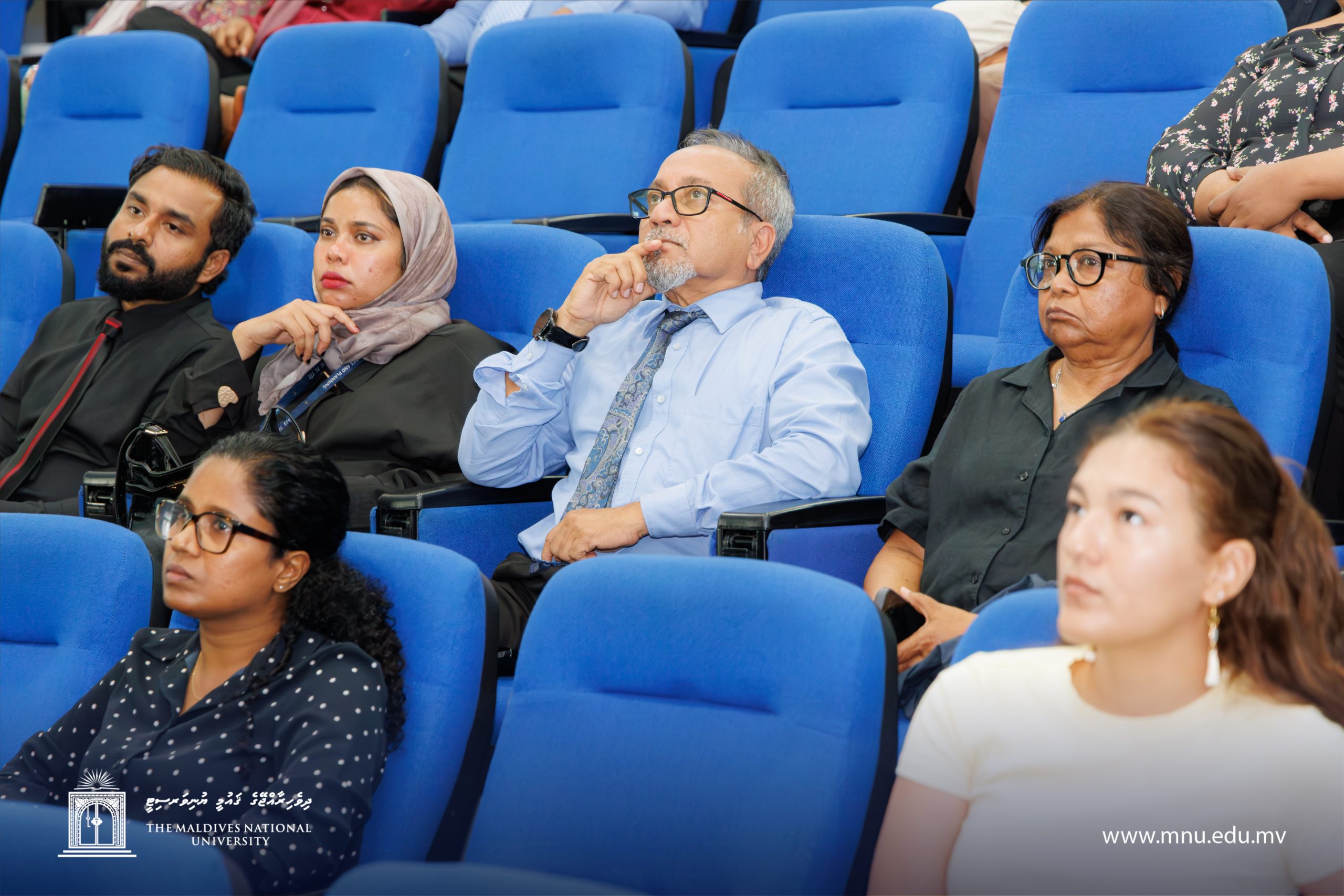
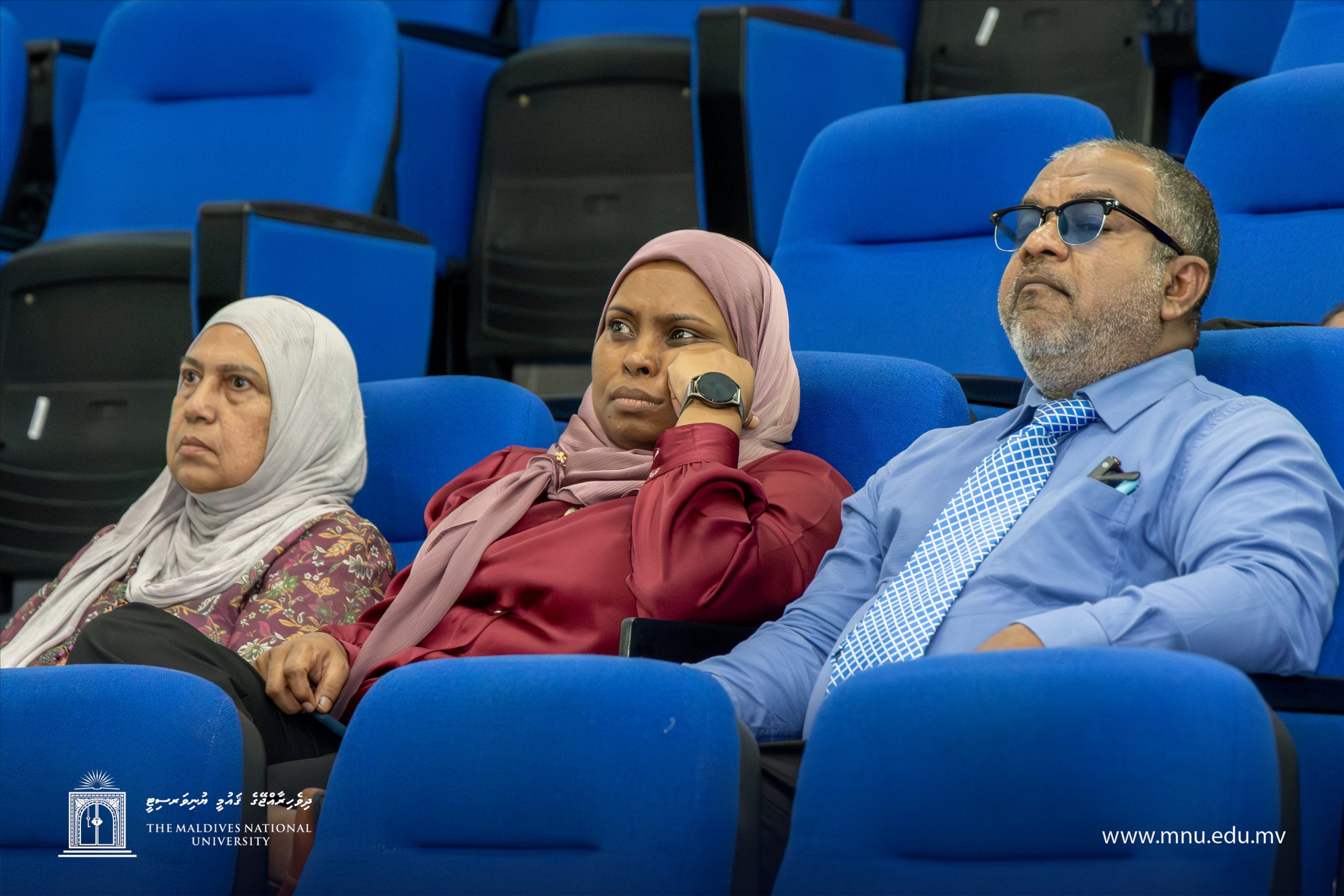
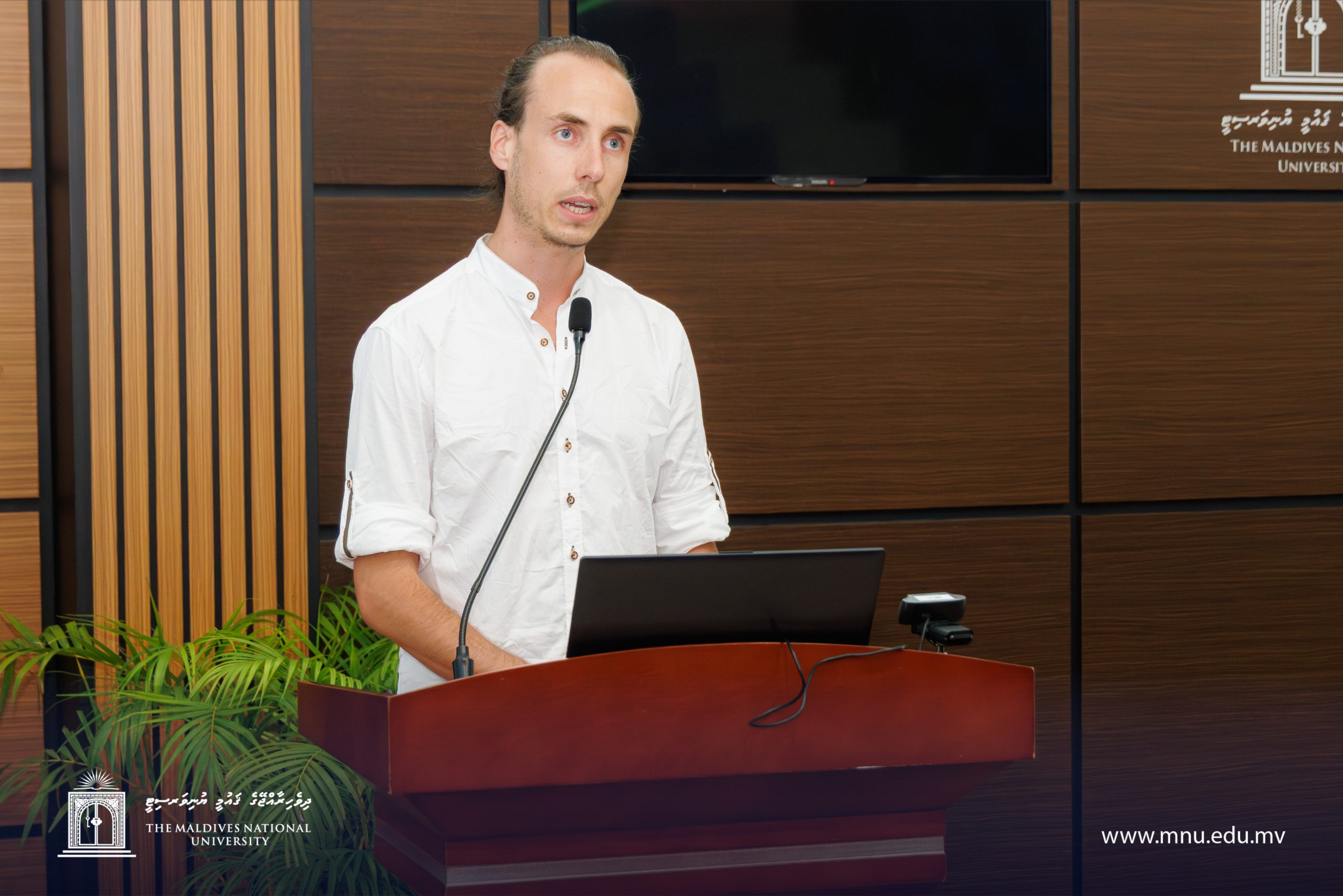
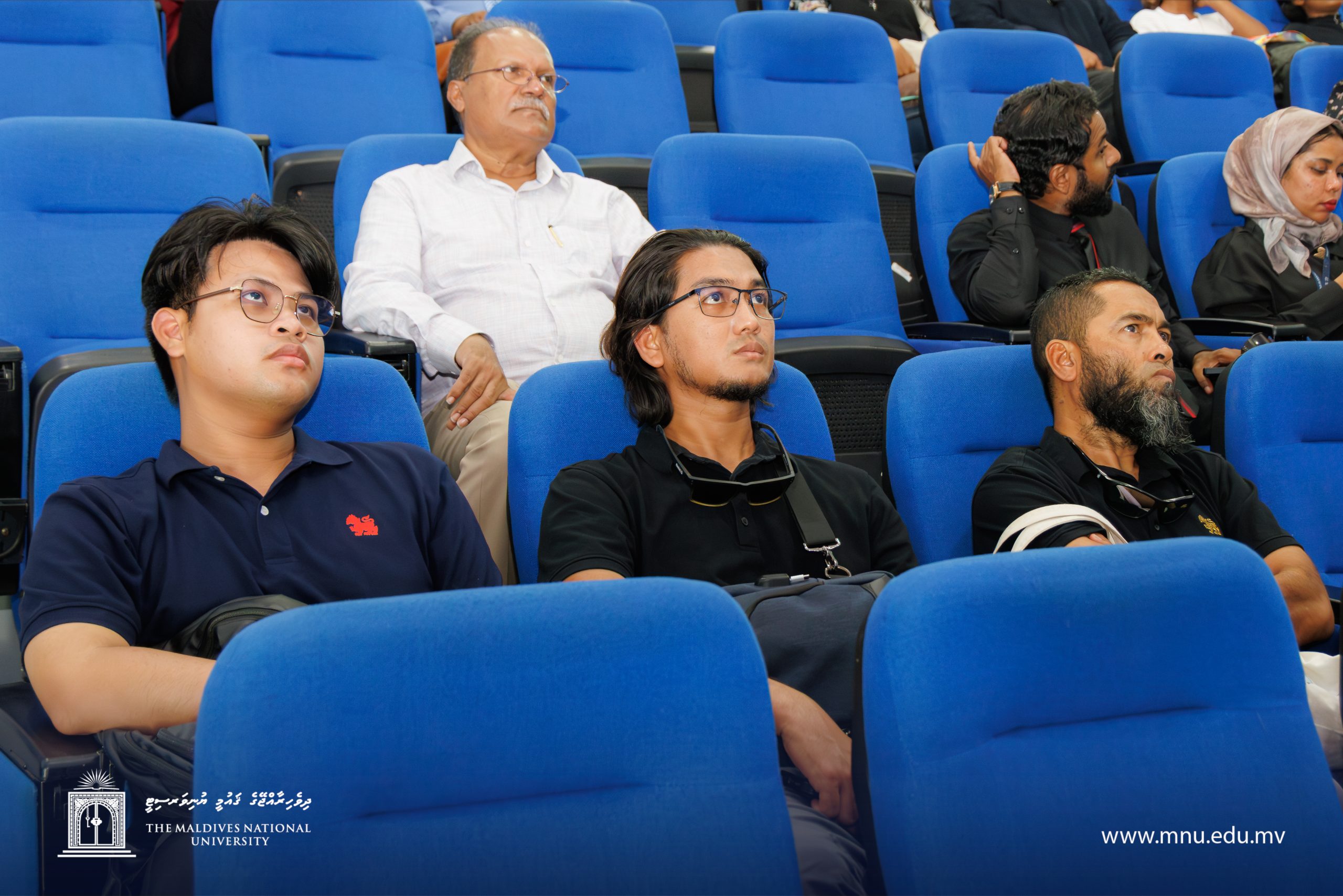
The Maldives National University (MNU) hosted a public lecture by Dr Sebastian Steibl, an ecosystem scientist and conservation biologist from Naturalis Biodiversity Center, Netherlands, and the University of Auckland, New Zealand, exploring the ecological connections between coral reefs, atoll islands and biodiversity, and the importance of ecological restoration in shaping nature-positive futures for tropical island nations.
The lecture highlighted the need to understand atolls as interconnected ecological and geological systems rather than isolated, small islands surrounded by coral reefs. Dr Steibl explained that atoll ecosystems comprise three closely connected components: coral reefs, reef flats and islands, each contributing to the functioning, biodiversity and resilience of atoll environments. These systems have evolved through geological and ecological processes operating over millions of years.
Dr Steibl presented research identifying approximately 7,780 atoll islands across the Indo-Pacific region 1. He also highlighted the exceptional concentration of atoll islands in the Maldives, which accounts for 60% of all islands in the Indian Ocean. This makes the Maldives particularly important for understanding the ecological processes that sustain atoll environments and their responses to environmental change.
Seabirds and the Ecological Functioning of Atolls
A central theme of the lecture was the often-overlooked role of seabirds in maintaining healthy atoll ecosystems. Dr Steibl discussed research documenting 37 seabird species nesting on atolls, representing approximately 15.6 million breeding pairs and an estimated quarter of the world’s tropical seabird population 2.
Despite their ecological importance, seabirds face significant conservation threats, including invasive species, habitat loss, and human disturbance.
Dr Steibl emphasized the reciprocal relationship between seabirds and atoll ecosystems, explaining that while seabirds depend on atoll islands for nesting and breeding habitats, the islands and surrounding reefs also benefit from seabird populations.
By transporting marine-derived nutrients onto islands through guano deposition, seabirds contribute to nutrient cycling, vegetation productivity and ecological processes that connect terrestrial and marine environments 3. Comparisons between islands with and without seabird populations demonstrate how the presence of seabirds can influence ecosystem functioning and potentially support the productivity and resilience of surrounding reef systems.
The lecture also examined the role of reef organisms in island formation and sediment production. Parrotfish, in particular, contribute significantly to the production of carbonate sediments through their grazing activities, with estimates suggesting that they can account for a substantial proportion of sand production in certain reef environments 4. These processes illustrate how marine biodiversity contributes to the physical development and maintenance of atoll islands.
Ecological Restoration of Atoll Ecosystems
Dr Steibl discussed ecological restoration as an important approach to recovering biodiversity and restoring the natural processes that sustain atoll environments.
One of the major restoration interventions highlighted was the eradication of invasive rats, which threaten native seabirds, particularly through the predation of eggs and chicks. Drawing on global island restoration initiatives, including research by Spatz et al. (2022), he discussed the scale of invasive species eradication efforts and their potential to support the recovery of native island biodiversity 5.
The lecture also introduced emerging restoration techniques, including the use of drones to distribute bait during invasive rodent eradication programmes and approaches to controlling invasive mosquitoes on tropical islands6
Another restoration strategy discussed was the active re-establishment of seabird colonies through social attraction techniques 7. These methods involve placing artificial seabird decoys and broadcasting seabird calls to encourage birds to establish breeding colonies in suitable restored habitats.
Such interventions demonstrate how ecological restoration can extend beyond protecting individual species to recovering the ecological interactions and processes that contribute to the functioning of entire atoll systems.
Towards Nature-Positive Futures for Atoll Islands
The lecture concluded by exploring the concept of nature-positive futures, emphasizing the importance of recognising the intrinsic value of intact atoll biodiversity alongside the benefits that healthy ecosystems provide to human societies 8.
Dr Steibl highlighted three interconnected perspectives: the inherent ecological value of biodiversity, the relationship between nature and culture, and the ecosystem services provided by functioning natural systems 9
For island communities, these perspectives reinforce the importance of reconnecting people with their natural environments and recognising biodiversity as an integral part of island identity, cultural heritage and environmental sustainability.
For the Maldives, where communities depend heavily on healthy marine and coastal ecosystems, understanding and restoring the natural processes that sustain atoll ecosystems can complement existing conservation and coastal management strategies and contribute to more resilient island environments.
The lecture emphasised the importance of biodiversity conservation, ecological restoration and sustainable management of natural resources. It highlighted how protecting interconnected marine and terrestrial ecosystems can strengthen island resilience, preserve natural heritage and support a sustainable future for island communities.