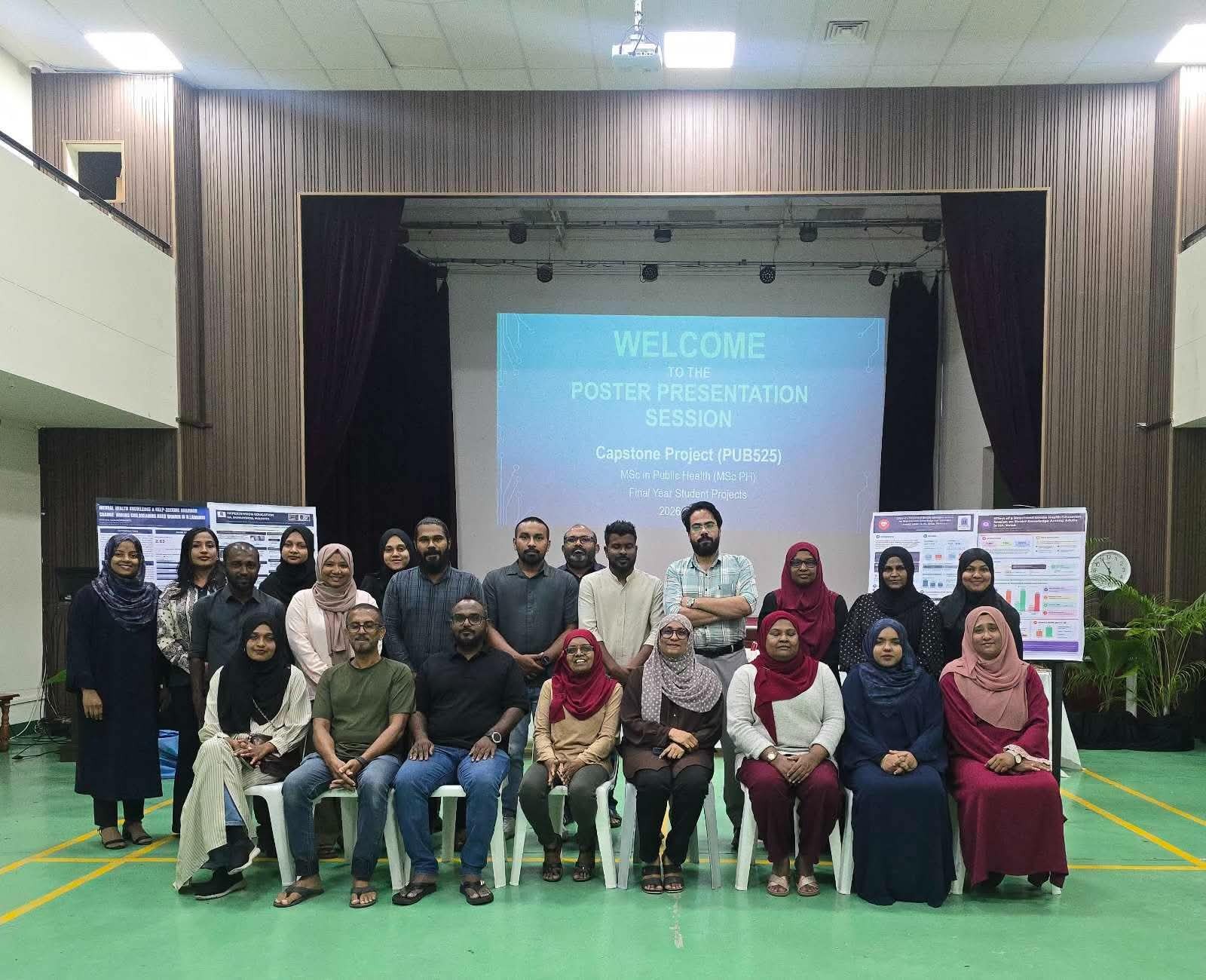
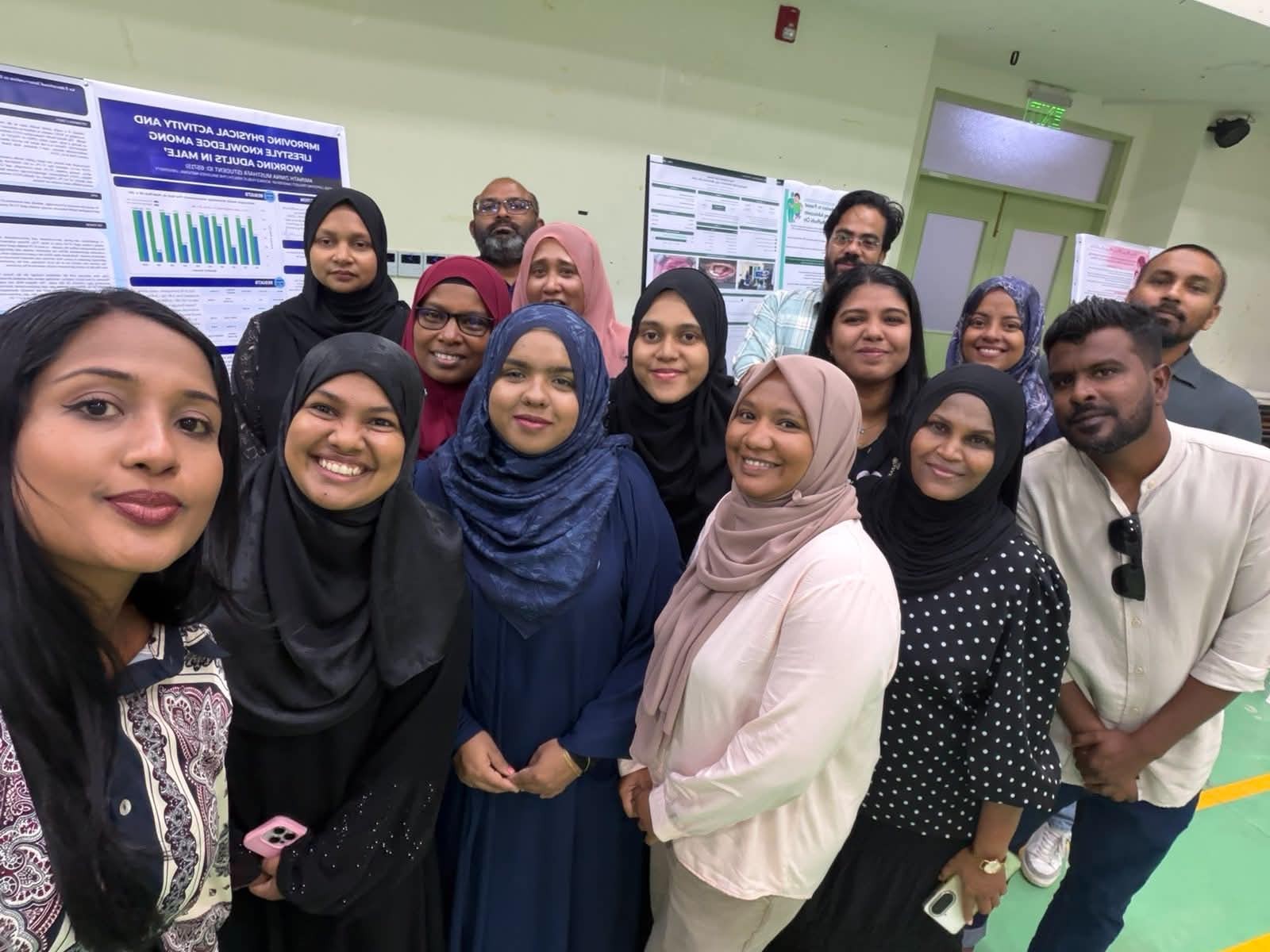
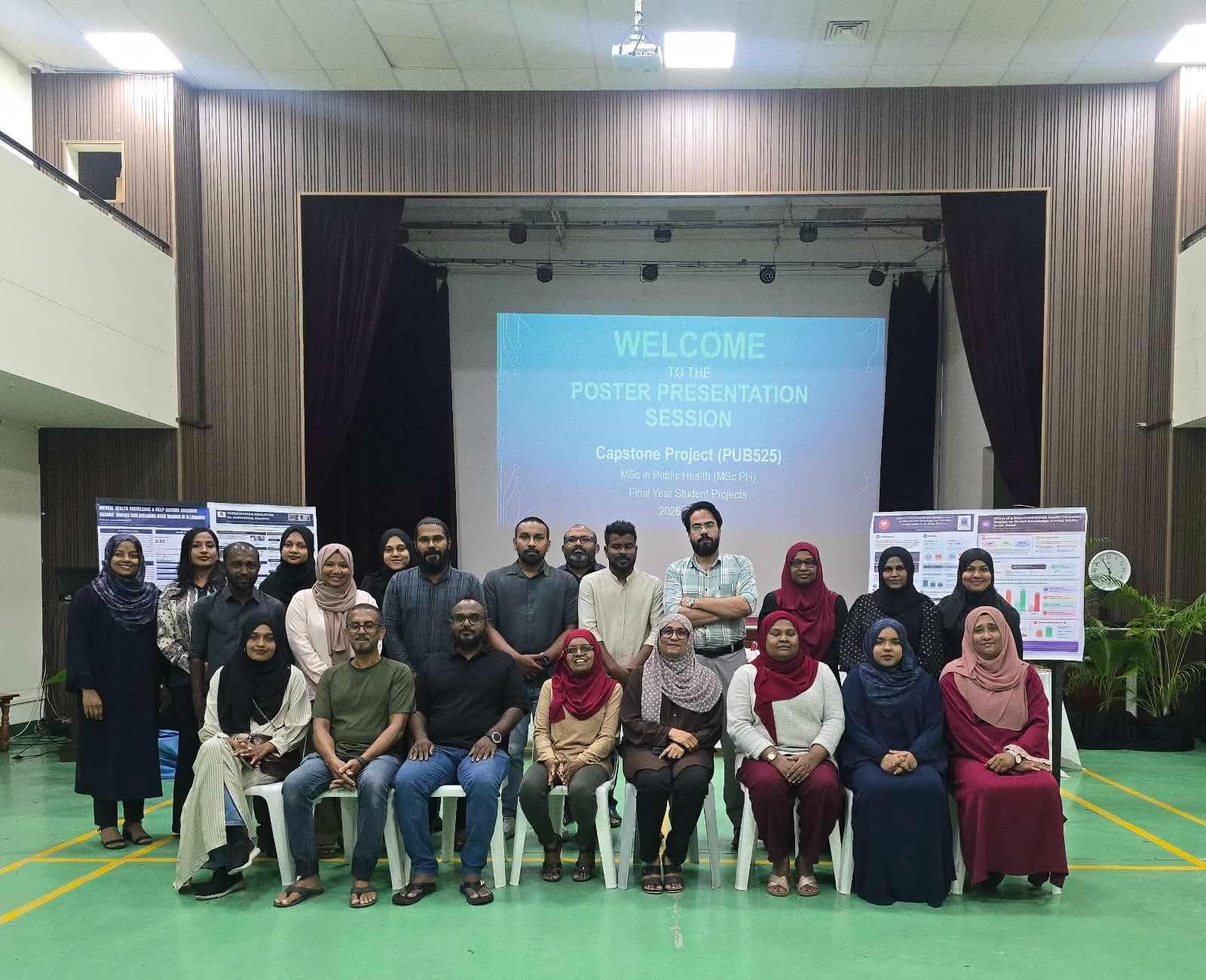
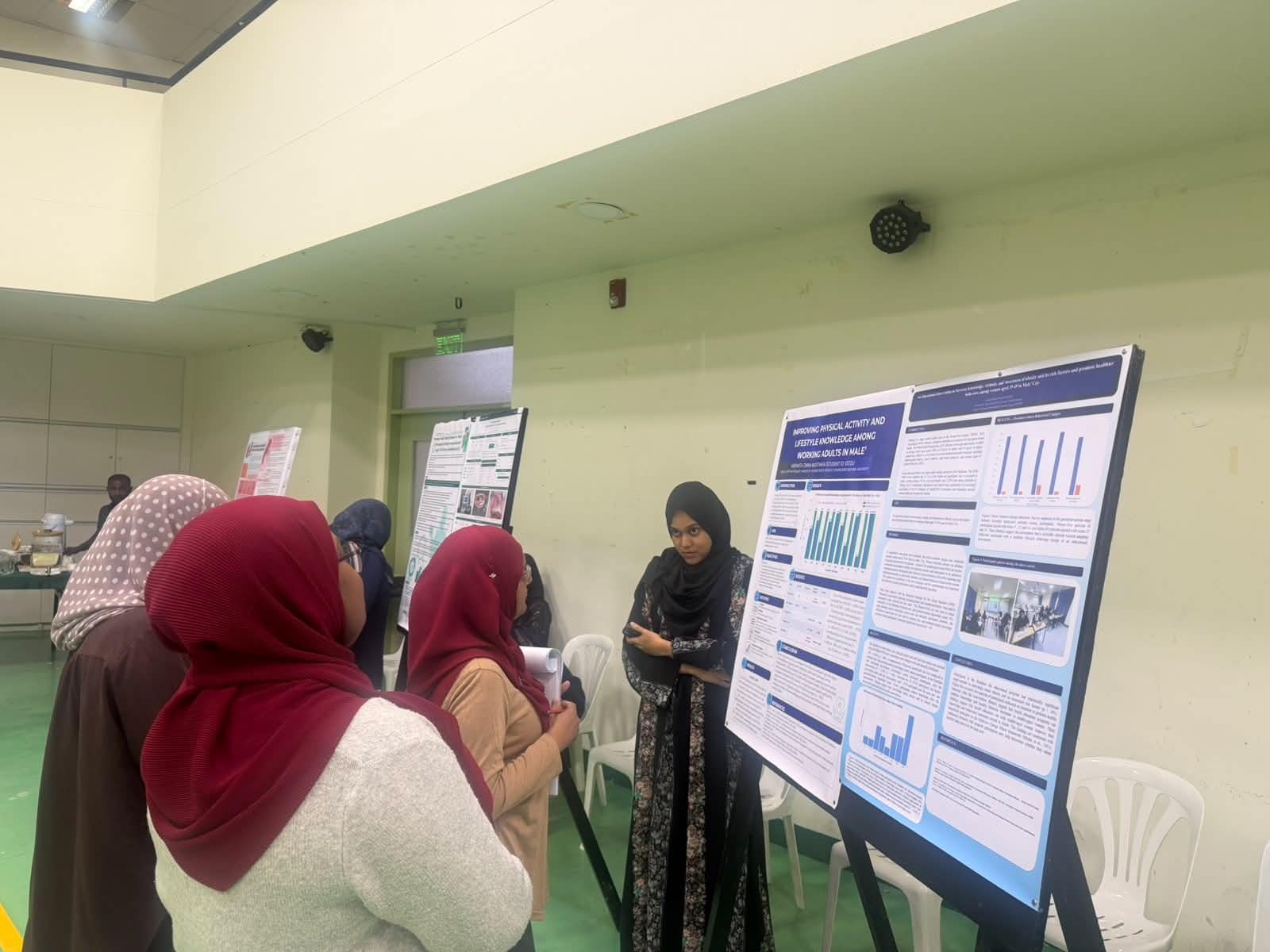
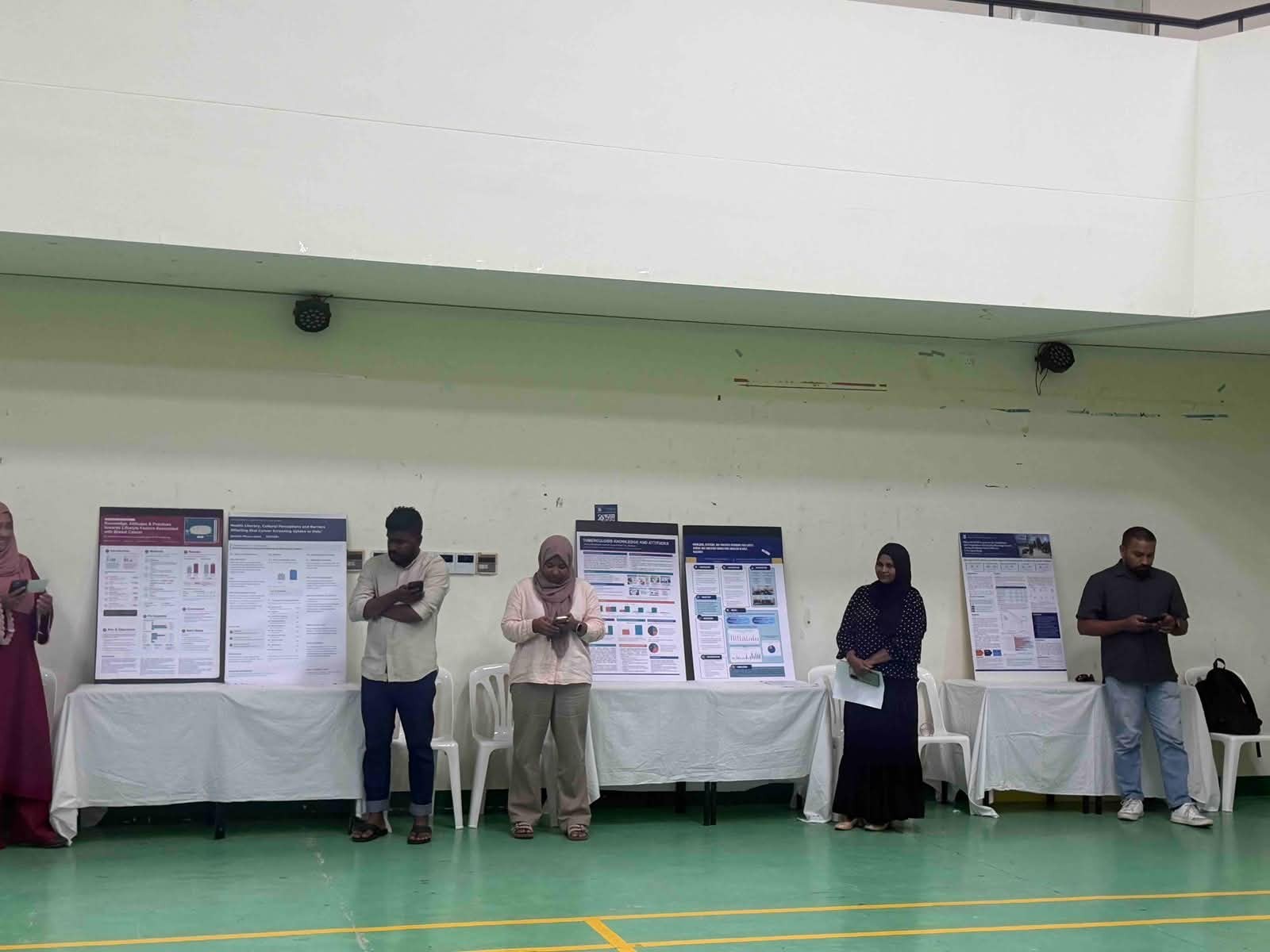
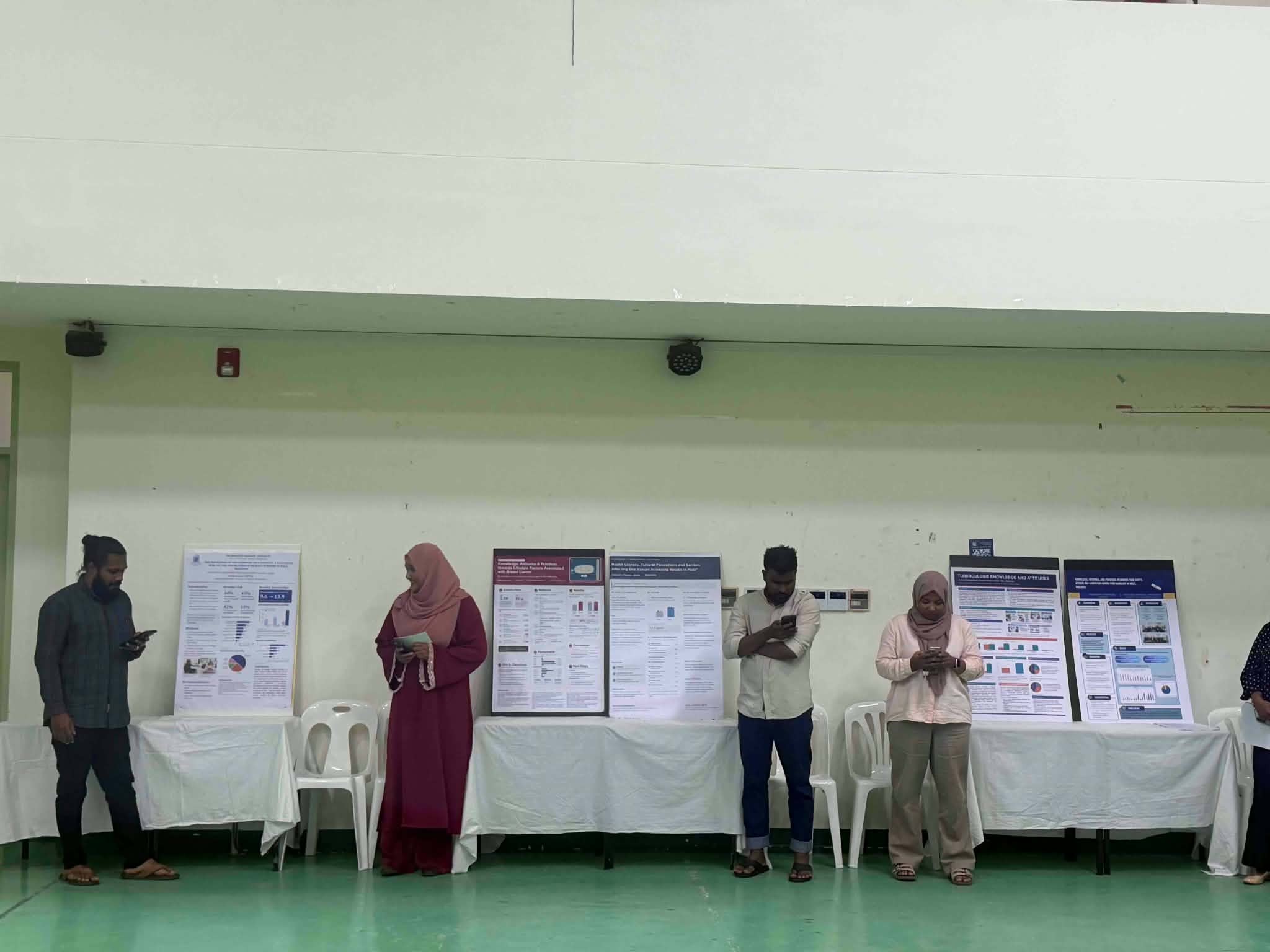
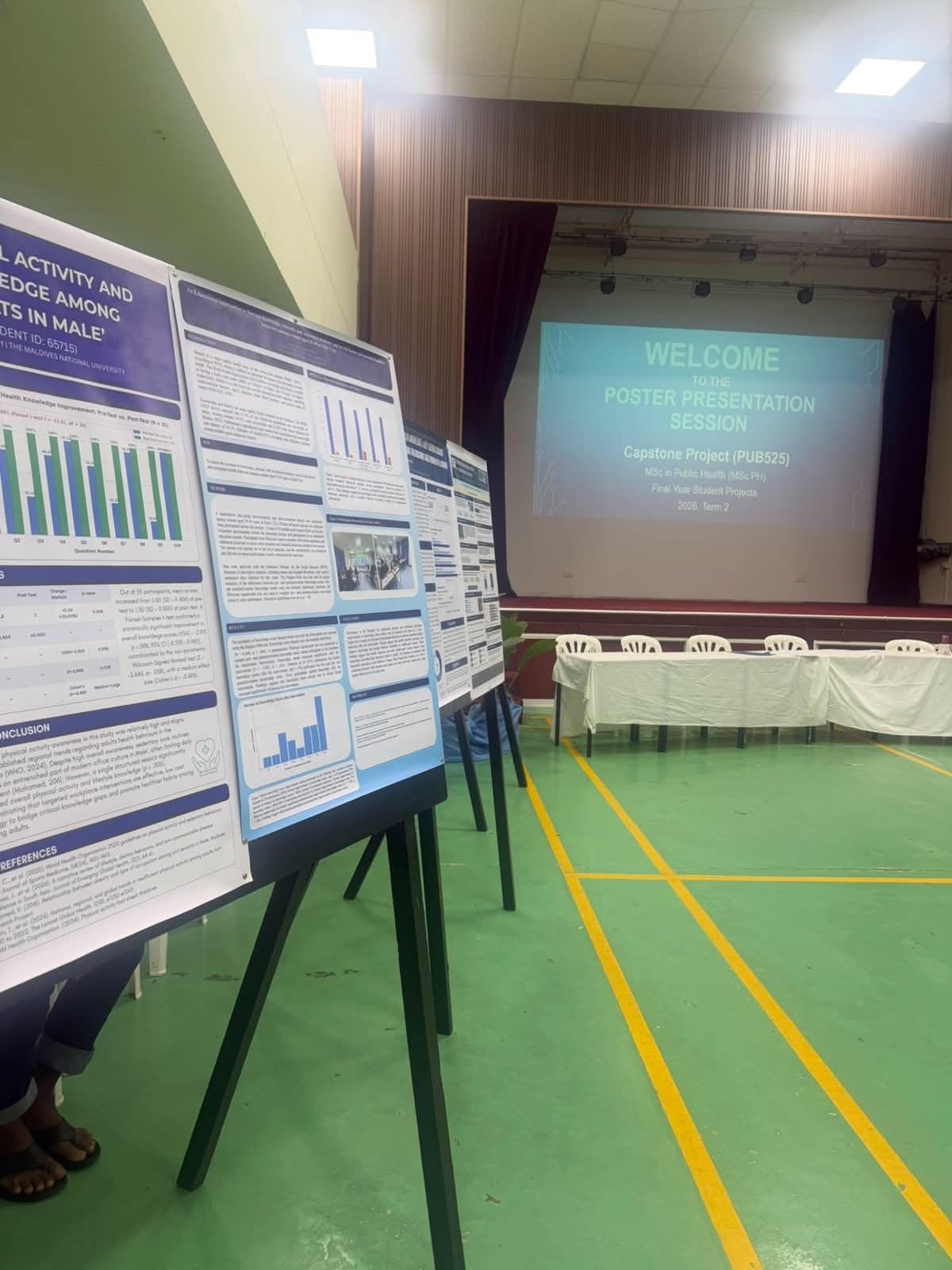
The Faculty of Health Sciences (FHS) at The Maldives National University (MNU) held the Poster Presentation Session for the Capstone Project (PUB525) of the Master of Science in Public Health (MSc PH) programme on 14 November 2026, providing a platform for final-year students to showcase their research findings and engage in academic knowledge exchange.
Organised by MSc in Public Health students, the session featured student-led research addressing public health topics and demonstrated the students’ research knowledge, analytical skills and ability to communicate scientific findings effectively. The event highlighted the importance of translating research evidence into practice and supporting informed decision-making to address public health challenges.
The session brought together 32 participants, including the Deputy Vice Chancellor (Research and Enterprise), staff from the Research Development Office (RDO), academic and administrative staff of FHS, MSc in Public Health students, and other FHS students. The participation of university leadership, research support personnel and faculty members provided an opportunity for academic engagement, constructive feedback and knowledge sharing across the Faculty.
Through their poster presentations, students presented their research findings, responded to questions and engaged in scholarly discussions with academic staff and fellow students. The session encouraged critical reflection on research findings, their relevance to public health practice and their potential contribution to addressing the health needs of communities.
Participants appreciated the students’ efforts, dedication and commitment to conducting and presenting their capstone research. The session was also recognised as a valuable opportunity to explore research findings, exchange ideas and strengthen the connection between academic research and real-world public health practice.
By providing a platform for student research dissemination, FHS continues to promote research-informed education, academic engagement and the development of public health professionals equipped to apply evidence in addressing population health challenges.
The poster presentation session strengthened MSc in Public Health students’ research, analytical and scientific communication skills by providing an opportunity to disseminate their capstone findings to an academic audience. It enhanced students’ confidence in presenting evidence, responding to questions and engaging in scholarly discussions.
The activity also promoted knowledge exchange and constructive engagement among students, academic staff, research support personnel and university leadership. By showcasing student-led research and encouraging the application of research evidence to public health practice, the session contributed to fostering a research-oriented academic culture within FHS and strengthening the role of research in informing public health decision-making and improving population health.
Contribution to the Sustainable Development Goals (SDGs)
-
SDG 3 – Good Health and Well-being: Supports research addressing public health challenges and encourages the application of evidence to improve health outcomes and population wellbeing.
-
SDG 4 – Quality Education: Promotes postgraduate research, experiential learning, critical thinking, academic development and the acquisition of research communication skills.
-
SDG 17 – Partnerships for the Goals: Encourages collaboration, academic exchange and knowledge sharing among students, faculty members, research support staff and university leadership.