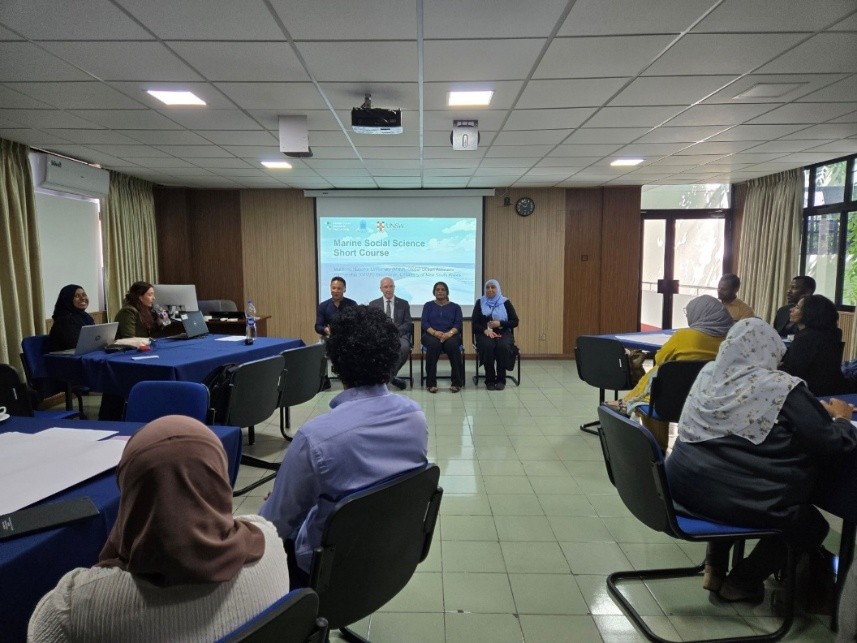
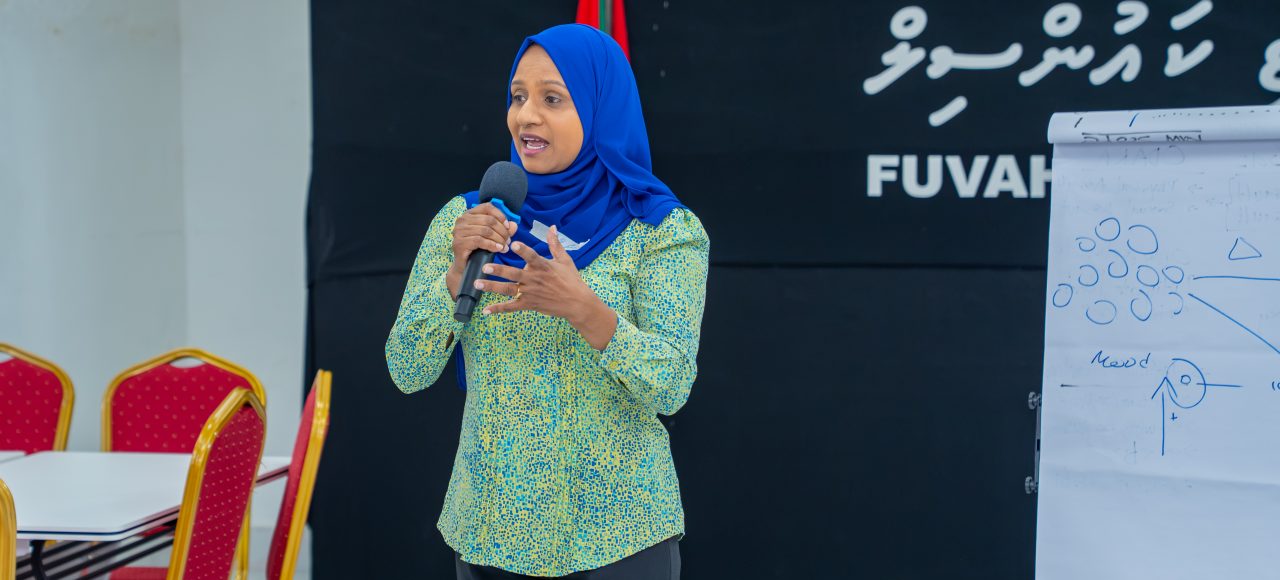
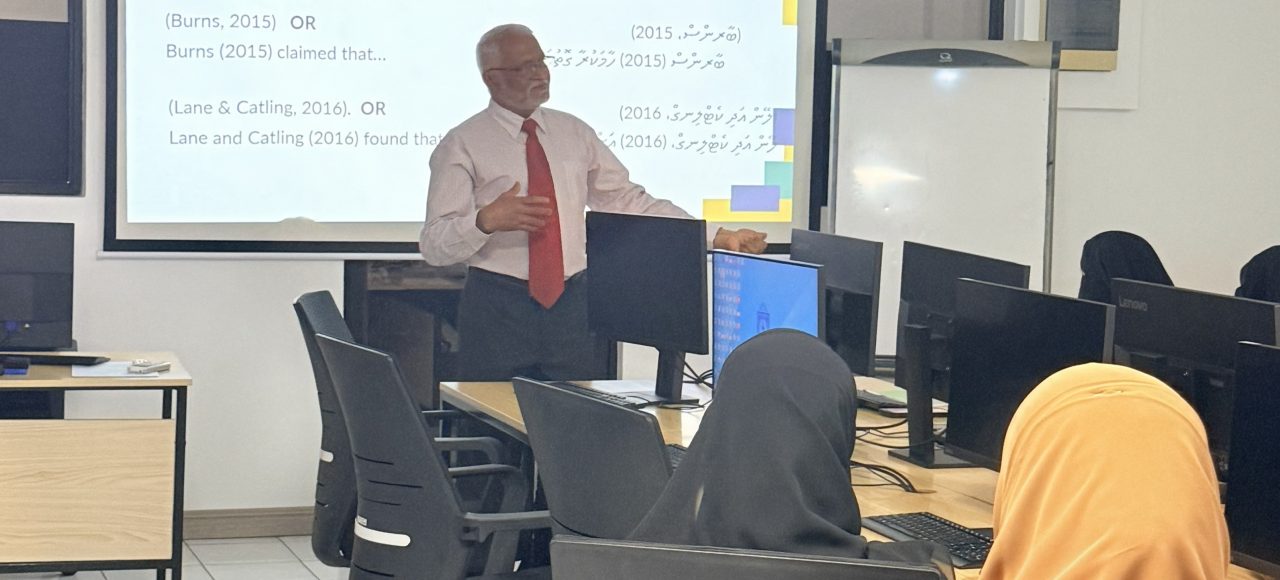
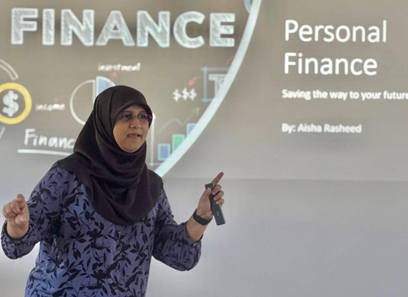
CFOS of the MNU in collaboration with Global Ocean Accounts Partnership Secretariat, University of New South Wales, Sydney conducted a one-day intensive Marine Social Science seminar Marine Science students and researchers. The short course introduced participants to social science and the types of methods that can be applied to study the human-ocean relationship in the Maldives. The seminar aimed to equip students with skills in planning and executing social research projects that support sustainable development and community well-being. Learning objectives included understanding the role of Marine Social Science in the Maldives, designing culturally appropriate research methods for Maldivian communities, selecting appropriate methods for different research contexts, and communicating findings effectively to stakeholders.
Sessions covered the definition and key disciplines of social science and explored why social science matters in the Maldives given its geographic dispersion, tourism dependency, and climate vulnerability. Students also learned about quantitative versus qualitative methods, sampling considerations for island populations, and the logistical challenges of research in the Maldives, such as inter-atoll travel and seasonal variations.
Practical activities included stakeholder mapping, where groups worked on marine conservation scenarios such as marine protected area establishment, and a research design exercise in which participants chose marine research scenarios—including shark conservation, MPA perceptions, and fishing regulations—and selected and justified appropriate methods. The seminar concluded with a session on designing research for impact, covering pathways from research to policy and practice, with examples of Marine Social Science impact in the Maldives.