Strengthening Water Discharge Management and Marine Pollution Prevention Through the CHOMV Project
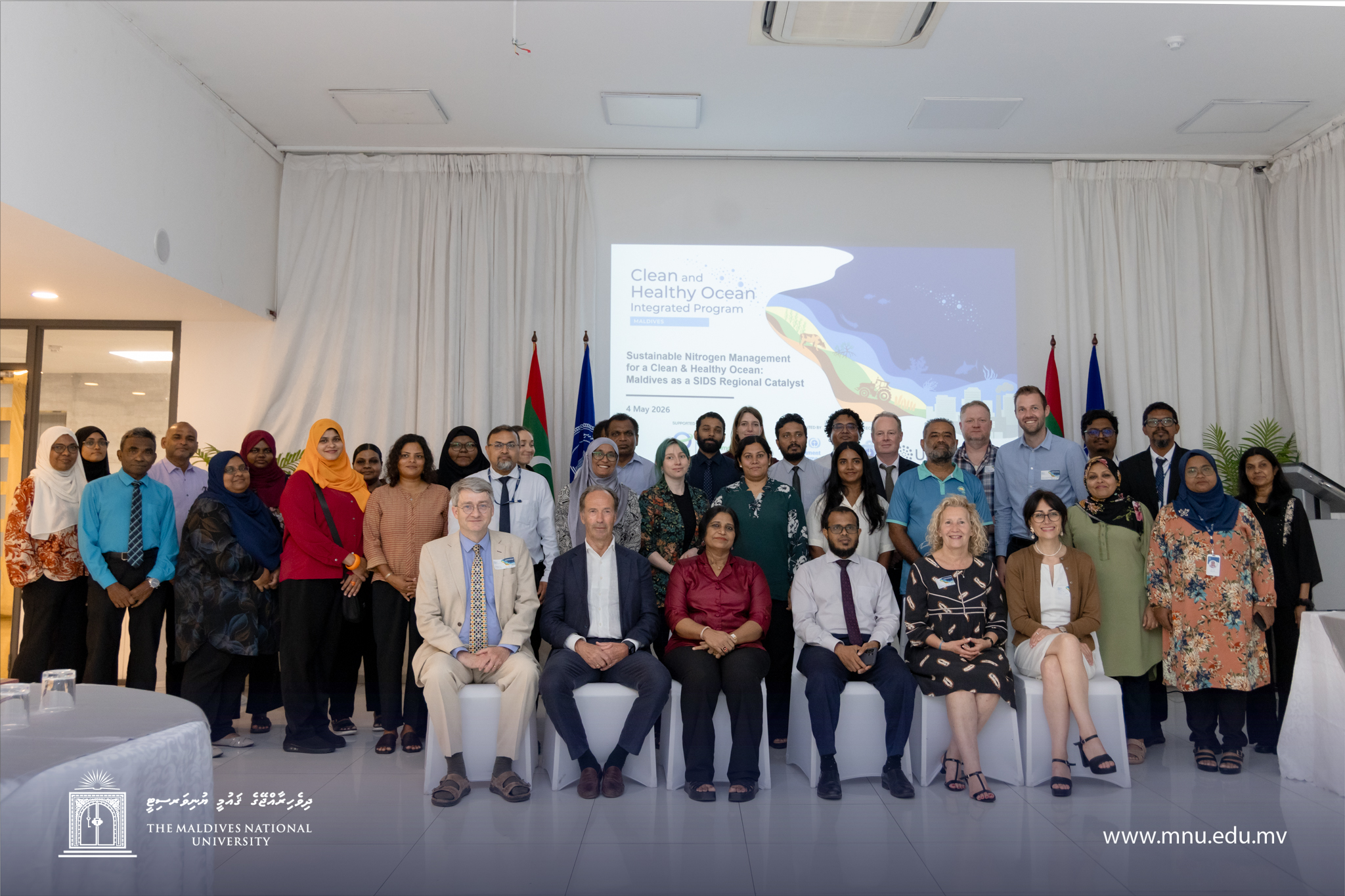
The Maldives National University (MNU), in collaboration with the UK Centre for Ecology & Hydrology (UKCEH), is jointly executing the Sustainable Nitrogen Management for a Clean and Healthy Ocean Maldives (CHOMV) Project, implemented by the United Nations Environment Programme (UNEP) and funded by the Global Environment Facility (GEF). The initiative aims to strengthen national approaches to wastewater management, nutrient pollution prevention, and the protection of marine and coastal ecosystems.
The project addresses the discharge of excessive nitrogen and phosphorus from untreated sewage, agricultural runoff, and industrial activities into aquatic environments. These pollutants can contribute to nutrient enrichment, harmful algal blooms, oxygen depletion, and the degradation of coastal water quality, posing significant risks to coral reefs, marine biodiversity, and coastal livelihoods.
A key component of CHOMV is strengthening national policies and management practices for controlling nutrient discharges into the marine environment. The project will support the development of the Maldives’ first National Nitrogen Action Plan, improve quantitative monitoring of nutrient pollution, and generate scientific evidence that can inform wastewater discharge standards, pollution control measures, and environmental management practices.
The initiative also aims to establish a sewage nutrient recovery system that converts nutrients from wastewater into agricultural fertiliser, reducing the potential discharge of nutrient-rich effluent into coastal waters while promoting sustainable resource utilisation.
Through scientific research, technological innovation, policy development, and institutional capacity building, MNU contributes to strengthening the evidence base for effective water discharge management and the prevention of land-based marine pollution.
Compliance with National Environmental Regulations on Wastewater and Hazardous Waste Disposal
The Maldives National University (MNU) is committed to managing wastewater, laboratory effluents and hazardous chemical waste in accordance with applicable national environmental legislation and regulatory guidelines. These include the Environment Protection and Preservation Act (Law No. 4/93), Hazardous Chemical Regulation (2019/R-1057), National Waste Management Policy 2015 and Waste Management Act (Law No. 24/2022), as amended.
In accordance with these national frameworks, MNU promotes responsible wastewater management, safe handling and segregation of chemical waste, and the prevention of environmentally harmful discharges from its teaching, research and operational facilities. Particular emphasis is placed on preventing hazardous laboratory chemicals and contaminated wastewater from entering drainage systems or the surrounding marine environment without appropriate treatment and regulatory authorisation.
Through its institutional environmental sustainability commitments, MNU seeks to minimise pollution, strengthen safe waste management practices and promote awareness among staff and students regarding the responsible use and disposal of water and chemicals. These commitments contribute to the University’s broader efforts to protect water quality, marine ecosystems and environmental health, while supporting Sustainable Development Goal 6 (Clean Water and Sanitation), particularly Target 6.3, and Sustainable Development Goal 12 (Responsible Consumption and Production), particularly Target 12.4.