DMADD Workshop on Passive Acoustic Monitoring to Support Coral Reef Restoration
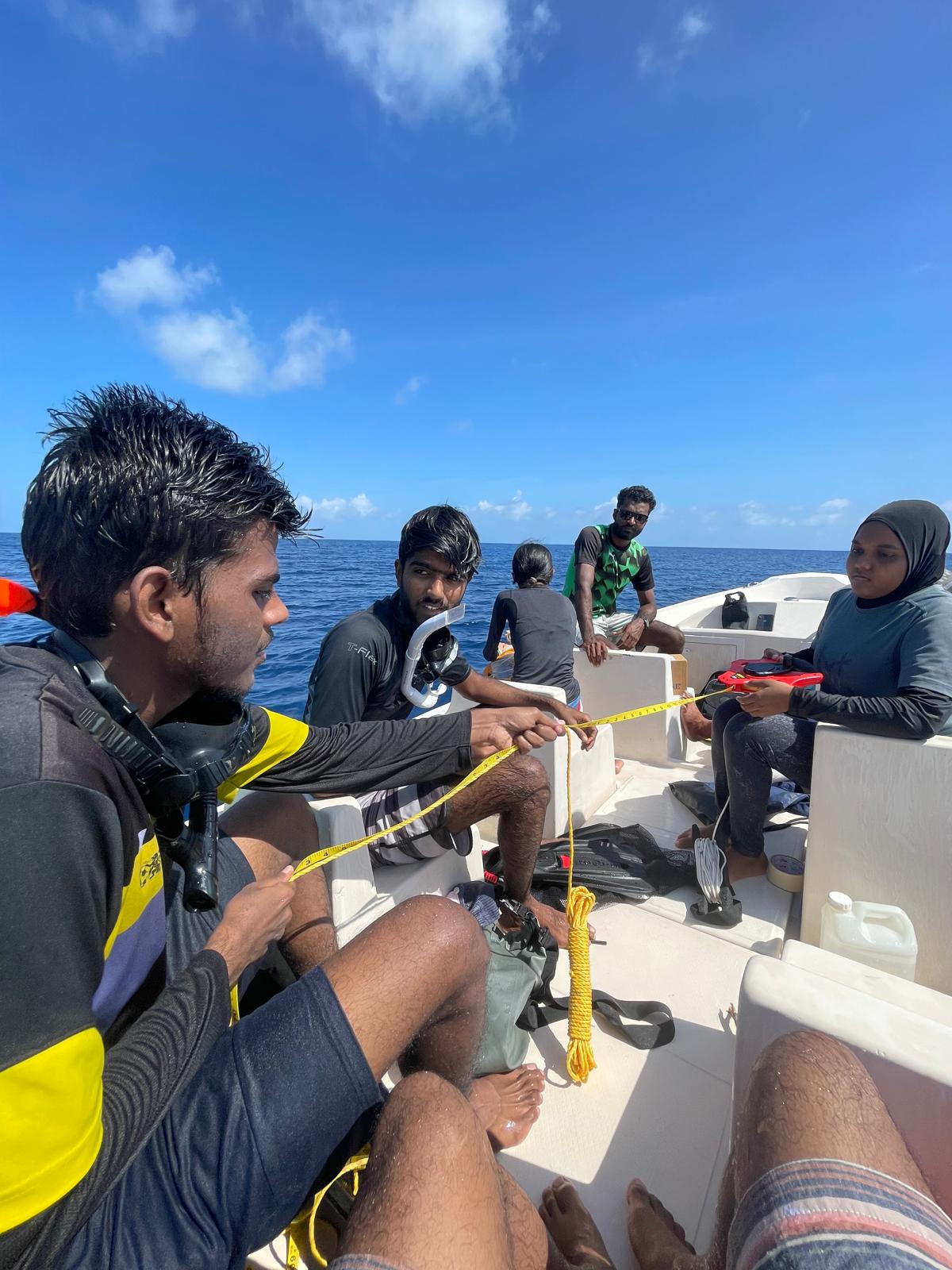
Three students and the Dean of the College of Fisheries and Ocean Studies (CFOS) at the Maldives National University (MNU) participated in a workshop on Passive Acoustic Monitoring (PAM) for Coral Reef Restoration, conducted under the Digital Maldives for Adaptation, Decentralization and Diversification (DMADD) Project.
The workshop explored the application of passive acoustic monitoring as a non-invasive and cost-effective technology for assessing coral reef ecosystems and supporting restoration initiatives. By recording and analysing underwater soundscapes, PAM enables researchers to investigate biological activity, monitor changes in reef biodiversity, and assess ecosystem conditions over time. The technology offers opportunities to complement conventional ecological surveys and strengthen long-term monitoring of coral reef health.
The training contributed to capacity development in marine bioacoustics, acoustic data analysis, and technology-based ecosystem monitoring. It also highlighted the potential for establishing baseline reef soundscape records and developing long-term biodiversity monitoring databases to inform conservation planning and coral reef restoration strategies.
MNU’s participation reflects its commitment to advancing marine scientific knowledge, strengthening technical expertise, and supporting innovative approaches to aquatic ecosystem protection in the Maldives.
Seminar on Exploring Artificial Intelligence in Marine Research
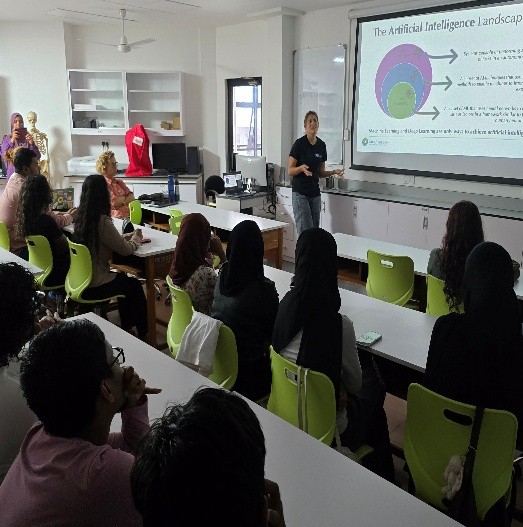
The Maldives National University (MNU) hosted a seminar exploring the application of Artificial Intelligence (AI) in marine research, with a particular focus on analysing underwater acoustic data collected from open-ocean environments. The seminar brought together international researchers collaborating with MNU to share knowledge and expertise on marine acoustic data collection, processing, and the use of AI-based analytical techniques to investigate marine ecosystems.
The seminar highlighted how artificial intelligence and machine learning can support the analysis of large volumes of underwater sound recordings, enabling researchers to identify acoustic patterns, investigate marine species’ behaviour, and improve understanding of ocean biodiversity and ecosystem dynamics. These emerging technologies offer opportunities to strengthen marine biodiversity monitoring, complement conventional ecological research methods, and support evidence-based conservation and ecosystem management.
A total of 16 students from the Bachelor of Marine Science and Bachelor of Environmental Management programmes participated in the seminar, gaining exposure to emerging technological applications in marine science and opportunities for interdisciplinary research. The activity contributed to developing awareness and scientific capacity among future marine professionals while strengthening knowledge exchange between MNU and international research collaborators.
Through initiatives such as this seminar, MNU supports the integration of innovative technologies into marine science education and research, contributing to national capacity development in marine ecosystem monitoring and conservation.
Contribution to the Sustainable Development Goals: The activity supports SDG 14 – Life Below Water, particularly Target 14.a (increasing scientific knowledge, developing research capacity, and transferring marine technology). It also contributes to SDG 4 – Quality Education, particularly Target 4.4, by exposing students to emerging technical skills and scientific applications relevant to marine research and environmental management.
MNU Research on Tuna Aggregation Dynamics Presented at the 6th Maldives Marine Science Symposium
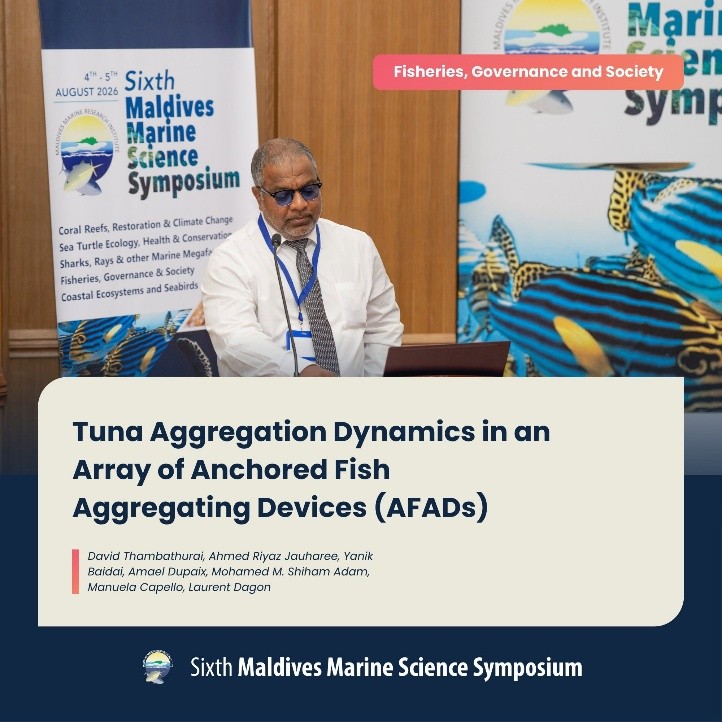
Dr. Ahmed Riyaz Jauharee, Dean of the College of Fisheries and Ocean Sciences (CFOS) at the Maldives National University (MNU), presented research on tuna aggregation dynamics around anchored Fish Aggregating Devices (aFADs) at the 6th Maldives Marine Science Symposium. The presentation, delivered during the Fisheries, Governance and Society thematic session, highlighted findings from two years of acoustic monitoring and their implications for understanding tuna behaviour and supporting sustainable fisheries management in the Maldives.
The study used echo-sounder buoys deployed at anchored Fish Aggregating Devices across the Maldives to investigate patterns of tuna presence, absence, and residence time during 2017–2018. Results indicated that tuna occupancy at monitored aFADs exceeded 60% in both years, with peak occupancy surpassing 80% in April. Tuna aggregations demonstrated an average continuous residence time of 7.96 days, while periods of absence averaged 3.89 days. Both residence and absence durations followed exponential distributions, providing insights into the temporal dynamics of tuna associations with anchored FADs.
Tuna fisheries are of substantial economic and social importance to the Maldives, supporting national livelihoods, food security, and the fisheries sector. The country’s tuna fishery relies in part on a government-managed network of approximately 65 anchored FADs distributed across the archipelago. Understanding tuna aggregation patterns and their interactions with these structures is important for evaluating fishing practices, improving fisheries monitoring, and informing sustainable resource management strategies.
The research demonstrates the application of acoustic monitoring technologies and quantitative ecological analysis to improve scientific understanding of commercially important marine species. By contributing empirical evidence on tuna aggregation behaviour, the study provides information that can support future research and evidence-based fisheries management in the Maldives.
MNU’s contribution to the symposium highlights the University’s role in advancing marine scientific research, disseminating research findings, and strengthening the scientific knowledge base needed to support sustainable utilisation of marine resources.
Advancing Oceanographic Research Through Autonomous Underwater Glider Technology in the Maldives
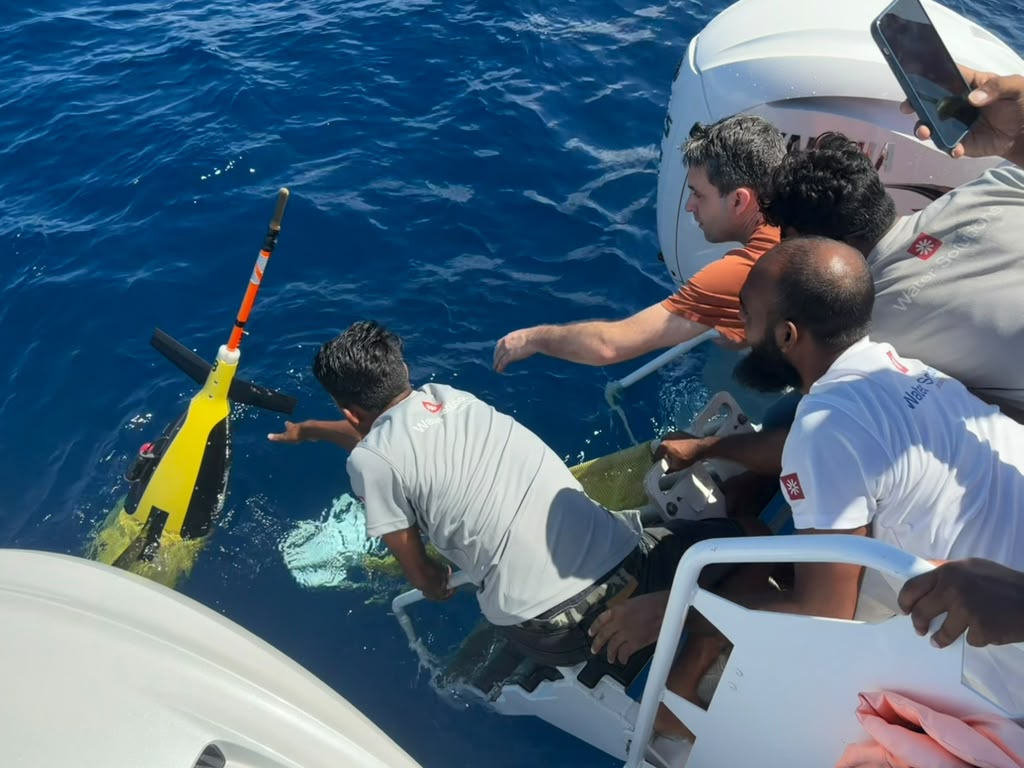
The Maldives National University (MNU), in collaboration with the Applied Physics Laboratory at the University of Washington, USA, is advancing oceanographic research through the deployment of autonomous underwater gliders to monitor physical and biological ocean conditions around the Maldives. The collaborative research, titled “Glider-Based Observations of Temperature, Salinity, and Chlorophyll Variability Near the Maldives,” is led by Ahmed Aslam Waheed of MNU and Luc Rainville of the University of Washington.
Since 2024, the collaboration has undertaken five autonomous Seaglider missions, collecting more than 4,000 oceanographic profiles in the deep ocean east of the Maldives. These gliders collect high-resolution measurements of ocean temperature, salinity, and chlorophyll, sampling depths of up to 1,000 metres. The technology enables extended observations across different seasons and weather conditions, providing valuable information on ocean processes that are difficult to capture through conventional monitoring methods.
The research investigates seasonal and short-term variability in upper-ocean conditions, including the influence of monsoon circulation, internal tides, ocean mixing, and changes in water temperature and salinity. Initial findings reveal significant spatial and temporal variability in ocean properties, strong vertical water movements associated with internal tides, and interactions between physical ocean processes and subsurface chlorophyll distributions. Comparisons with satellite observations also demonstrate the importance of in-situ measurements for capturing small-scale ocean variability that may not be fully represented in satellite-derived datasets.
These observations contribute to improving scientific understanding of ocean dynamics surrounding the Maldives, including processes that influence marine productivity, ocean warming, and the environmental conditions affecting marine ecosystems. The resulting datasets provide an important foundation for further research into climate-related ocean variability and its potential implications for marine ecosystem resilience.
The collaboration demonstrates MNU’s commitment to advancing marine scientific research, strengthening international research partnerships, and applying innovative ocean-monitoring technologies. By contributing to sustained oceanographic observations in the northern Indian Ocean, the initiative supports the development of scientific knowledge relevant to marine conservation, climate research, and evidence-based environmental management in the Maldives.
Contribution to the Sustainable Development Goals: This research directly supports SDG 14 – Life Below Water, particularly Target 14.a, through increased scientific knowledge, marine research capacity, and the application of ocean-monitoring technologies. It also contributes to the scientific evidence base relevant to SDG 13 – Climate Action, particularly Target 13.1, by improving understanding of ocean variability and climate-related processes that can inform future climate adaptation and resilience planning. Furthermore, the collaboration supports SDG 17 – Partnerships for the Goals, particularly Target 17.6, by facilitating international scientific cooperation and knowledge exchange between MNU and the University of Washington.
Clean and Healthy Ocean Integrated Programme
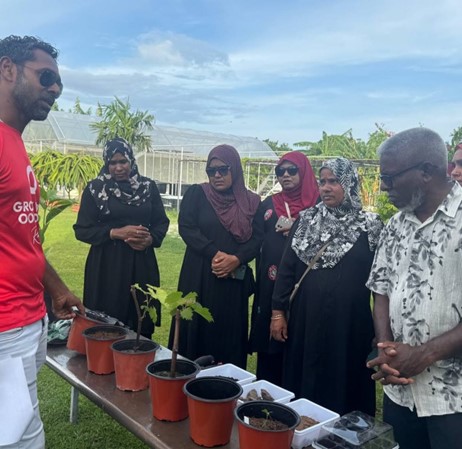
The Maldives National University (MNU), in collaboration with the UK Centre for Ecology & Hydrology (UKCEH), is jointly executing the Sustainable Nitrogen Management for a Clean and Healthy Ocean Maldives (CHOMV) project, associated with the United Nations Environment Programme (UNEP) and funded by the Global Environment Facility (GEF).
The project addresses nutrient pollution from agricultural runoff, industrial discharges, and untreated wastewater, with particular emphasis on nitrogen and phosphorus entering coastal and marine environments. Excessive nutrient enrichment can contribute to harmful algal blooms, oxygen depletion, and deterioration of marine water quality, threatening coral reef ecosystems, marine biodiversity, and coastal livelihoods.
A key technological component of the project involves developing nutrient recovery systems capable of extracting nutrients from untreated wastewater and converting them into liquid fertiliser for agricultural use. This approach aims to reduce nutrient discharges into coastal waters while promoting resource recovery and circular economy practices.
The project also seeks to strengthen national capacity for quantitative nutrient pollution monitoring, environmental data analysis, and evidence-based marine pollution management. Through the promotion of innovative financing mechanisms, including Nitro-Finance partnerships, the initiative aims to encourage private-sector investment in nutrient recovery technologies and sustainable nutrient management.
An important anticipated policy outcome is the development of the Maldives’ first National Nitrogen Action Plan, intended to strengthen national governance and establish coordinated approaches to reducing nitrogen pollution.
Through its participation, MNU contributes scientific expertise and research capacity to addressing land-based sources of marine pollution and supporting sustainable management of coastal and marine ecosystems.
Contribution to the Sustainable Development Goals: The project directly supports SDG 14 – Life Below Water, particularly Target 14.1 (preventing and significantly reducing marine pollution, especially from land-based activities). It also contributes to SDG 6 – Clean Water and Sanitation, particularly Targets 6.3 (improving water quality and reducing pollution) and 6.a (international cooperation and capacity-building in water-related activities), and SDG 12 – Responsible Consumption and Production, particularly Target 12.5, through proposed nutrient recovery and resource reuse.
Research Funding for Technology-Driven Coastal Safety and Monitoring
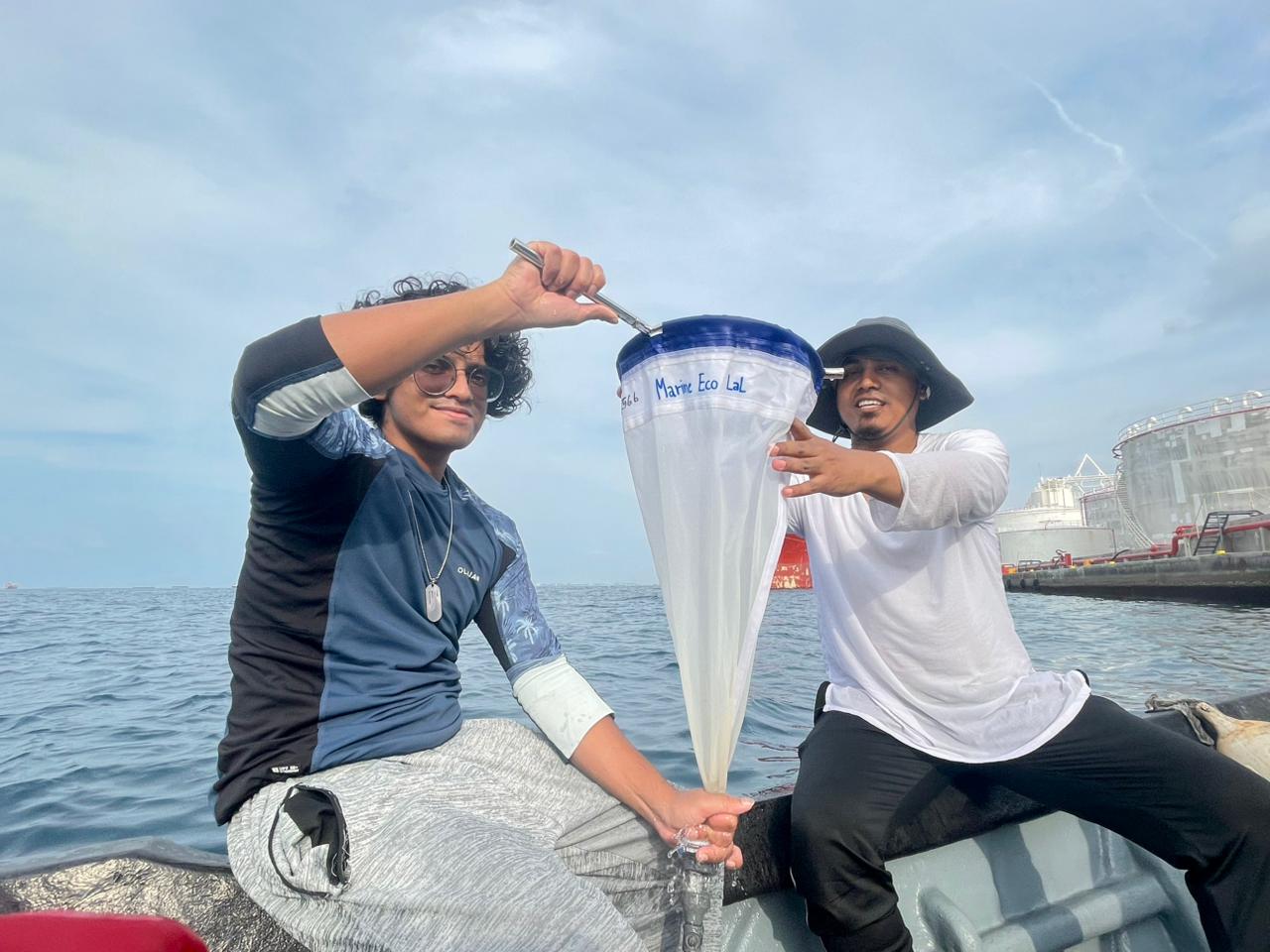
The Maldives National University supports the development of innovative technologies through research funding initiatives that address national environmental and societal challenges.
Under the National Research Fund’s Emerging Research Grants programme, the research project “AEGIS-M: An Edge-AI System for Automated Drowning Detection and Harbor Security” received funding to develop an artificial intelligence-based system for automated drowning detection and harbour security.
The project focuses on the application of edge artificial intelligence to improve monitoring and safety in coastal and harbour environments. By exploring automated detection technologies, the research aims to strengthen capabilities for identifying potential drowning incidents and supporting safer use of coastal infrastructure.
The initiative demonstrates MNU’s engagement in applied technological research and the development of locally relevant AI solutions. It also highlights opportunities for integrating intelligent monitoring technologies into coastal infrastructure management and public safety systems.
International Collaboration for Coral Reef Protection and Sustainable Fisheries
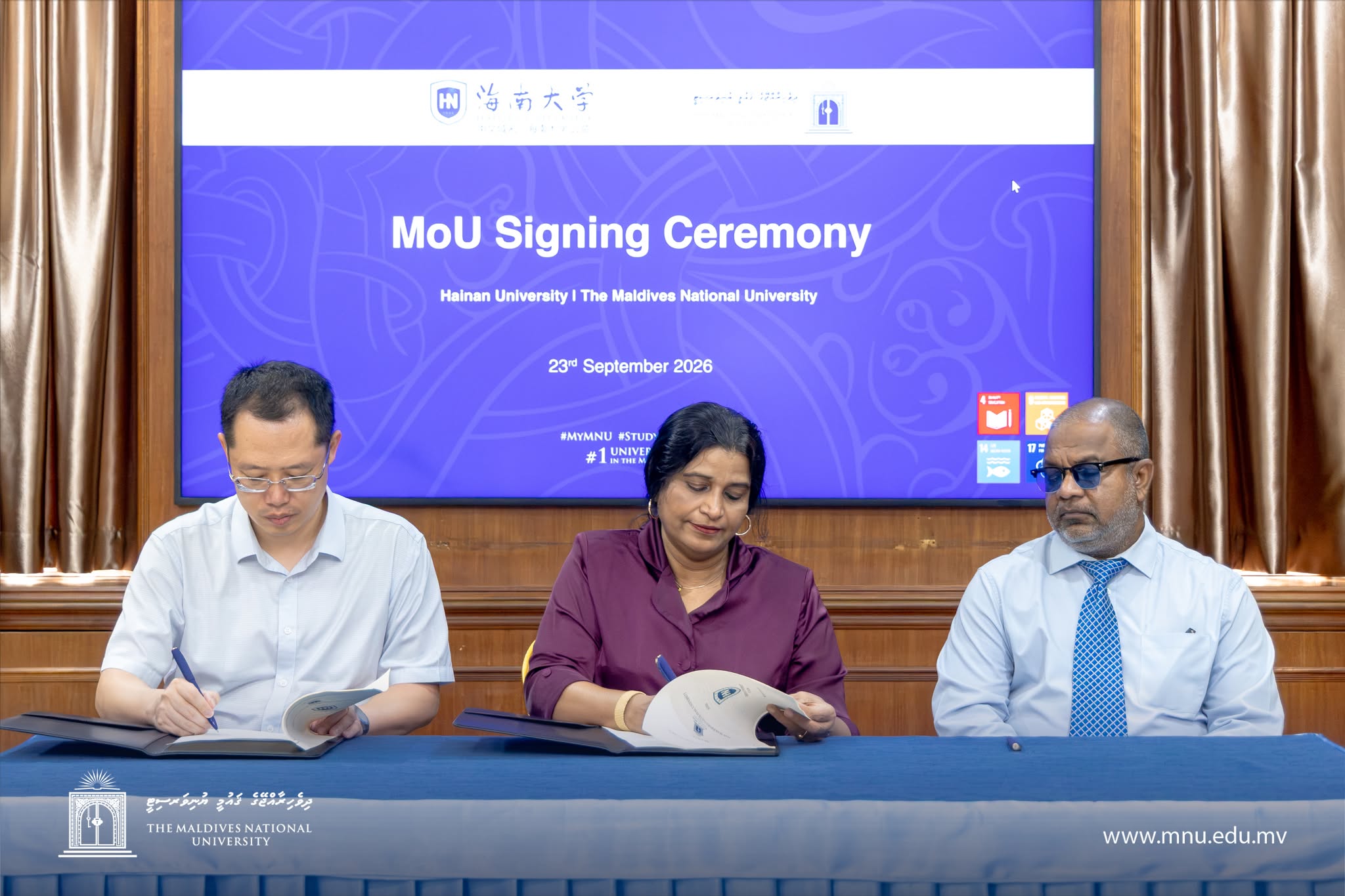
The Maldives National University has strengthened its international scientific partnerships through a five-year Memorandum of Understanding with the School of Marine Biology and Fisheries at Hainan University, China, focusing on marine resource management, coral reef conservation, and sustainable fisheries development.
The agreement provides a framework for collaborative scientific research, academic exchanges, and knowledge transfer through the Science and Technology Backyard Initiative. Areas of cooperation include marine fishery resource management, coral reef protection, sustainable utilisation of marine resources, and the application of scientific research to environmental management challenges.
Through the partnership, the institutions aim to promote joint research activities, faculty and student exchanges, and opportunities to strengthen scientific and technical capacity in marine sciences. The collaboration also provides a platform for exploring research-based approaches to addressing pressures on coral reef ecosystems and fisheries resources.
The agreement reflects MNU’s commitment to advancing international cooperation in marine science, facilitating scientific knowledge exchange, and strengthening institutional capacity to support sustainable management of the Maldives’ marine resources.