Strengthening Marine and Coastal Ecosystem Conservation through Protected Area Ranger Training
The Maldives National University (MNU), in collaboration with the Ministry of Tourism and Environment, has strengthened national capacity for biodiversity conservation and protected area management through the development and delivery of the Maldives’ first Basic Rangers Training Course under the ENDhERI project. The initiative responds to the growing need for qualified conservation professionals to support the effective management of the country’s extensive network of protected areas, including ecologically significant marine and coastal ecosystems.
Following the signing of an agreement in January 2025, MNU delivered the inaugural 12-week training programme at its Laamu Gan Campus, with 17 participants graduating in July 2025. The graduates included ten scholarship recipients from Laamu Atoll and seven individuals already engaged in conservation-related roles across the Maldives. The programme combined theoretical instruction with practical fieldwork, covering environmental science, environmental legislation and enforcement, community engagement, environmental awareness, basic computing and maritime navigation. These competencies are essential for strengthening protected area management, supporting conservation enforcement and promoting the sustainable use of natural resources.
The training was further supported by Maldives Resilient Reefs (MRR), which delivered practical sessions on coral reef and seagrass monitoring techniques. Participants from Laamu, Addu, Alif Dhaalu, Shaviyani and Baa atolls gained exposure to ecological assessment methods relevant to monitoring marine ecosystem health and identifying conservation priorities. By developing practical monitoring and management skills, the initiative contributes to strengthening local capacity for biodiversity protection and ecosystem stewardship.
Building on this initiative, MNU’s College of Fisheries and Ocean Sciences (CFOS) is developing a Level 4 Advanced Certificate in Protected Areas Management and Ranger Training to expand professional training opportunities in conservation management. In November 2025, MNU also signed an agreement with the Ministry to develop a Diploma in Protected Area Management under the IUCN-funded CATENATE project, with delivery planned to commence in 2027. These developments reflect MNU’s continued commitment to establishing long-term educational pathways for environmental and marine conservation professionals.
The initiative aligns with MNU’s Sustainability Policy and Climate and Environment Research Framework 2025–2030, which emphasise environmental conservation, sustainability-focused education, research capacity development, community engagement and collaboration with national and international partners. Through specialised training and institutional partnerships, MNU contributes to developing the human resources and technical expertise required for effective protected area management in the Maldives.
This initiative supports Sustainable Development Goal 14 (Life Below Water), particularly Target 14.2, which promotes the sustainable management and protection of marine and coastal ecosystems, Target 14.5, which focuses on conserving coastal and marine areas, and Target 14.a, which encourages the development of scientific knowledge and research capacity for improved ocean health. By training conservation professionals and expanding opportunities for specialised education, MNU contributes to strengthening biodiversity protection, ecosystem monitoring and the long-term management of the Maldives’ marine and coastal protected areas.
Advancing Coral Reef Biodiversity Conservation through the Map the Giants Initiative

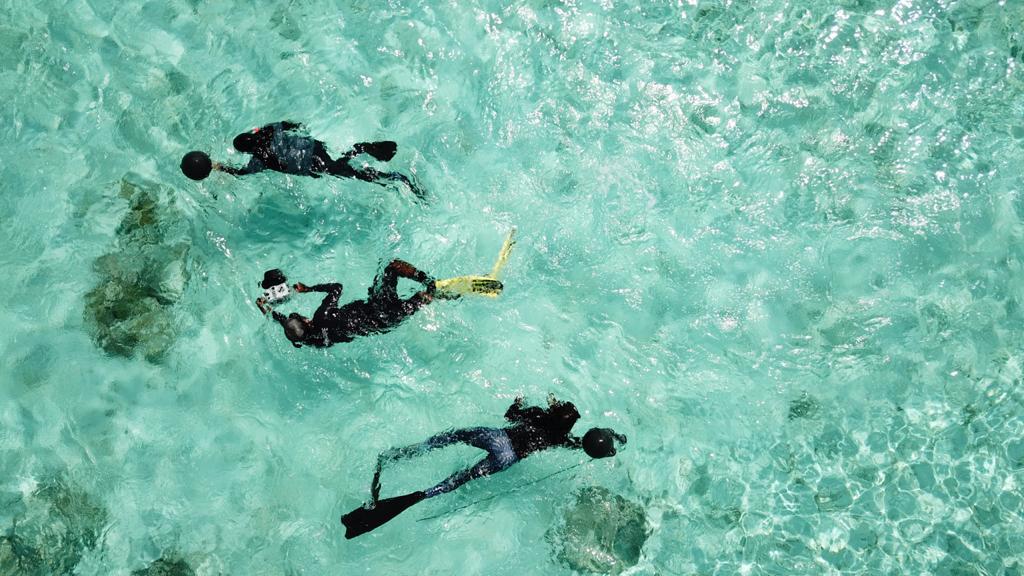
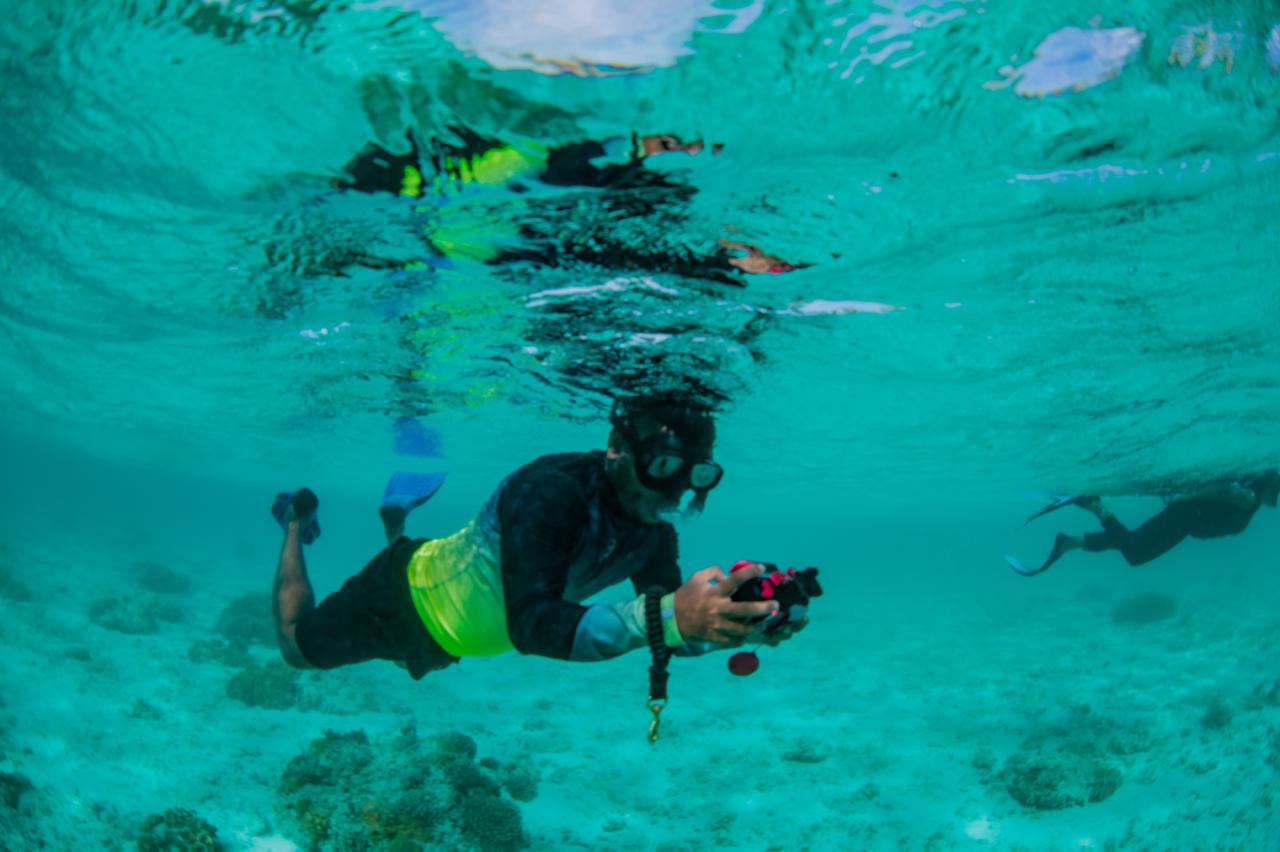
The Maldives National University (MNU), through its College of Fisheries and Ocean Sciences (CFOS), is supporting student engagement in international marine biodiversity research through participation in the Map the Giants initiative, a global citizen-science project dedicated to identifying, studying and protecting exceptionally large coral colonies. Ahmed Raif Shahid, a Marine Science student at MNU, was selected to join a Map the Giants research expedition through a full scholarship, providing an opportunity to gain practical experience in coral reef research and conservation.
The Map the Giants initiative focuses on documenting giant coral colonies exceeding five metres in any linear dimension. These exceptionally large and often long-lived corals represent important components of reef biodiversity and may provide valuable insights into historical ocean conditions, coral growth and ecosystem responses to environmental change. Through observations and reports contributed by divers, researchers and ocean enthusiasts, the project aims to locate previously undocumented giant corals, investigate their ecological significance and promote their conservation. A seminar conducted by the MaRHE Center also highlighted the initiative and its contribution to scientific understanding of coral reef ecosystems.
Raif’s selection for the expedition represents an opportunity for MNU students to engage directly with international marine scientists and develop practical research skills in coral identification, ecological observation and underwater scientific exploration. As a scuba diving instructor and Marine Science student, Raif has expressed a strong commitment to promoting ocean awareness and inspiring Maldivians to appreciate and protect their marine environment. His involvement highlights the importance of creating opportunities for young Maldivian scientists to participate in international research and contribute to the conservation of the country’s marine biodiversity.
The initiative aligns with MNU’s Sustainability Policy and Climate and Environment Research Framework 2025–2030, which emphasise environmental conservation, scientific research, student capacity development, international collaboration and community engagement. By supporting opportunities for students to participate in collaborative marine research and citizen-science initiatives, MNU contributes to developing the next generation of marine scientists and strengthening national expertise in biodiversity conservation.
This engagement supports Sustainable Development Goal 14 (Life Below Water), particularly Target 14.2, which promotes the sustainable management and protection of marine and coastal ecosystems, and Target 14.a, which focuses on increasing scientific knowledge and strengthening marine research capacity. Through international research exposure, scientific training and citizen-science engagement, MNU contributes to advancing knowledge of coral reef biodiversity and building local capacity to support the long-term conservation of marine ecosystems in the Maldives.
Soneva CSM Partnership: Coral Reef Research and Student Internships
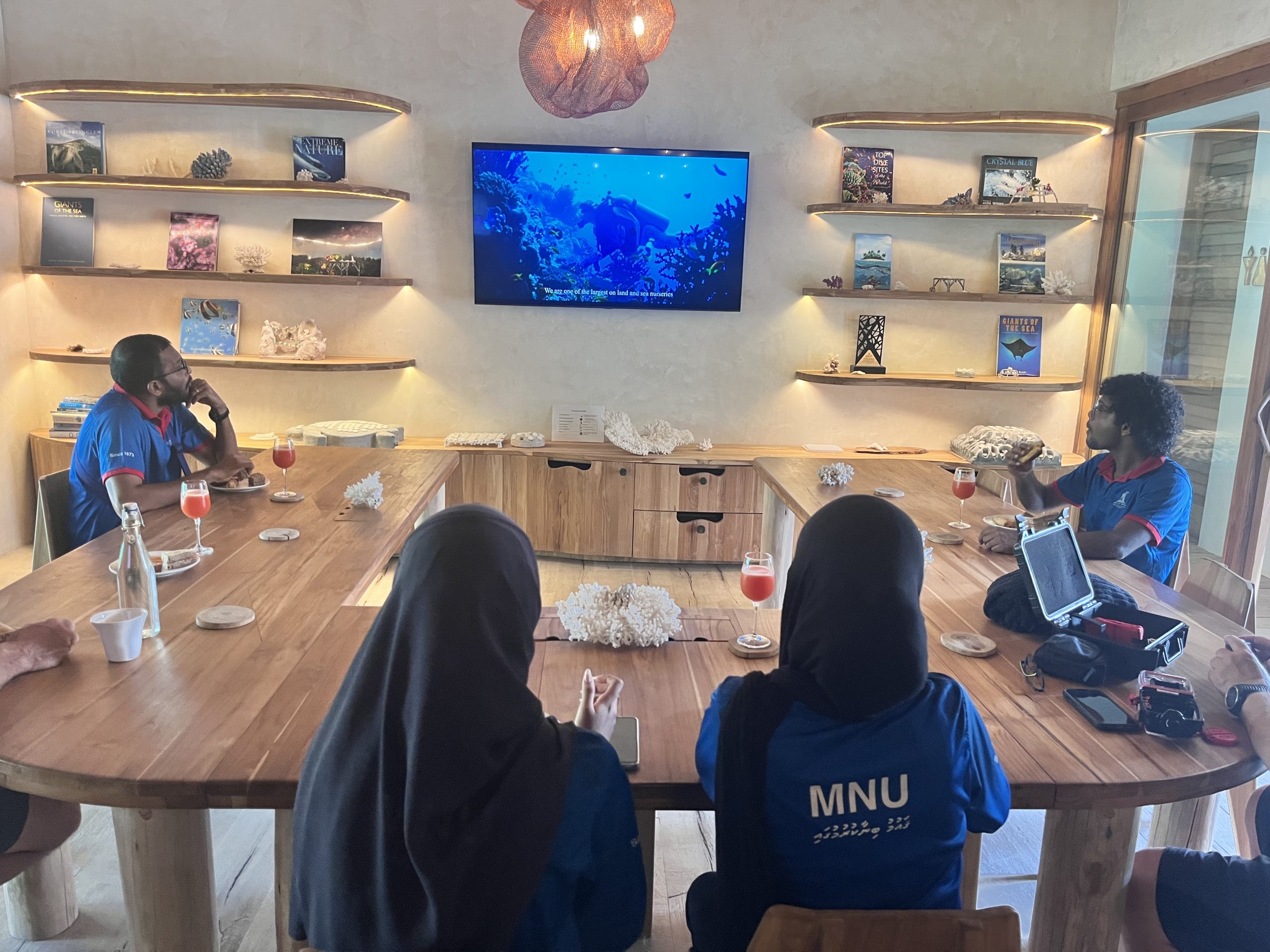
In September 2025, MNU signed a Memorandum of Understanding with Soneva Conservation and Sustainability Maldives (Soneva CSM), the NGO supported by Soneva Resorts that focuses on coral reef restoration and marine biodiversity monitoring. Under the agreement, Soneva CSM provides MNU students with opportunities to participate in research projects and internships, gaining practical experience in coral reef ecology and marine conservation. The partnership also facilitates the exchange of research findings and creates a platform for future joint research initiatives.
Strengthening Coral Reef Conservation and Marine Biodiversity Research through Partnership with Banyan Tree Vabbinfaru
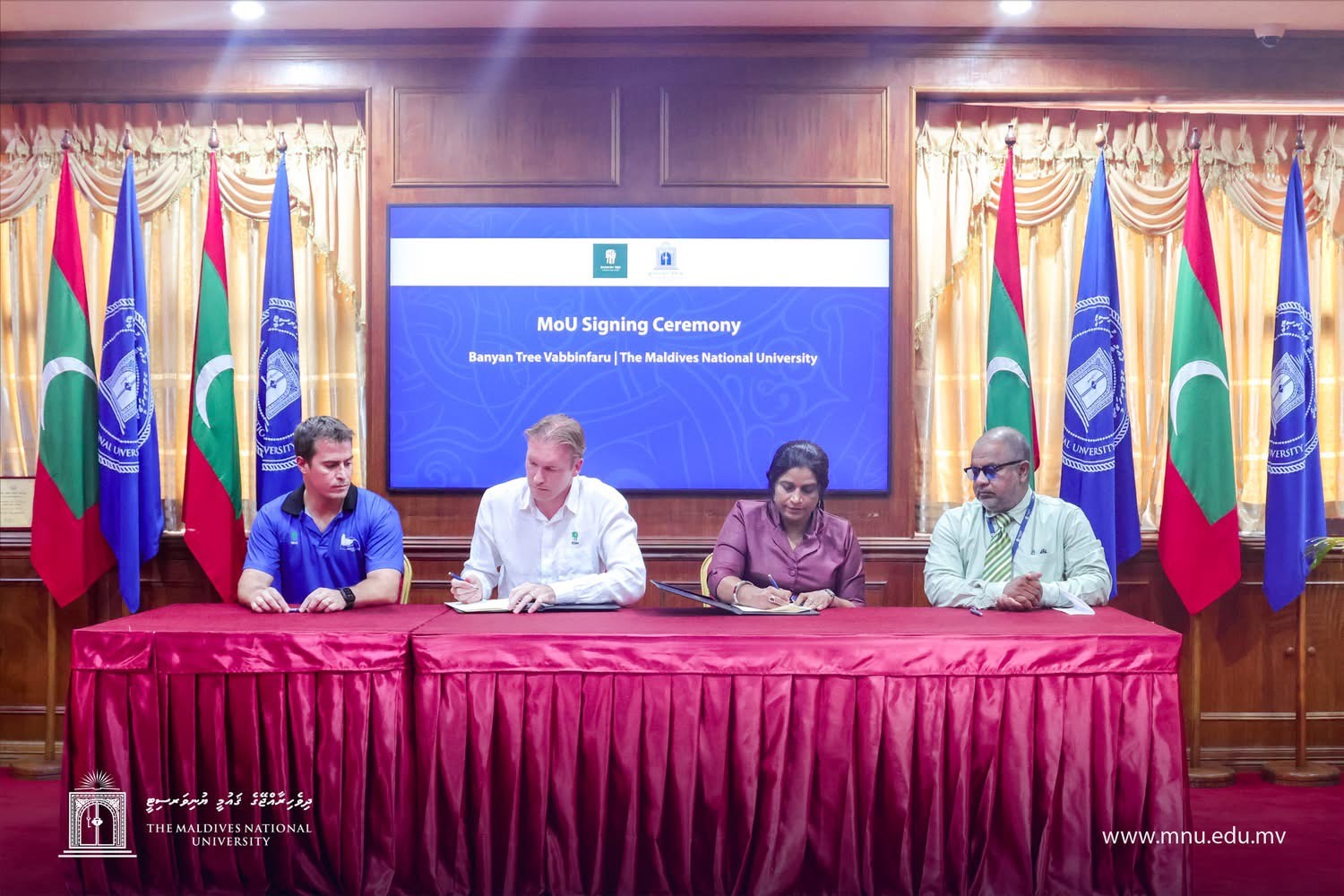
The Maldives National University (MNU) formalised a strategic partnership with Banyan Tree Vabbinfaru in September 2025 to advance marine biodiversity conservation, ecological research and practical education. The collaboration provides opportunities for MNU students and researchers to utilise the resort’s house reef and surrounding lagoon as a natural research environment, supporting scientific investigations into coral reef ecosystems and marine biodiversity in the Maldives.
The partnership focuses on collaborative research and monitoring of coral reef health, including assessments of reef resilience to coral bleaching and other environmental pressures. It also supports long-term ecological studies of marine megafauna, particularly reef sharks and sea turtles, to strengthen scientific understanding of their populations, habitat use and conservation needs. Through the Banyan Tree Marine Lab, the collaboration offers opportunities for MNU students to participate in internships and practical training in scientific diving, ecological monitoring and marine conservation techniques.
The initiative aligns with MNU’s Sustainability Policy and Climate and Environment Research Framework 2025–2030, which emphasise environmental conservation, applied scientific research, research capacity development and collaboration with external partners. By connecting academic research with field-based conservation activities and private-sector expertise, MNU seeks to strengthen national capabilities in marine ecosystem monitoring and biodiversity conservation.
This partnership contributes to Sustainable Development Goal 14 (Life Below Water), particularly Target 14.2, which promotes the sustainable management and protection of marine and coastal ecosystems, and Target 14.a, which emphasises increasing scientific knowledge and strengthening marine research capacity. Through collaborative research, practical training and knowledge exchange, MNU supports efforts to improve scientific understanding of coral reef health, conserve marine biodiversity and strengthen the long-term resilience of marine ecosystems in the Maldives.
Strengthening Marine Biodiversity Conservation through Educational Visits to Baa Atoll UNESCO Biosphere Reserve
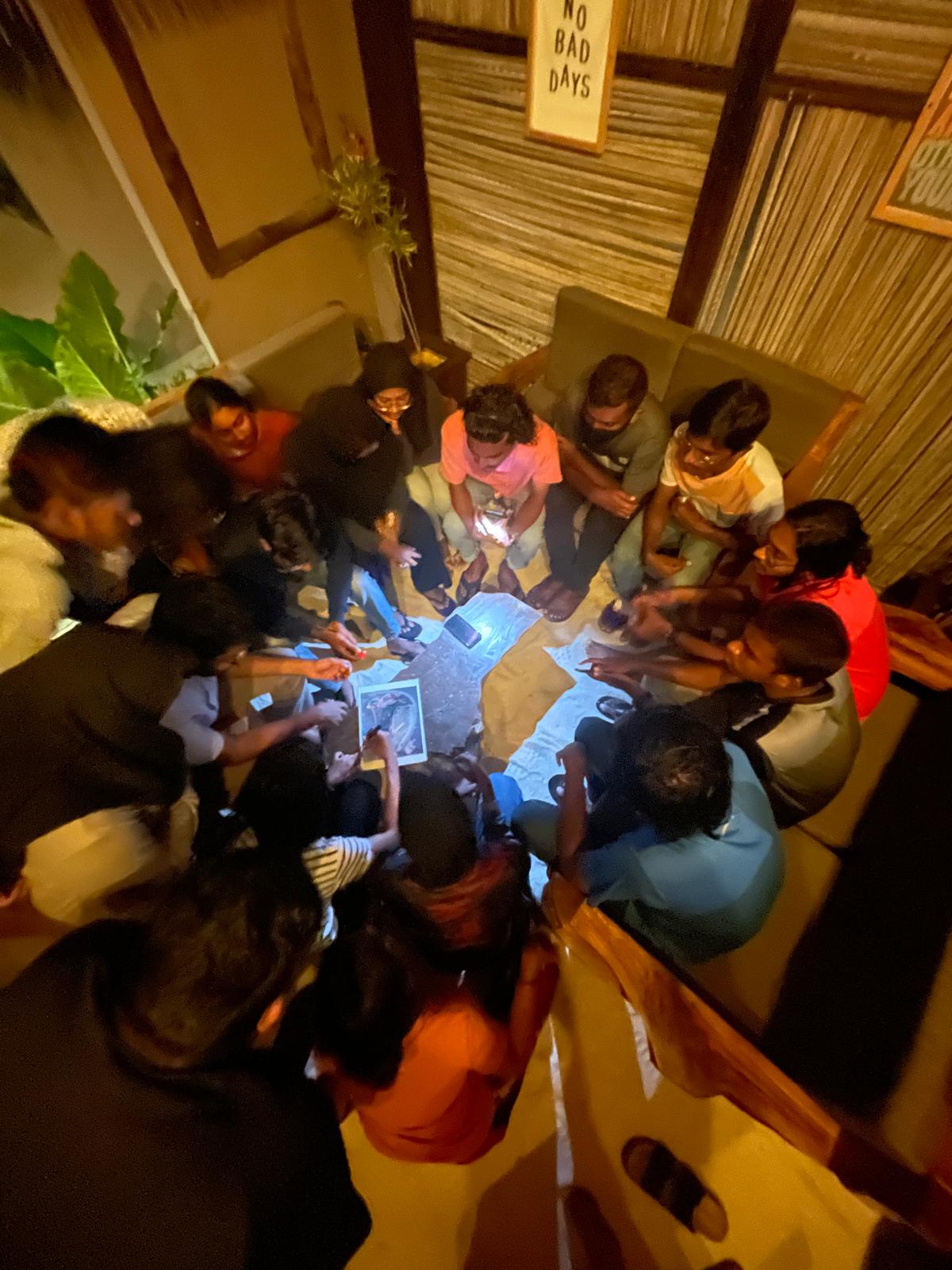
The Maldives National University (MNU), through its College of Fisheries and Ocean Sciences (CFOS), integrates practical learning experiences into its marine science programmes to strengthen students’ understanding of marine biodiversity conservation and protected area management. In November 2025, first-year Bachelor of Marine Science students visited the Baa Atoll UNESCO Biosphere Reserve Office in Eydhafushi, gaining insights into the conservation and sustainable management of marine ecosystems within one of the Maldives’ most ecologically significant regions.
The visit introduced students to the biodiversity of Baa Atoll, particularly Hanifaru Bay, an internationally recognised aggregation site for reef manta rays and whale sharks. Students learned about the regulatory and management measures implemented to protect these species and their habitats, including restrictions on boat access and visitor numbers, ranger patrols, and tourism-related conservation fees that contribute to community initiatives. The visit also highlighted the importance of marine education, scientific monitoring and research collaborations involving organisations such as the Maldives Manta Conservation Programme.
Through engagement with protected area management professionals, students gained an understanding of how scientific research, conservation regulations, community participation and sustainable tourism practices contribute to the protection of marine biodiversity. The experience strengthened their appreciation of the relationship between ecosystem conservation, responsible resource use and the long-term ecological and economic benefits of effectively managed marine protected areas.
The initiative supports Sustainable Development Goal 14 (Life Below Water), particularly Target 14.2, which focuses on sustainably managing and protecting marine and coastal ecosystems, Target 14.5, which promotes the conservation of coastal and marine areas, and Target 14.a, which emphasises strengthening scientific knowledge and marine research capacity. Through field-based education and engagement with conservation practitioners, MNU supports the development of national capacity to conserve marine biodiversity and maintain the ecological integrity of the Maldives’ marine ecosystems.
Strengthening Mangrove Ecosystem Conservation through Ecological Fieldwork in Huraa
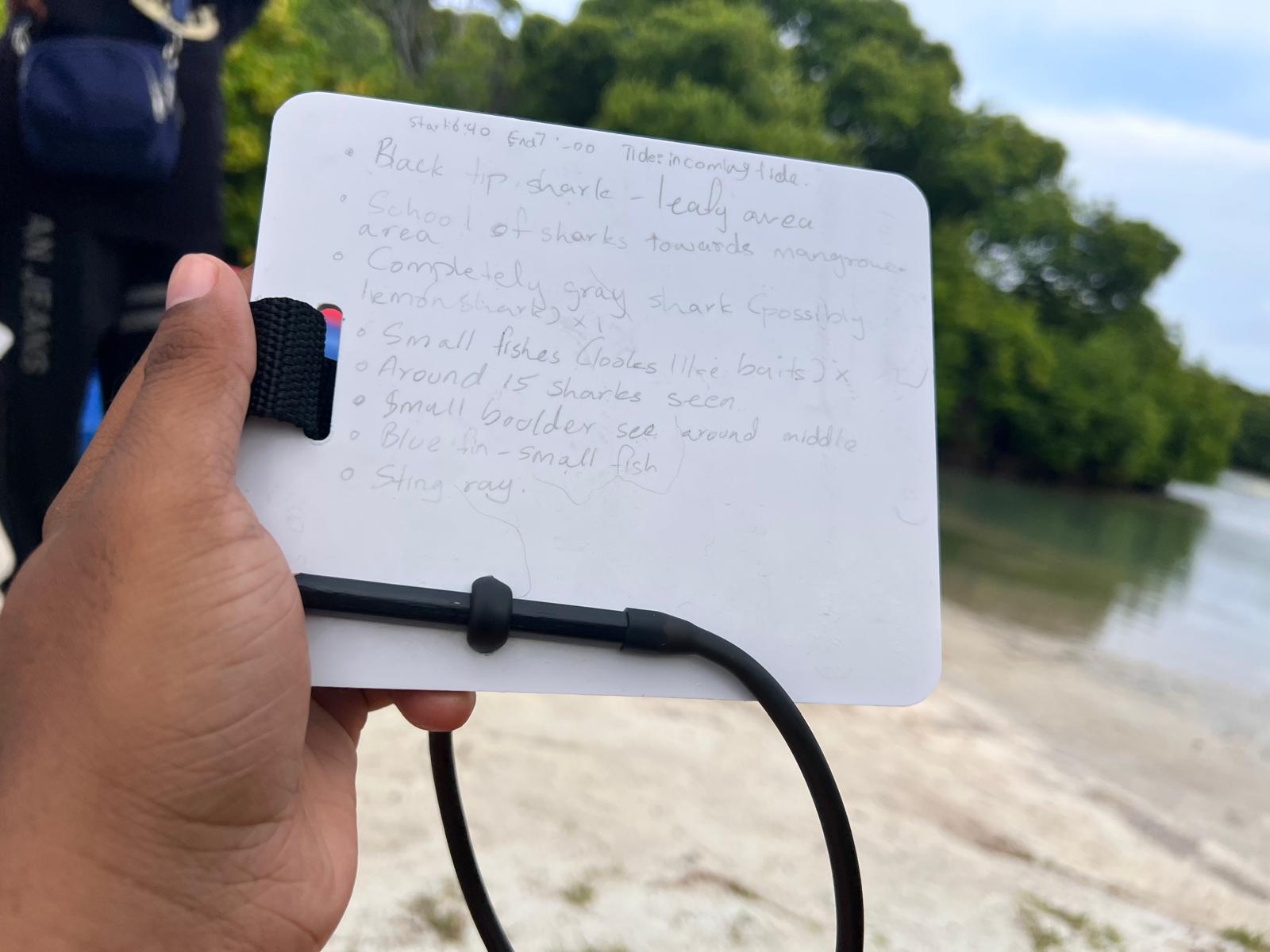
The Maldives National University (MNU), through its College of Fisheries and Ocean Sciences (CFOS), conducts regular ecological field visits to Huraa Island to strengthen students’ practical understanding of mangrove ecosystems, coastal biodiversity and environmental conservation. Huraa is home to a protected mangrove area covering approximately 5.3 hectares, supporting more than 4,000 mangrove trees representing four species. The site provides an important natural learning environment for studying the ecological functions, biodiversity and conservation needs of mangrove ecosystems in the Maldives.
During these field visits, students undertake ecological surveys to assess mangrove species composition, vegetation health, natural regeneration and the abundance of associated fauna, including fiddler crabs and mangrove crabs. Students also conduct field observations and ecological assessments of nearby seagrass meadows and sandy beach environments, developing practical skills in biodiversity monitoring, habitat assessment and environmental data collection. These activities provide opportunities to examine the ecological connections between coastal habitats and understand threats to their integrity, including habitat modification and the overexploitation of ecologically important species.
The initiative aligns with MNU’s Sustainability Policy and Climate and Environment Research Framework 2025–2030, which emphasise environmental conservation, sustainability-focused education, scientific research and the development of practical research skills. By integrating field-based ecological monitoring into marine science education, MNU contributes to developing local scientific expertise and strengthening the knowledge needed to support evidence-based conservation and sustainable ecosystem management.
This educational initiative contributes to Sustainable Development Goal 14 (Life Below Water), particularly Target 14.2, which promotes the sustainable management and protection of marine and coastal ecosystems, and Target 14.a, which focuses on increasing scientific knowledge and strengthening marine research capacity. Through practical ecological education and field-based research training, MNU supports the development of future marine scientists and environmental professionals equipped to contribute to the conservation of mangrove ecosystems, coastal habitats and marine biodiversity in the Maldives.
Strengthening Sea Turtle Conservation through Partnership with the Olive Ridley Project
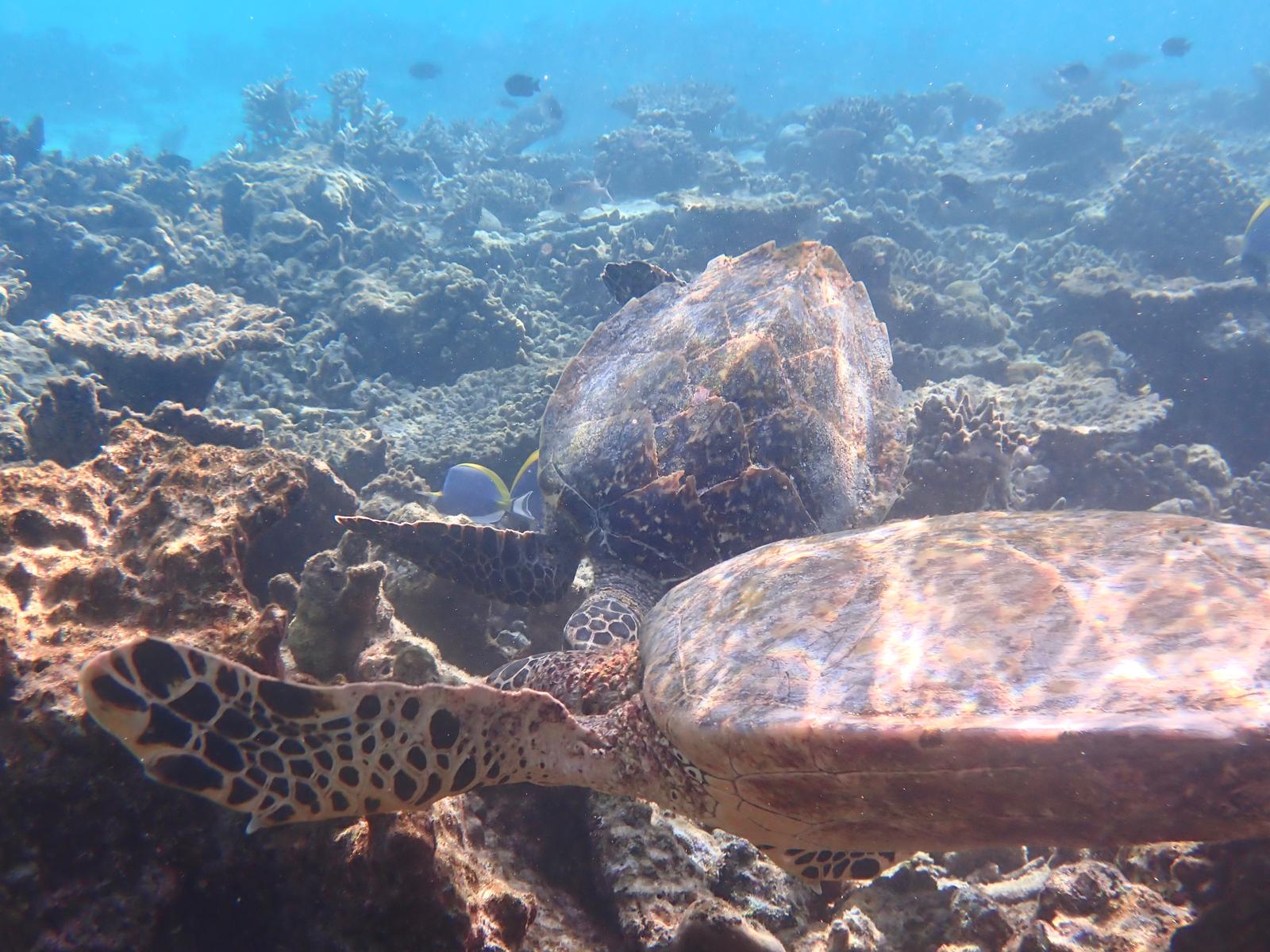
The Maldives National University (MNU) has established a strategic partnership with the Olive Ridley Project (ORP) – Maldives through the signing of a Memorandum of Understanding (MoU) to advance marine biodiversity conservation, scientific research and specialised education. The agreement was signed at MNU’s central campus by Vice-Chancellor Dr. Aishath Shehenaz Adam, representing MNU, and Fathimath Isha Afeef, Executive Director of ORP–Maldives.
The collaboration brings together ORP’s expertise in sea turtle veterinary care, rehabilitation and conservation research with MNU’s academic and research capabilities. A key component of the partnership is the planned development of a specialised course in sea turtle medicine and surgery, designed to equip marine science students and local veterinary professionals with practical knowledge and skills in sea turtle health, trauma management, rehabilitation and surgical interventions. The programme aims to strengthen national capacity to respond to threats affecting marine turtles, particularly injuries caused by abandoned, lost or discarded fishing gear and other human activities.
The partnership also creates opportunities for collaborative scientific research on sea turtle populations, movement patterns and habitat use through activities such as population monitoring, satellite tracking and habitat assessments. By facilitating student participation in conservation research and strengthening links between academic learning and field-based conservation practice, the initiative aims to build local expertise and contribute to a stronger scientific understanding of marine turtle ecology and conservation needs in the Maldives.
The partnership contributes to Sustainable Development Goal 14 (Life Below Water), particularly Target 14.2, which promotes the sustainable management and protection of marine and coastal ecosystems, and Target 14.a, which emphasises increasing scientific knowledge and developing research capacity to improve ocean health and enhance the contribution of marine biodiversity to sustainable development. Through this partnership, MNU aims to strengthen locally led marine conservation, develop specialised scientific expertise and support the long-term protection of sea turtles and marine biodiversity in the Maldives.