Sustainability Policy: carbon neutrality by 2030 and sustainable transport
MNU’s Sustainability Policy, approved by the Academic Senate on 28 September 2025, sets the university’s main sustainability target: to “achieve carbon neutrality by 2030 through comprehensive carbon reduction initiatives”. Alongside it, the policy commits MNU to energy efficiency, renewable energy, less water use and better waste management. Section 4.3, on transport, commits the university to encouraging walking, cycling and public transport and to exploring electric or hybrid transport for its operations. The Sustainability Committee, whose terms of reference took effect on 26 October 2025, must develop key performance indicators and report to the Academic Senate at least once a year. For SDG 11, this gives MNU a dated, university-wide target. It does not set a specific target for sustainable commuting, such as the share of staff and students walking or using public transport, which 11.4.1 looks for.
Commitment to carbon neutrality (MNU sustainability pages)
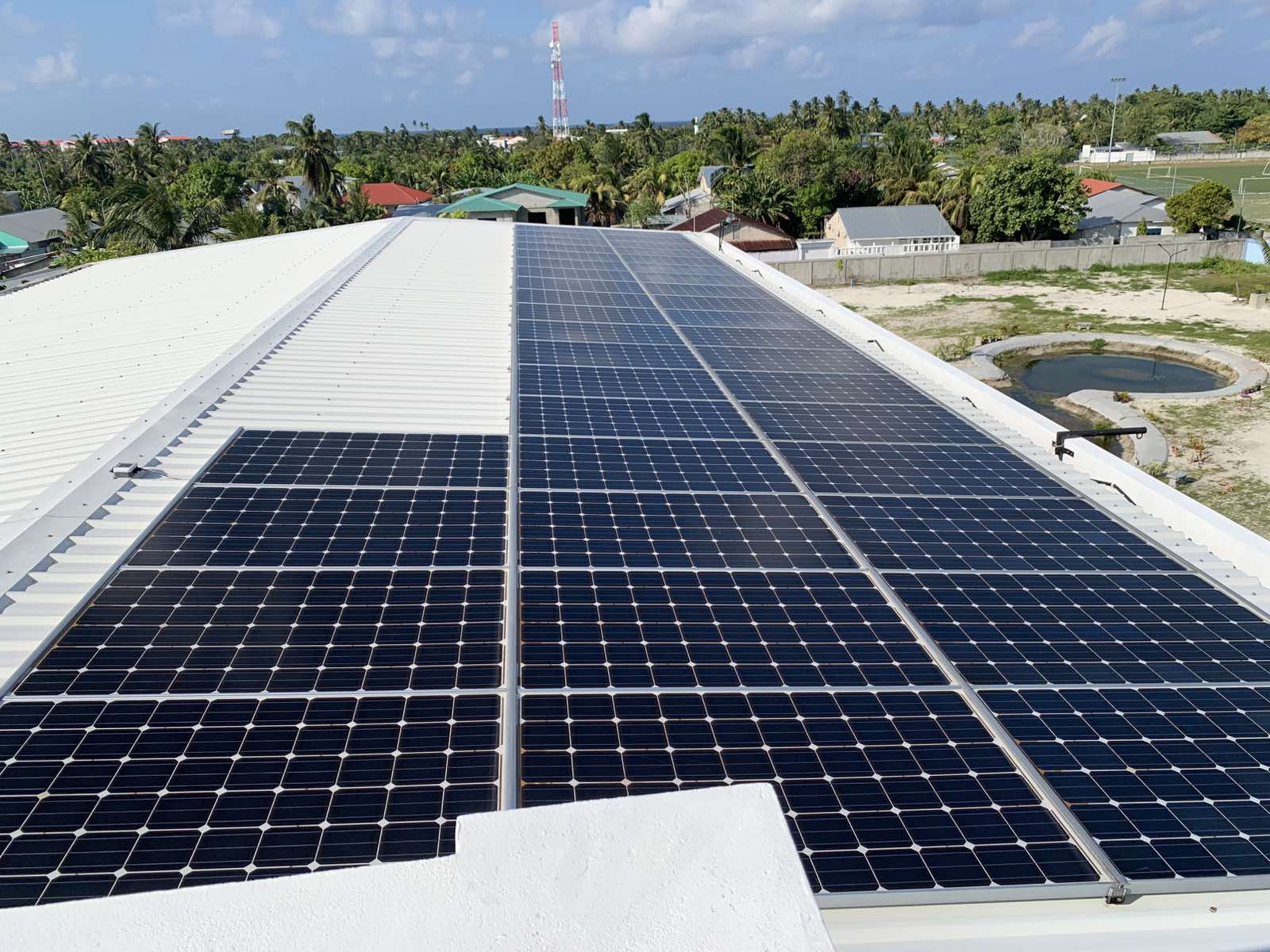
MNU’s sustainability web pages set out the university’s public commitment to carbon neutrality and the steps already taken. They report that solar panels have been installed at the Central Administration buildings in Malé and at the Hithadhoo campus, to reduce carbon emissions and lower energy costs. They also note that MNU launched a Bachelor of Electrical and Electronics Engineering in 2025 with a focus on green energy, and that in October 2025 it became a member of the International Zero Carbon Island Cooperation Organisation (IZCICO). For SDG 11, these pages show that MNU’s carbon neutrality commitment is public and backed by some action. They give no target year, solar capacity or emissions figures, and they focus on energy rather than commuting, so they support the policy target rather than replace it. The proof is the two MNU sustainability pages.
Sustainability training for all MNU staff
From 8 to 14 April 2026, MNU ran sustainability training for all of its teaching, administrative and support staff. Staff in Malé attended in person and staff at the other campuses joined online. The sessions were led by Dr Ibrahim Mohamed, an external member of the University Council and a sustainability specialist, and covered how to bring sustainability into curriculum, teaching and daily university operations. The Vice Chancellor described the training as an essential part of MNU’s wider sustainability agenda. Training for student leaders was to follow from 19 April 2026. For SDG 11, this shows MNU taking practical steps to involve its whole workforce in meeting the targets set in its Sustainability Policy. The training took place in 2026, after the 2025 data year, so it should be reported as recent progress. The proof is MNU’s news article.