On 8 September 2025, MNU conducted a handwashing awareness programme for 190 preschool children and teachers at Falah Preschool. Lecturers and second-semester nursing students demonstrated proper handwashing techniques and engaged children in practical demonstrations. The programme promoted awareness of hygiene, sanitation and the responsible use of water in maintaining public health. By introducing good hygiene practices at an early age, MNU contributes to building a more informed and health-conscious community.
MNU contributes to sustainable water management through research titled Unveiling Island Water Demand Patterns: A Comparative Analysis Across Scales in the Maldives, published in 2025. Conducted by MNU researchers in collaboration with the Fenaka Institute for Training and Research, the study examines water-demand patterns across different scales in the Maldives. This research provides evidence to support better understanding of water consumption, resource requirements and planning for sustainable water supply. The findings can help inform water conservation strategies and encourage more responsible water use within island communities.
Through the international RECOVER project (Resilience to Climate Vulnerability and Environmental Risk), MNU conducted stakeholder consultations and community engagement activities in Malé during 2025. These activities involved vulnerable community groups to understand challenges associated with water accessibility, availability and security, particularly during climate-related crises. The initiative incorporated community perspectives into research and policy recommendations, supporting inclusive water-resource planning and promoting awareness of the importance of sustainable water management.
As part of the RECOVER project, MNU conducted a household water-usage survey from October to December 2025. The survey collected information on household water consumption to improve understanding of water-use patterns and demand in Malé. The collected data is intended to support research on urban water security, resource management and climate resilience. This initiative contributes to evidence-based strategies for promoting responsible water consumption and improving sustainable water planning within the wider community.
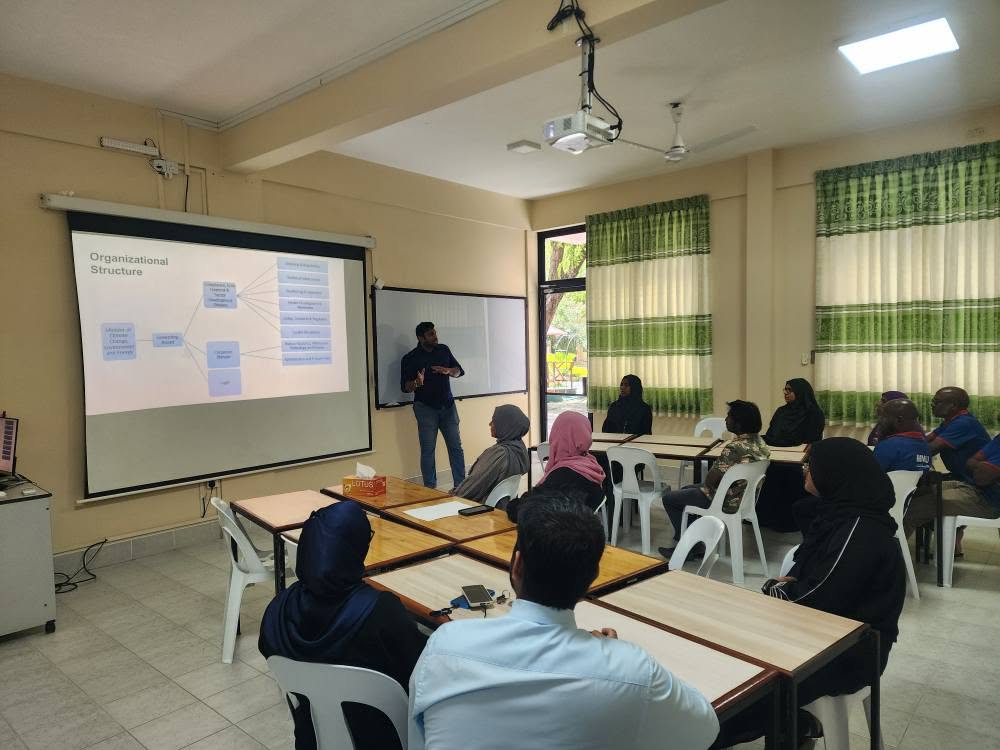
In collaboration with the Utility Regulatory Authority (URA), MNU Kulhudhuffushi Campus conducted an information session on 17 August 2025 to promote awareness of sustainable utility consumption. The session engaged 16 MNU staff and nine URA staff, providing practical guidance on water conservation, responsible utility usage and sustainable waste management. The initiative encouraged participants to adopt environmentally responsible practices and apply water-saving behaviours in their daily lives and communities.