Activities relating to this section
The Maldives National University, through the Maldives National Journal of Research (MNJR), published the research article “Unveiling Island Water Demand Patterns: A Multi-Scale Comparative Study in the Maldives” in Volume 13, Issue 1, on 31 July 2025. The study, authored by Ibrahim Miflal Fayaz and Suma Khalid Mohamed of the Fenaka Institute for Training and Research, examined water-demand patterns across HDh. Finey, M. Mulah and Gn. Fuvahmulah.
Using operational water-supply data, the study identified differences in peak demand and minimum night-flow patterns between the islands. The findings highlight the importance of understanding local water-consumption patterns when planning water-supply infrastructure. By supporting more accurate system design and helping to avoid over- or under-capacity infrastructure, the research contributes to sustainable water management and improved water security in island communities.
As part of the international RECOVER project, Resilience to Climate Vulnerability and Environmental Risk: Focus on Small Islands, the Maldives National University conducted a household water-use survey between October and December 2025. The survey aimed to improve understanding of household water-consumption patterns and the factors influencing water use in the Maldives.
The survey data analysis has been completed, and the report is under development. The research provides valuable information for understanding water demand and the challenges associated with water security in island communities. By generating evidence on household water use, the project supports informed planning and the development of more sustainable approaches to freshwater-resource management.
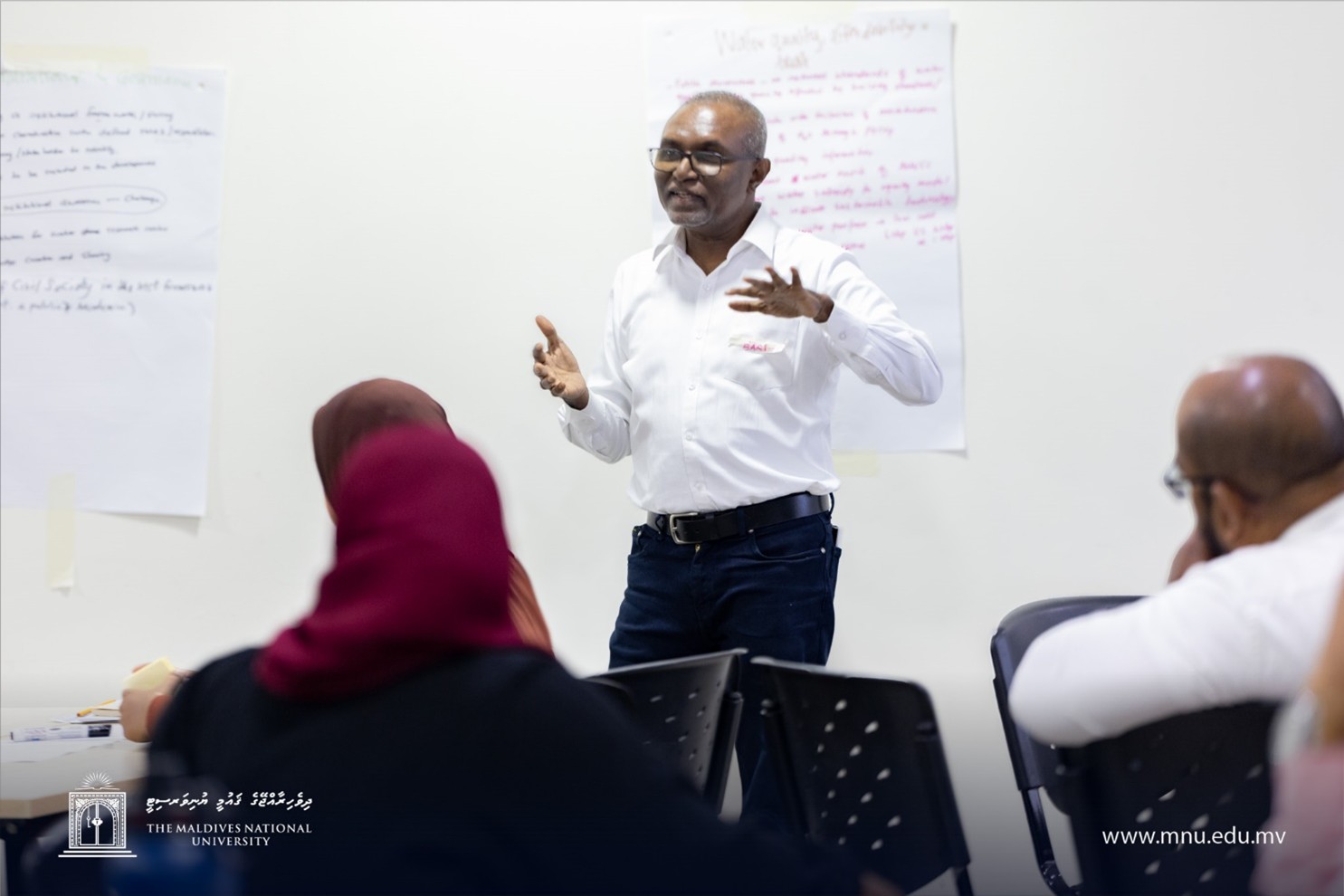
The Maldives National University organised stakeholder meetings and consultations under the RECOVER project to identify key challenges and risks associated with water security in small island communities. The consultations brought together government stakeholders, non-governmental organisations, representatives of vulnerable communities and project researchers to discuss water use, accessibility and security.
The discussions provided an opportunity for stakeholders and community representatives to share their experiences and contribute to the identification of locally relevant solutions. The activity supported a collaborative approach to water-resource management, recognising the importance of community participation in addressing water insecurity and strengthening the resilience of small island communities.
Participation: The Excel sheet does not specify the number of participants. The groups involved included government stakeholders, NGOs, vulnerable community representatives and project researchers.
The Maldives National University continued to advance research addressing water security and the sustainable management of freshwater resources in the Maldives. Research activities recorded by the Research Development Office included the completion of a Storm Water Management Model (SWMM) study for Malé and a student research project examining flooding risks in the capital.
Additional research focused on the climate resilience of Malé’s water system through a Hydro-Socio-Metabolic Risk analysis, groundwater quality and vulnerability, and rainfall trends and intensity–duration–frequency analysis. At the time of reporting, the Hydro-SMR paper had been submitted for publication, while the groundwater-quality and rainfall-analysis papers were under development.
Together, these studies contribute to a better understanding of the pressures affecting freshwater resources, including groundwater vulnerability, rainfall variability, urban development and climate-related risks. The findings can support evidence-based planning and more sustainable water-resource management in the Maldives.