Lifelong Learning Policy
Empowering learners, strengthening communities, and building sustainable futures.
Purpose
- Promote inclusive access to education at every stage of life.
- Support decent work and economic growth through skills development.
- Foster innovation, sustainability, and resilience in national development.
Core Commitments
- Equity & Inclusion: Opportunities for all, especially disadvantaged groups.
- Flexible Pathways: Non‑degree courses, workshops, and Recognition of Prior Learning.
- Digital Transformation: Expanding access through technology‑enabled platforms.
- Community Engagement: Outreach programs that strengthen health, well‑being, and civic participation.
- Global Collaboration: Partnerships with government, industry, and international bodies.
Implementation
- Leadership & Accountability: Guided by MNU’s Deputy Vice Chancellor (Academic Affairs).
- Quality Assurance: Benchmarked against national and international standards.
- Capacity Building: Staff training in digital tools and sustainable curriculum design.
- Monitoring & Impact: Annual reviews with measurable outcomes and stakeholder feedback.
Why It Matters
This policy ensures that learning is:
- Inclusive – no one left behind.
- Future‑ready – aligned with digital innovation and sustainability.
- Globally connected – strengthening partnerships for the goals.
MNU BEFORE LIFELONG LEARNING POLICY
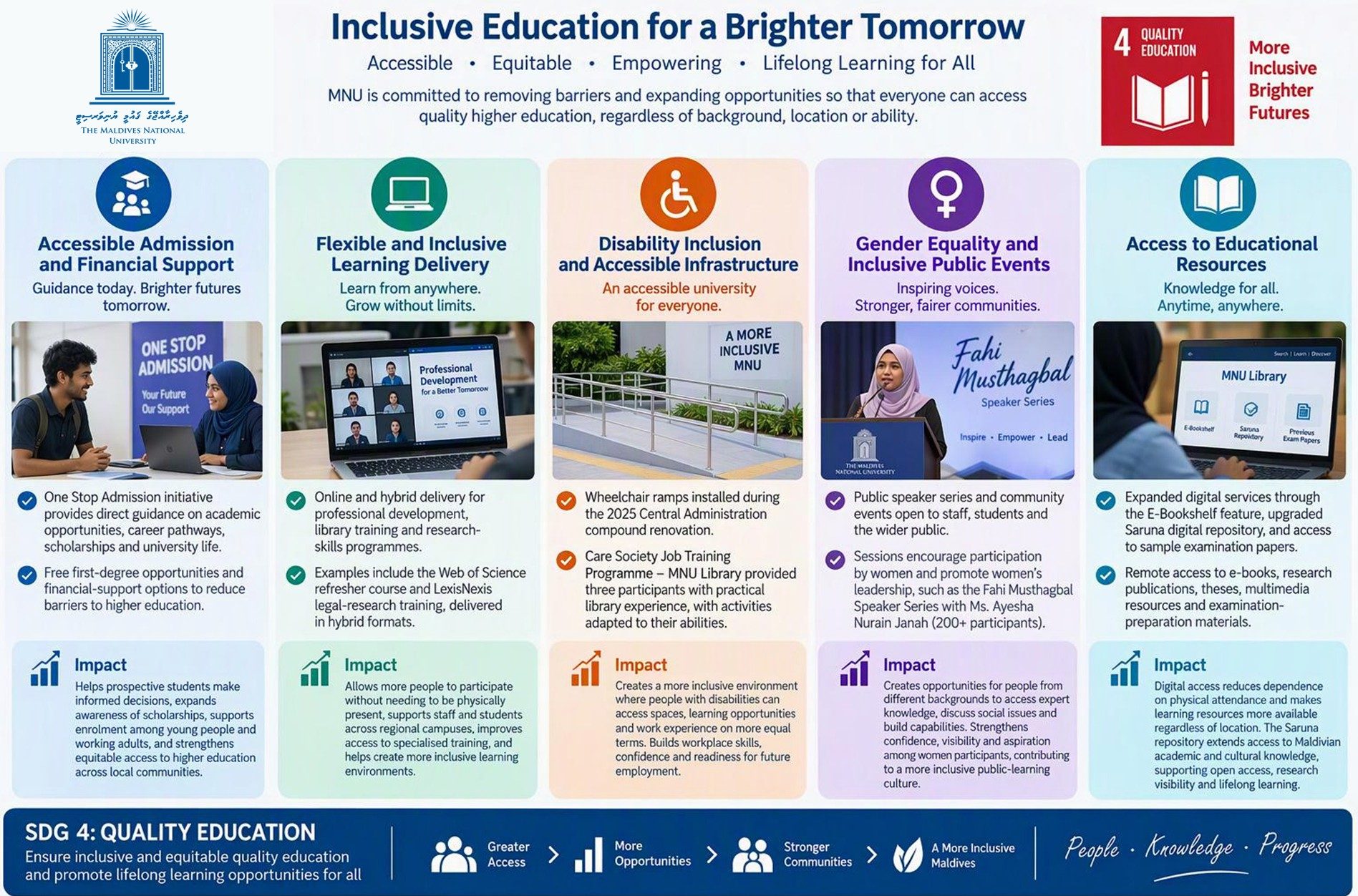
The Maldives National University (MNU) recognises lifelong learning as a fundamental pillar of its commitment to inclusive and equitable education. This commitment is embedded in Guiding Value 4, which states: “We are dedicated to life-long learning, emphasizing teamwork and leadership.”
MNU’s dedication to lifelong learning predates its formal Lifelong Learning Policy and is reflected in its earlier institutional commitments, particularly the Disability Policy and the University’s guiding values. Through these commitments, MNU recognises the importance of removing barriers to education, promoting equal opportunities and supporting the participation of individuals with diverse needs and abilities.
Building on this foundation, MNU continues to strengthen access to lifelong learning through institutional policies and initiatives that encourage continuous personal, academic and professional development. The University remains committed to ensuring that learning opportunities are inclusive, accessible and available to all, advancing SDG 4 – Quality Education and the principle of leaving no one behind.
Research Ethics Policy
Purpose
- Safeguard human rights, dignity, and well‑being in all research.
- Ensure integrity, transparency, and accountability in knowledge creation.
- Promote responsible innovation that supports sustainable development.
Core Principles
- Integrity & Quality: Research must be designed and conducted to the highest standards.
- Informed Consent: Participants must be fully aware of purpose, methods, risks, and uses.
- Confidentiality & Privacy: Respect for personal data and anonymity.
- Voluntary Participation: Free from coercion or undue influence.
- Avoidance of Harm: Protect physical, emotional, and cultural well‑being.
- Independence & Transparency: Declare conflicts of interest openly.
Ethical Review Process
- Exempt Activities: Evaluations, public data analysis, or teaching reviews.
- Blanket Approval: Low‑risk classroom projects under 60 credits.
- Low‑Risk Projects: Everyday‑life level risks, supervised student research.
- Full Review: Required for higher‑risk or sensitive projects.
- Oversight: Managed by the MNU Research Ethics Committee (MNUREC).
Governance & Accountability
- Committee Leadership: Chaired by Deputy Vice Chancellor (Research & Innovation).
- Membership Diversity: Includes deans, academic experts, health specialists, psychologists, and external members.
- Monitoring & Reporting: Regular reviews, transparent decisions, and documented processes.
Supporting Students with Disability Policy
Purpose
- Guarantee inclusive education for students with disabilities.
- Remove barriers to participation, learning, and employment opportunities.
- Promote equity, dignity, and respect across the university community.
Core Principles
- Non‑discrimination: Upholds the Maldives Disability Act (8/2010).
- Accessibility: Physical spaces, learning environments, and digital platforms designed for universal access.
- Reasonable Adjustments: Tailored support to meet individual needs without compromising academic integrity.
- Confidentiality: Student information handled with care and respect.
- Awareness & Training: Staff equipped with skills to support diverse learners.
Implementation
- Disclosure & Registration: Students inform coordinators with valid documentation.
- Reasonable Adjustments: Admission, participation, facilities, financial support, and course requirements adapted where needed.
- Examination Support: Extra time, ergonomic tools, alternative formats, or assistive technology.
- Exceptions: Adjustments may be refused only if they undermine academic standards or health/safety.
- Grievances: Complaints of discrimination or harassment addressed promptly and confidentially.
Roles & Responsibilities
- Course/Batch Coordinators: Collect documentation, liaise with lecturers, monitor progress.
- Lecturers: Implement agreed adjustments, maintain records.
- Faculties: Keep registries of students needing support.
- Examinations Department: Ensure equitable exam arrangements.
- Student Support Services (SSS): Maintain records, provide ongoing assistance.
- Facilities Management: Ensure accessible infrastructure.
- Training & Development Unit (TDU): Provide mandatory staff training.