Introduction
The International Day of Women in Diplomacy, observed annually on June 24, has become a platform to highlight the contributions of women in shaping global governance and foreign policy. In 2026, the day carried particular resonance in the Indian Ocean Region (IOR), where littoral states are grappling with challenges of maritime security, climate change, and geopolitical competition.
Against this backdrop, women diplomats, defence advisors, and maritime professionals are becoming increasingly central to national and regional maritime security.
This article explores how women in diplomacy are influencing the maritime security domain, including the IOR states, while situating these developments within recent regional initiatives and events.
Women’s Leadership and Strategic Engagements
The United Nations General Assembly established the International Day of Women in Diplomacy in 2022 to recognise women’s leadership in peace, security, and international cooperation. By 2026, observance has evolved into a call for gender inclusion in strategic sectors, including maritime governance.
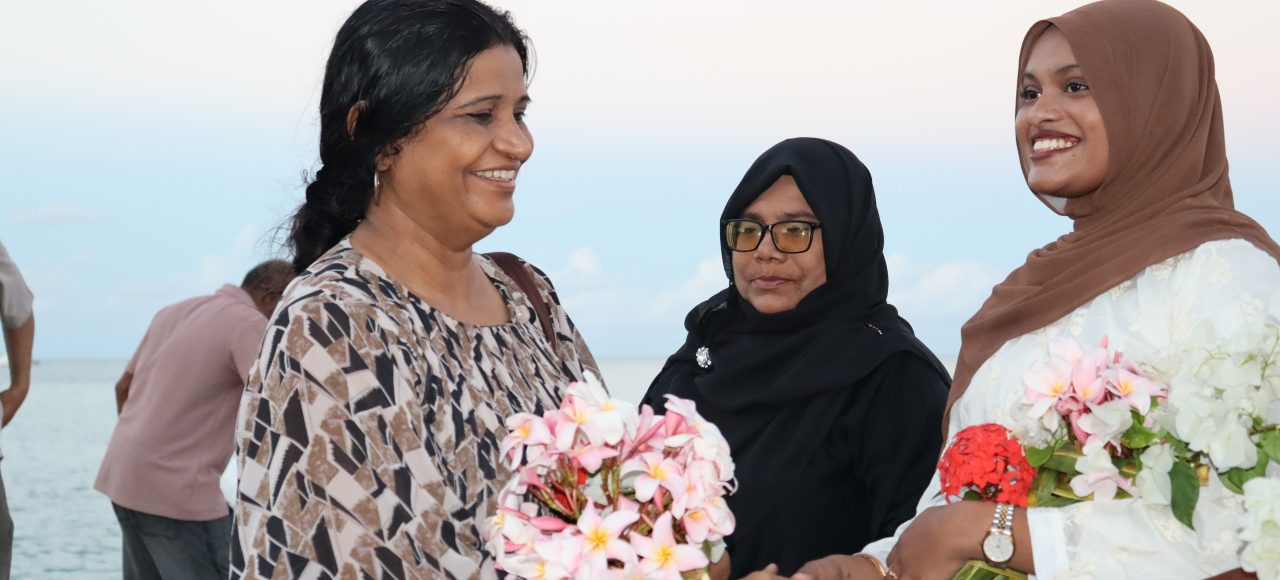
At the High Commission of Maldives in New Delhi, the women diplomats, including the High Commissioner, the Charge de Affairs and the First and Second Secretaries, contribute to Maldives’ voice in global affairs by advancing dialogue, bridging diplomacy and bilateral defence cooperation. They foster transformative impact, and regional and international politics, promoting their country’s foreign policy position on political, economic and strategic grounds.
As such, in the IOR, women are becoming increasingly visible in foreign ministries and diplomatic missions, where they play a growing role in negotiating maritime cooperation agreements.
For example, women are part of naval and coast guard services, where they contribute to surveillance and patrol operations. In regional organisations, such as the Indian Ocean Rim Association (IORA) and the Information Fusion Centre – Indian Ocean Region (IFC-IOR), women diplomats advocate for inclusive security frameworks.
Key participants attended the recently held 28th Committee of Senior Officials of the IORA, and the High Commissioner of the Maldives in New Delhi, H.E. Aishath Azeema, headed the Maldives delegation to the Committee. The High Commissioner focused on sustainable development and reinforcing cooperation across the IOR.
International literature observes that women’s participation strengthens legitimacy, enhances trust-building, and broadens the scope of cooperative security, including the maritime security domain.
In June 2026, the United Nations (UN) Department of Peace Operations (DPO) convened a high-level meeting in New York to reaffirm and strengthen both national and international commitments to advancing women’s participation in peacekeeping. This objective aligns with the Uniformed Gender Parity Strategy 2018–2028, which seeks to increase the representation and leadership of women across UN peace operations. Highlighting that the strategy was approaching its conclusion, Canada emphasised that achieving gender parity is “not the responsibility of women peacekeepers” alone but “the duty of the entire peacekeeping architecture.” Germany, Uruguay, and Zambia echoed this position and expressed their support.
In the Pacific, the institutional resilience and strategic positioning of the Pacific Women in Maritime Association (PacWIMA) – one of eight regional Women in Maritime Associations (WIMAs) established worldwide – have become important drivers of gender equality in maritime governance and strategic engagement. Recognising that greater gender equality contributes to more inclusive and effective maritime security outcomes, PacWIMA has prioritised policy development across the region. As Chairperson Meliame Tualau noted, “[a]t the moment, the majority of the region does not have a maritime gender equality policy, so the objective for the Pacific Women in Maritime Association is to have an understanding of how individual countries should be able to tap into the regional policy”.
Consequently, regional diplomatic forums, such as PacWIMA, seek to help member states understand how national initiatives can be aligned with and informed by regional policy frameworks, strengthening gender-responsive maritime governance.
Women’s Role in Maritime Security and Diplomacy
Diplomacy is the institutional driver of national and international peace and security. Women diplomats yet lead the gender story in the maritime security space.
In the IOR, they are not only participants in international affairs but agenda-setters, architects of peace, advocates for equality, and leaders shaping the future of global cooperation in maritime security dialogues. Their contributions include trust-building, in which women’s leadership enhances credibility within cooperative frameworks.
Moreover, soft power and gender inclusion can create more open and inclusive societies, supporting long-term peace and security.
For example, international research shows that women’s participation in peace negotiations significantly enhances the durability of peace agreements. Research indicates that when women are meaningfully involved, the likelihood of a peace agreement lasting at least two years increases by per cent, while the probability of it remaining in force for at least 15 years rises by 35 per cent. This finding is particularly important given the continued underrepresentation of women in political decision-making within conflict-affected countries, where women hold parliamentary seats at rates approximately four percentage points lower than the global average of 22.7 per cent.
Furthermore, women in diplomacy and defence engagements can strengthen the strategic positions of small states. The diverse contributions of women serving in policing, defence forces, customs, immigration, and other uniformed services have been recognised in Maldives’ discourse. Beyond their critical role in maintaining law and order, these women serve as role models whose dedication, professionalism, and leadership inspire future generations to pursue public service and contribute to national development.
In Sri Lanka, recent reforms aim to remove institutional barriers that have limited women’s advancement within the armed forces, including the navy, enabling them to compete for the highest leadership positions. A significant milestone was the Sri Lankan Navy’s deployment of its first group of female troops participating in a United Nations peacekeeping mission in 2022. These developments recognise the valuable contributions women make in leadership, intelligence, strategic planning, and maritime security, while inspiring a new generation of women to pursue careers in naval service.
While women’s participation and leadership in diplomacy and negotiations can enhance the inclusivity, legitimacy, and sustainability of peace agreements and security operations, significant efforts are still required globally to close the gender parity gap in formal institutions. As maritime security forms an integral part of broader national security frameworks, national governments must ensure meaningful opportunities for women’s leadership and decision-making.
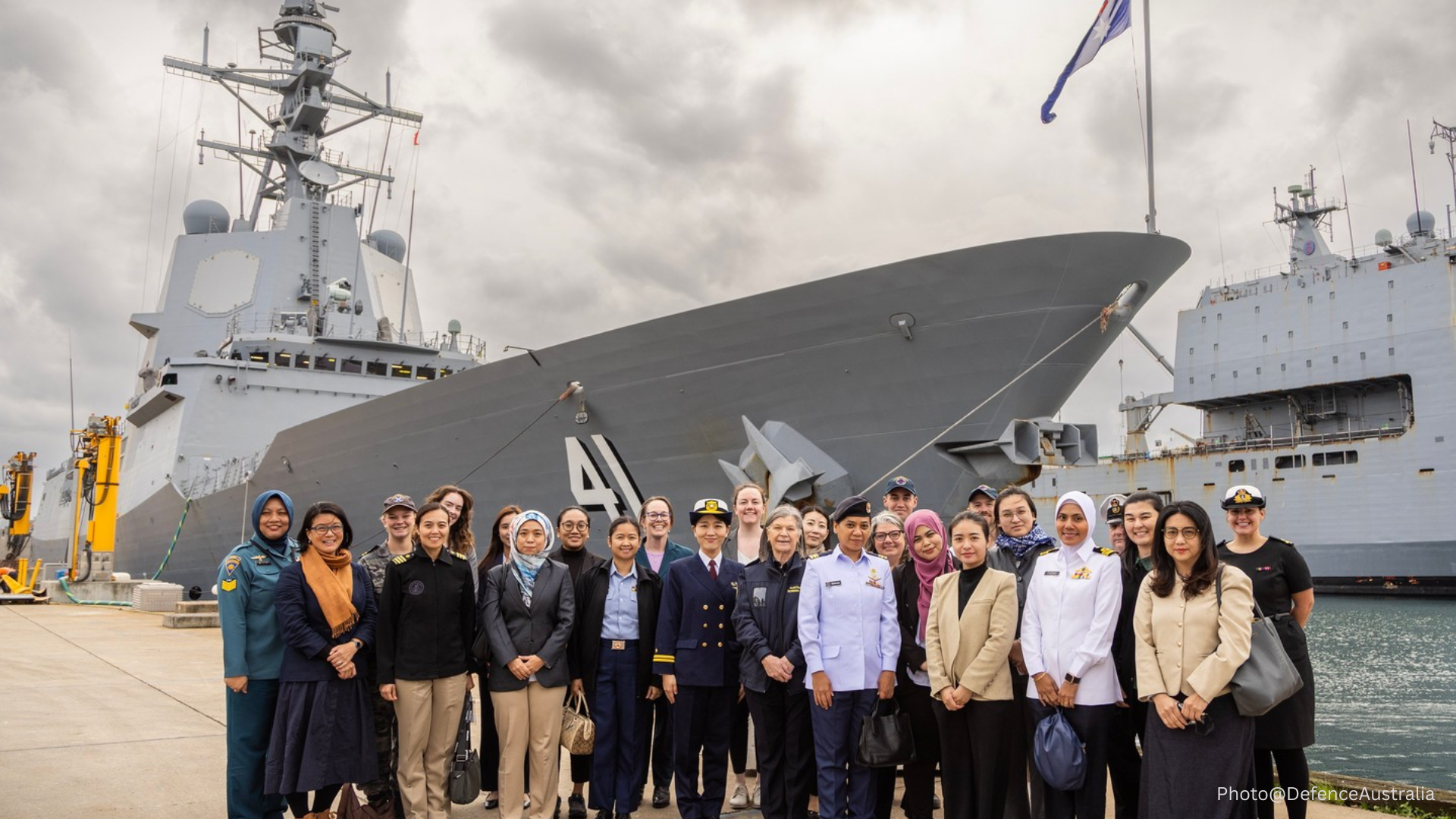
For example, among other Indo-Pacific forums, the Women in Maritime Security (WIMS) programme by Defence Australia in 2025 illustrates regional diplomacy. In that programme, Deputy Fleet Commander Commodore Anita Williams said that “[i]t’s all about diplomacy and talking together, and the key is to continue to listen and learn from each other, because there’s nothing to stop us getting along.” This includes strengthening women’s representation in diplomatic roles as well as in military and defence institutions, thereby enabling them to contribute more effectively to maritime governance, security policymaking, and strategic affairs.
Conclusion
Women’s participation in diplomacy and maritime security is no longer symbolic; it is strategic. Across and beyond the IOR, women’s leadership strengthens trust, cooperation, and inclusive decision making. Sustained investment in women’s roles will enhance maritime governance, support peace and stability, and help small states shape a more secure regional future. Yet, institution-building in national and regional security remains a key priority.
Author
Col Amanulla Ahmed Rasheed is a serving officer in the Maldives National Defence Force (MNDF). He has two postgraduate degrees, in Management from Kotelawala Defence University, Sri Lanka and Art and Science in Warfare from the National Defence University, Pakistan. The author acknowledges that statements, opinions and arguments made are of his own and do not reflect the Maldivian Government’s policy and position.