Introduction
Ports are an integral part of Sri Lanka’s economy and identity. Historically, ports were instrumental in placing Sri Lanka on the world map. While port development shapes strategic debate and geopolitics, many of its drivers are rooted in the very heart of domestic politics, community and culture.
Sri Lanka has seven major commercial ports and 24 fisheries ports. Sri Lanka’s land mass is 65,610 square kilometres, which is insignificant when compared to its Maritime Search and Rescue (SAR) zone, which is 27 times larger than the island’s land mass. Extending its maritime identity, in 2009, Sri Lanka made submissions to the ‘Commission on the Limits of the Continental Shelf (CLCS) to extend the outer limit of the continental shelf beyond 200 nautical miles to claim an oceanic area almost equal to 25 times its total land area with potential hydrocarbon reserves.’ Sri Lanka’s locational importance is further amplified by its convenient access to international trade routes immediately south of the island (12 nautical miles).
This discussion shows the link between domestic identity and the geopolitical implications of Sri Lanka’s ports, indicative of small states’ agency in regional policy.
Small state identity and connectivity
Generally, small states are unable to wield significant influence in regional and global policies. However, some small states are able to shape narratives in policy and security communities like those in the Indian Ocean or the Indo-Pacific regions.
Sri Lanka’s story illustrates that it has managed to exceed expectations in shaping important regional and global discussions.
Sri Lanka’s identity, shaped by its international connectivity through history, gives it the persona of being larger than it is. This larger-than-life identity features prominently when it interacts with the world. So much so that Sri Lanka has been instrumental in convening the Colombo Powers meeting in 1954, playing an instrumental role in the Non-Aligned Movement, in maritime security and terrorism-related conversations through the Indian Ocean Rim Association (IORA) and Bay of Bengal Initiative for Multi-Sectoral Technical and Economic Cooperation (BMISTEC). Notwithstanding, Sri Lanka has demonstrated that small states have a rightful place in the region and can shape conversations.
In the security sphere, Sri Lanka has, for example, ‘chaired the IORA Working Group on Maritime Safety and Security (WGMSS) for a period of two years, ending 2021’ and played a crucial role in ‘introducing the SAARC Convention on the Suppression of Terrorism.’ Sri Lanka also actively participates in naval exercises like ‘Dosti’ (trilateral maritime exercises between India, Sri Lanka and Maldives) and SLINEX, ‘Cooperation Afloat Readiness and Training’ (CARAT), RIMPAC or the Rim of the Pacific Exercise, AMAN, to name a few. These exemplify the role small states can play in regional and international politics and security, should they have the desire to do so.
Ports and local drivers
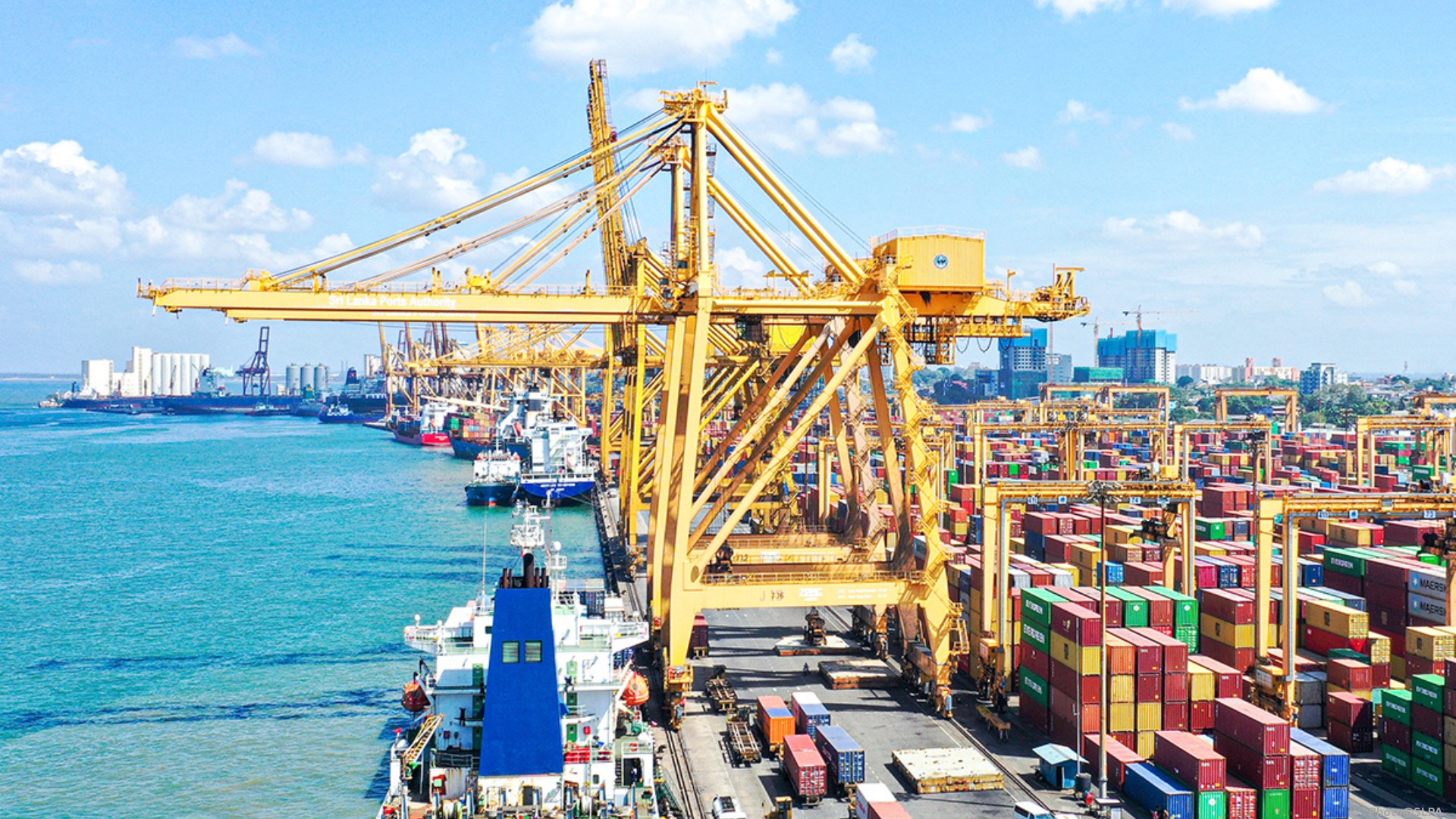
As an integral part of Sri Lanka’s economy, ports drive exports, imports and even the transshipment of goods and services. It is also a favourite with foreign naval vessels for port calls. Since ports are Sri Lanka’s gateway to the world, they have been driven by both internal and external needs.
The Port of Colombo, for example, is ranked among the top 25 ports in the world and the best in South Asia. This port drives Sri Lanka’s trade with the external world and, in turn, the local economy. Given its accessibility to international shipping lines and history, it also contributes significantly to the Indian economy by being the main transshipment hub for Indian shipments. Therefore, locally, the Port of Colombo is known as the gateway to the world and the driver of the economy. Its development, expansion and reputation are, therefore, of significant importance and interest to local politics.
The Hambantota International Port, on the other hand, was constructed due to a political need to develop the southern regions of Sri Lanka. It outshone an economic need or an organic need for a port through local industries and investments. Even though this port is reputed for its strategic positioning along the sea lanes, and often cited for its Chinese management, it is less significant in local economics. The Hambantota Port is at times discussed locally when there is a need to discuss irresponsible debt, fiscal management and the sale of Sri Lankan land to foreign entities.
The development and expansion of the Port of Kankesanthurai (KKS) in the north of the island has been driven by local and geopolitical interests. India offered a US $ 62 million grant to develop the port, so that it can increase its people-to-people connectivity with Sri Lanka, as well as maintain political connectivity with the island at a time when they feel the southern port of Sri Lanka permits Chinese engagements in the island and the Indian Ocean region. Ensuring that they take the lead in the KKS port development reduces the risk of another foreign government’s engagements closer to India’s borders.
According to the Proposal for Sri Lanka Navy’s Strategy 2023 and Beyond, ‘the development of key infrastructure projects, including the Hambantota Port, Colombo City, the expansion of the Port of Colombo and the proposed Trincomalee development plan has drawn significant international attention.’ This illustrates that Sri Lanka’s ports are highly internationalised, with geopolitics playing a considerable role when compared with local needs.
Sri Lanka’s maritime security leadership
While port development is essential for accessing the oceans and for stewardship in maritime security, Sri Lanka’s aspirations have been less inclined to significantly develop ports around the island. Most of Sri Lanka’s port development initiatives have been driven by geopolitical interests rather than catering to local needs. Often, as stated above, Sri Lanka has received international interest in developing and operating its ports, which are strategically located. KKS, Trincomalee Port and Colombo Port are a few examples of this interest. China, India and Japan have shown the most interest in developing these ports.
Even though Sri Lanka Navy has provided significant support in developing Sri Lankan ports, its primary focus has been on protecting territorial waters and safeguarding maritime assets through regular patrols and surveillance, particularly in strategic locations like the Indian Ocean region. Sri Lanka Navy demonstrates its keenness and ability to govern international waters through various roles it plays in mitigating piracy, apprehending narcotics in the open seas and conducting naval exercises.
Conclusion
Sri Lanka continues to play an active role in the Indian Ocean region and in international and regional politics, exceeding the expectations of a small state. Port development in Sri Lanka is driven more by a need to connect with the world than a need arising from local demands. It is also equally driven through the support received from the international community in being physically present in the Indian Ocean region. Port development in Sri Lanka has received increased attention from regional and international powers, illustrating that port development is not merely a local requirement or an act driven by local development plans.
Author
Dr. Bhagya Senaratne is the inaugural Director of Education at the Bandaranaike Centre for International Studies, Sri Lanka. She previously served as the first BRI Postdoctoral Fellow at NYU Shanghai’s Center for Global Asia and as a Senior Lecturer at Sri Lanka’s Defence University. At NYU Shanghai, she led the ‘BRI and South Asia’ project, the ‘CGA BRI Talk Series,’ and managed communications for the Mapping Global China initiative. Her research focuses on foreign policy, Chinese defence and foreign policy toward South Asia, Indo-Pacific studies, and maritime security. Her work appears in leading journals and edited volumes, including The Routledge Handbook of US Policy in the Indo-Pacific. She has authored and co-edited Pakistan-Sri Lanka Relations (2017), Sri Lanka’s Post-Independence Defence Policy (2023), and From Friendship to Dependency (2025).