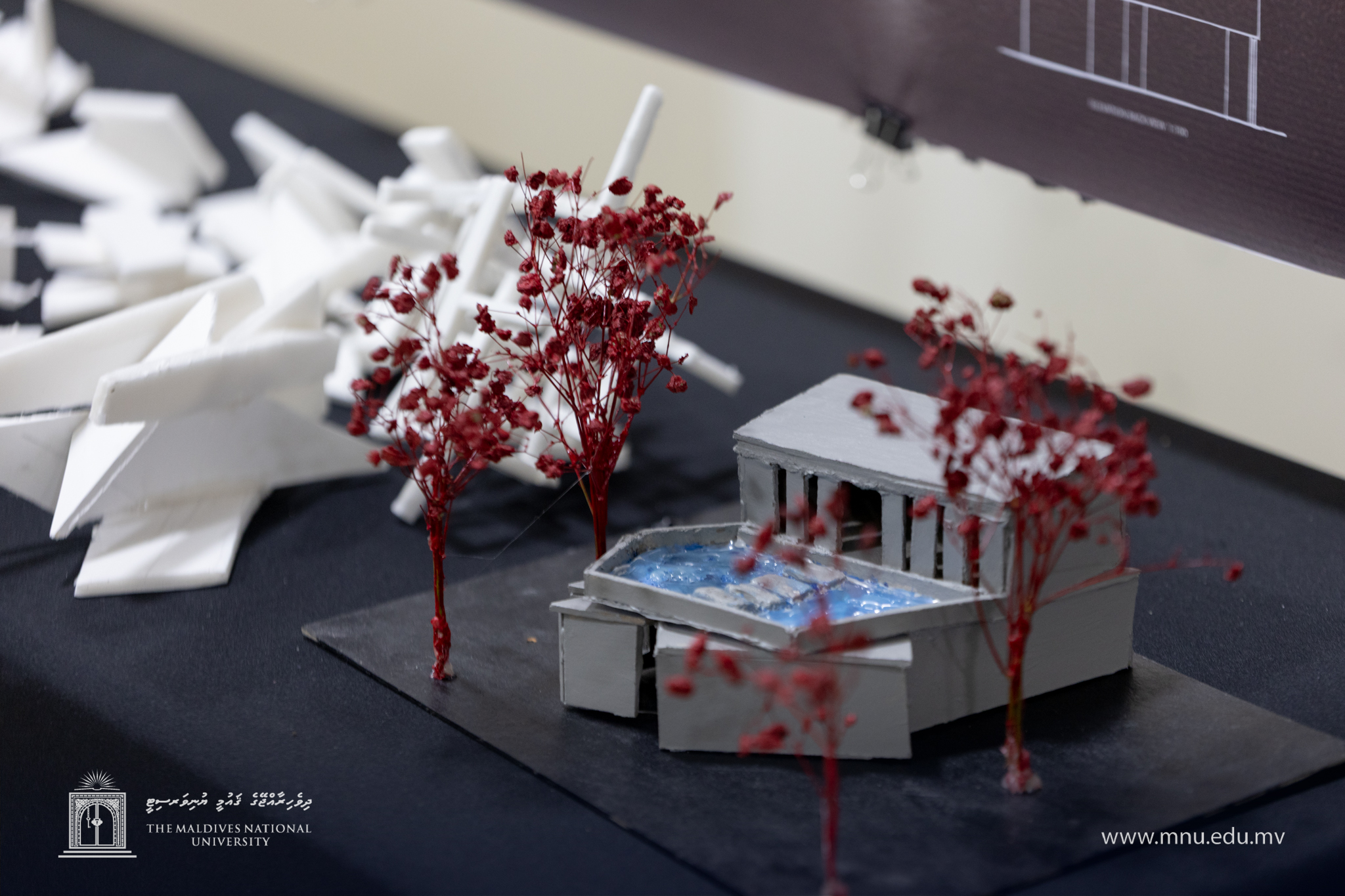
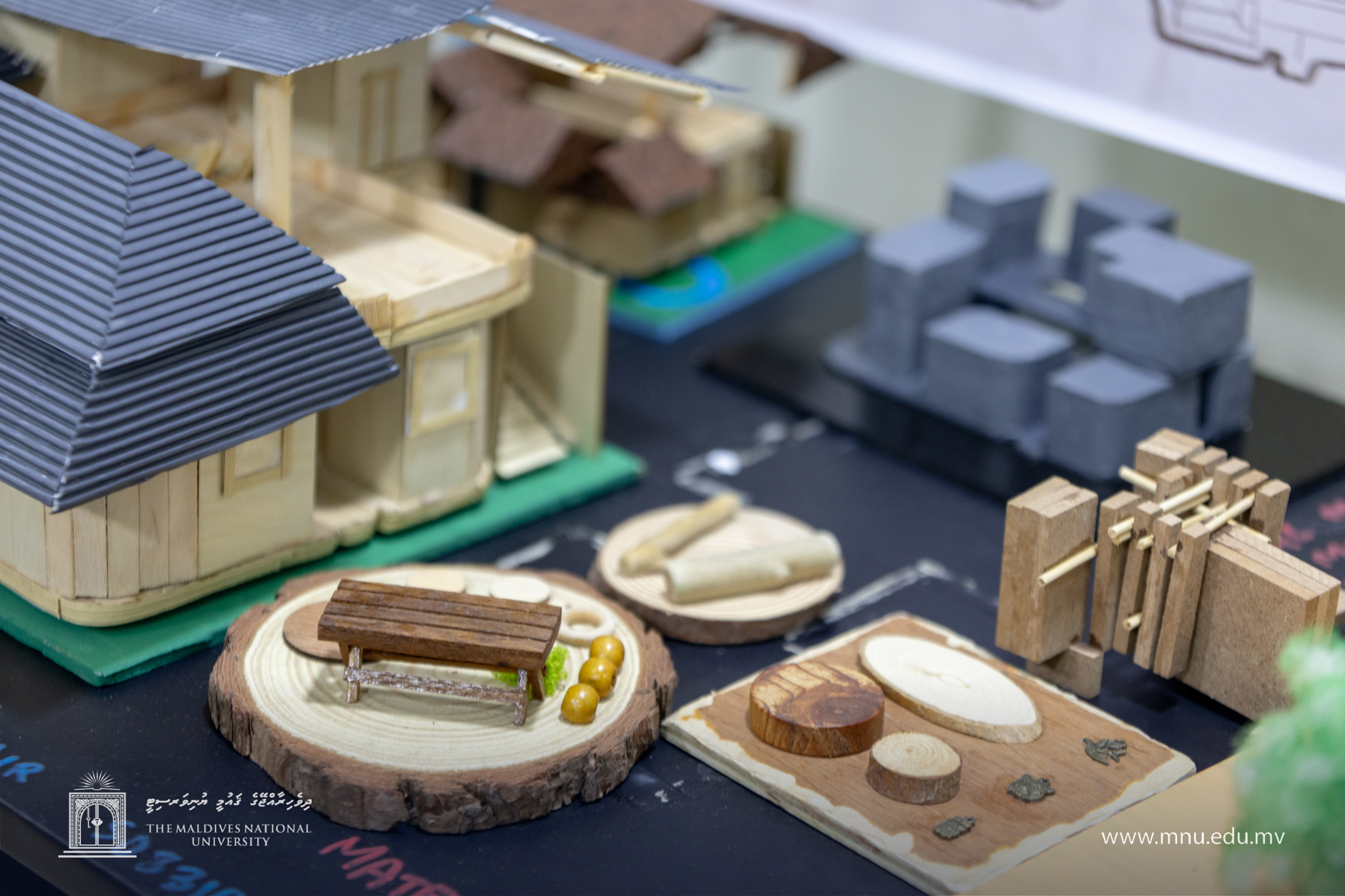
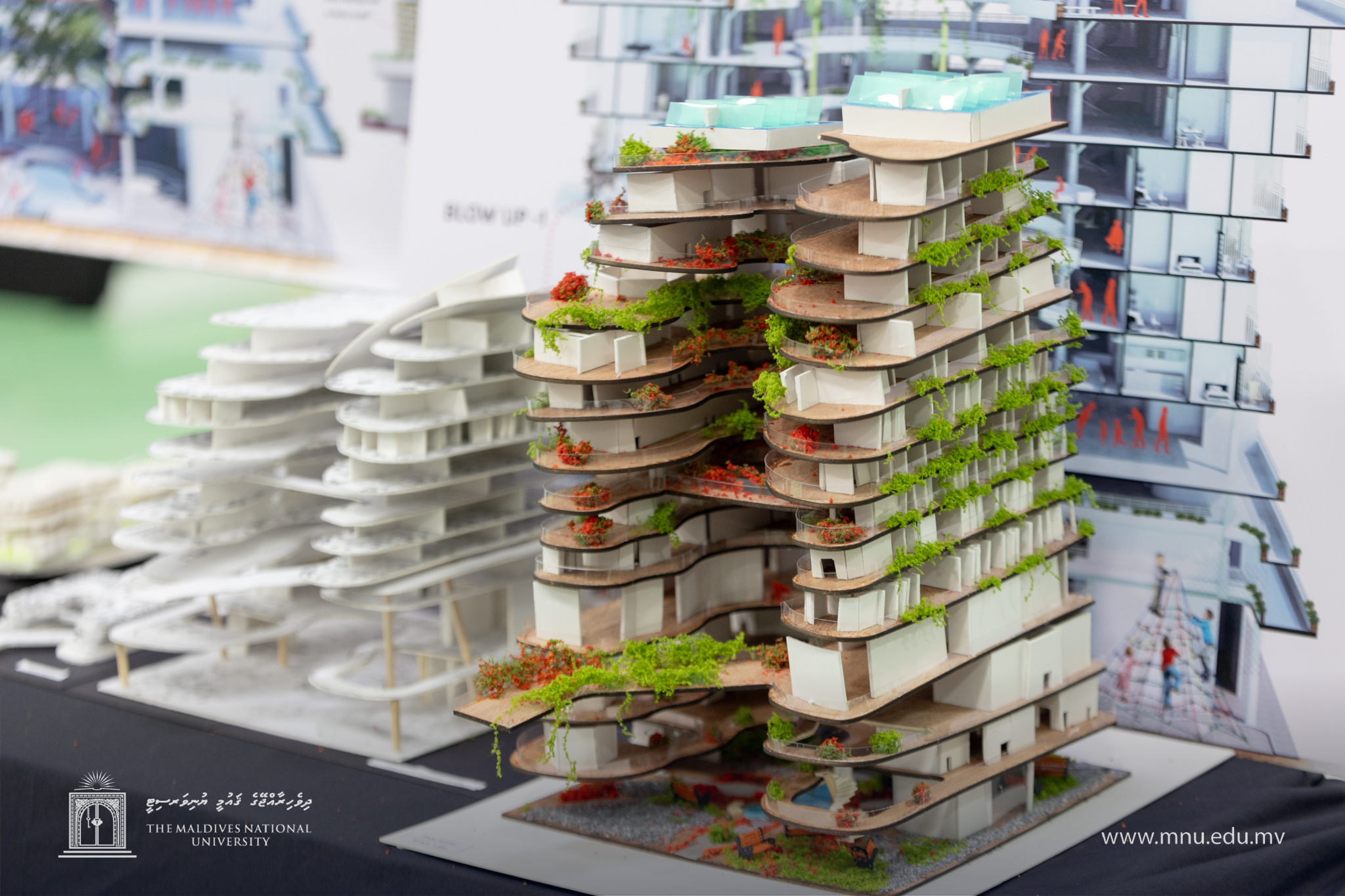
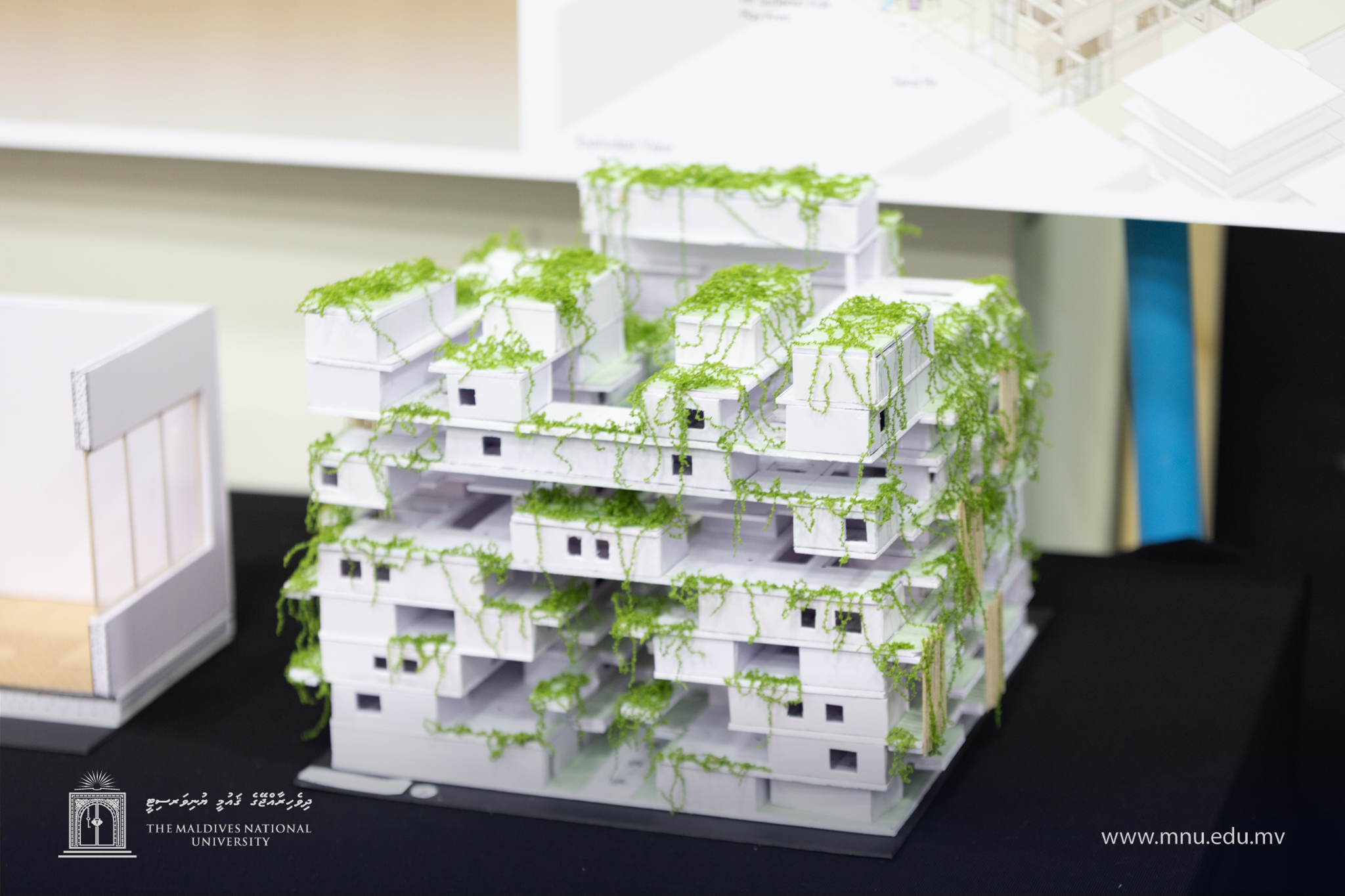
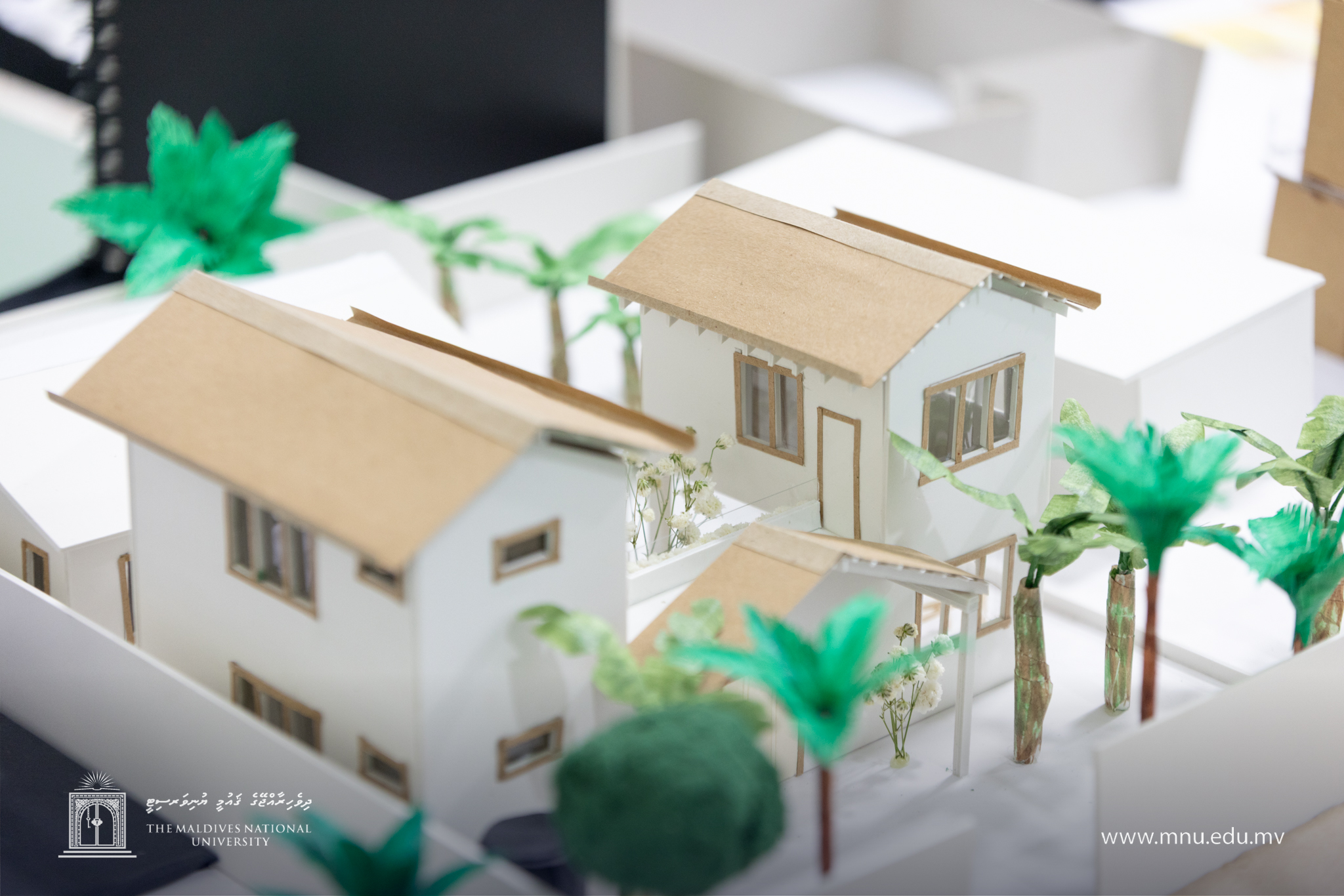
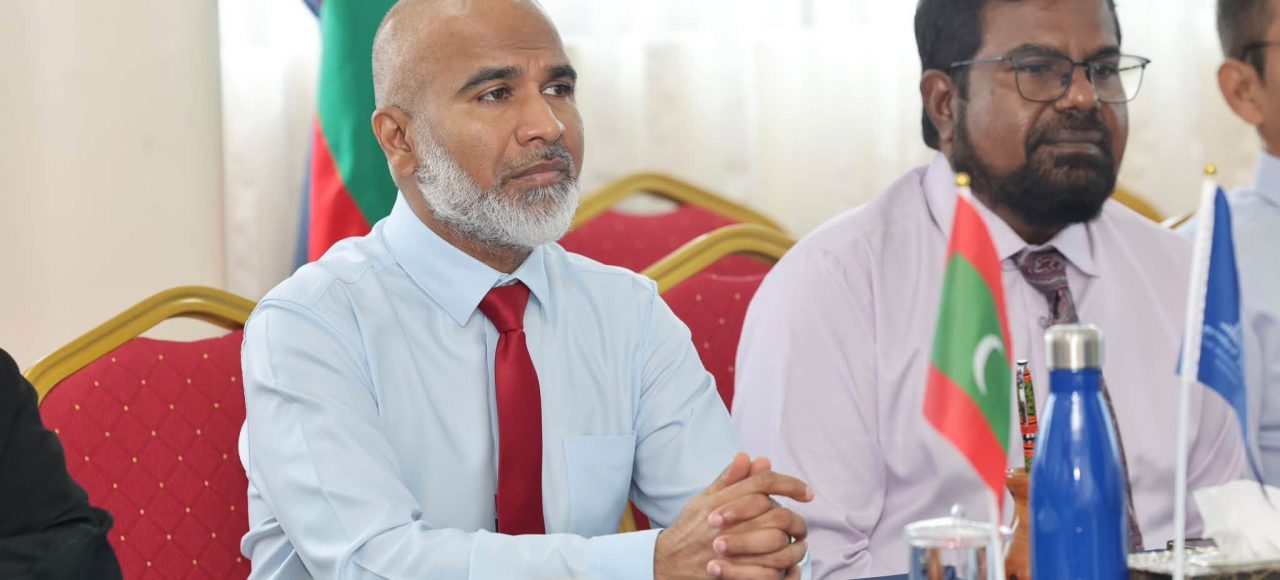
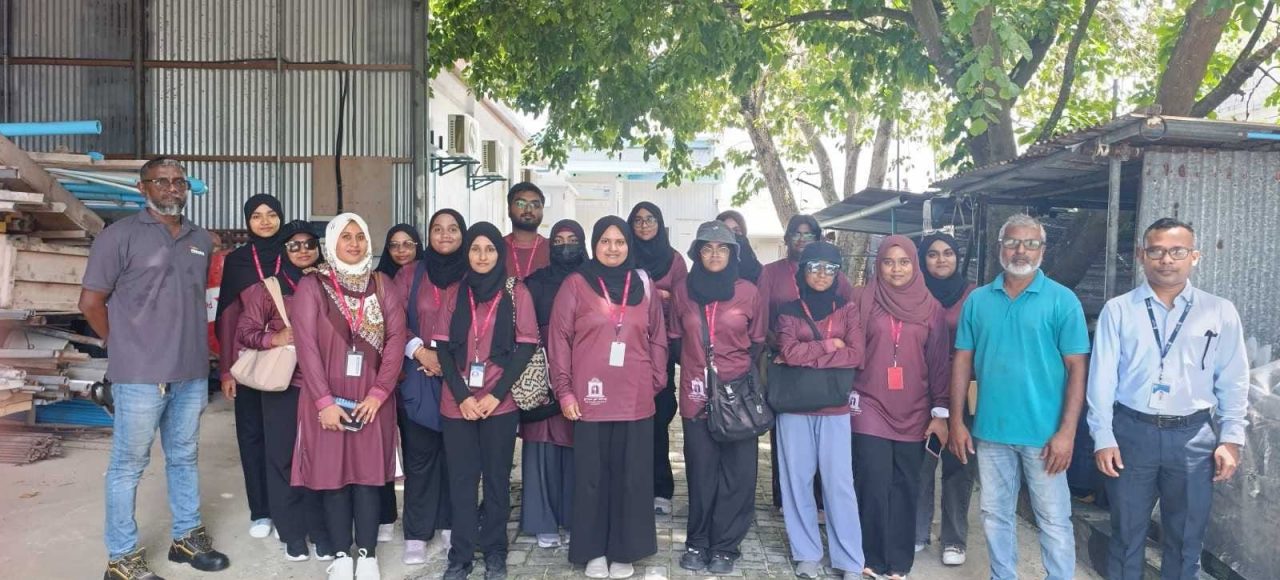
The Faculty of Engineering, Science and Technology (FEST) showcased the semester-end works of more than 60 Architecture students from all three levels of the Bachelor of Arts in Architectural Design programme through a public exhibition. The displayed projects explored diverse design challenges across different contexts, including client-based residential design at Semester 2, community-based tourism homestay proposals for N. Kendhikulhudhoo at Semester 4, and regenerative urban planning and mixed-residential housing strategies for Malé City at Semester 6. Through a process of site analysis, conceptual development, and design resolution, students demonstrated how architecture can address social, cultural, environmental, and urban challenges while creating meaningful and sustainable spaces. The exhibition followed an external review session, allowing students to receive professional feedback and engage with industry experts. Open to architects, alumni, families, friends, and the wider public, the event served as a platform for knowledge sharing, showcasing student creativity, and highlighting the transformative role of architecture in sustainable development and community wellbeing.
The architecture exhibition aligns with SDG 4 (Quality Education) by providing students with opportunities to apply design knowledge, receive professional feedback, and engage in experiential learning. It supports SDG 9 (Industry, Innovation and Infrastructure) by promoting innovative architectural solutions and design approaches. The exhibition contributes to SDG 11 (Sustainable Cities and Communities) through projects addressing sustainable urban planning, housing, tourism, and community development. It supports SDG 12 (Responsible Consumption and Production) and SDG 13 (Climate Action) by encouraging environmentally conscious design, resource-efficient solutions, and consideration of environmental challenges. Finally, it advances SDG 17 (Partnerships for the Goals) by bringing together students, academics, architects, alumni, industry professionals, families, and the wider community for knowledge sharing and collaboration.