Roza Ibrahim | Head of Centre


Roza Ibrahim | Head of Centre
Higher education is experiencing through a significant transformation due to the adoption of immerging technologies such as artificial intelligence, augmented reality, virtual reality, learning analytics and flexible modes of learning (Rajkumar, et al., 2026). These technologies and tools not only enhance our teaching and learning but also how we perceive teaching and learning.
As we harness the potential of technology, one principle should remain at the center of our approach: pedagogy should come before technology, PBT (Cowling & , 2018). Our focus should always be on how we can best support learners and achieve meaningful learning, with technology serving as an enabler. At the Centre for Educational Technology and Excellence (CETE), this perspective is reflected in our work. Our role extends beyond introducing and supporting technology; it focuses on helping educators use technology purposefully to enhance teaching and learning.
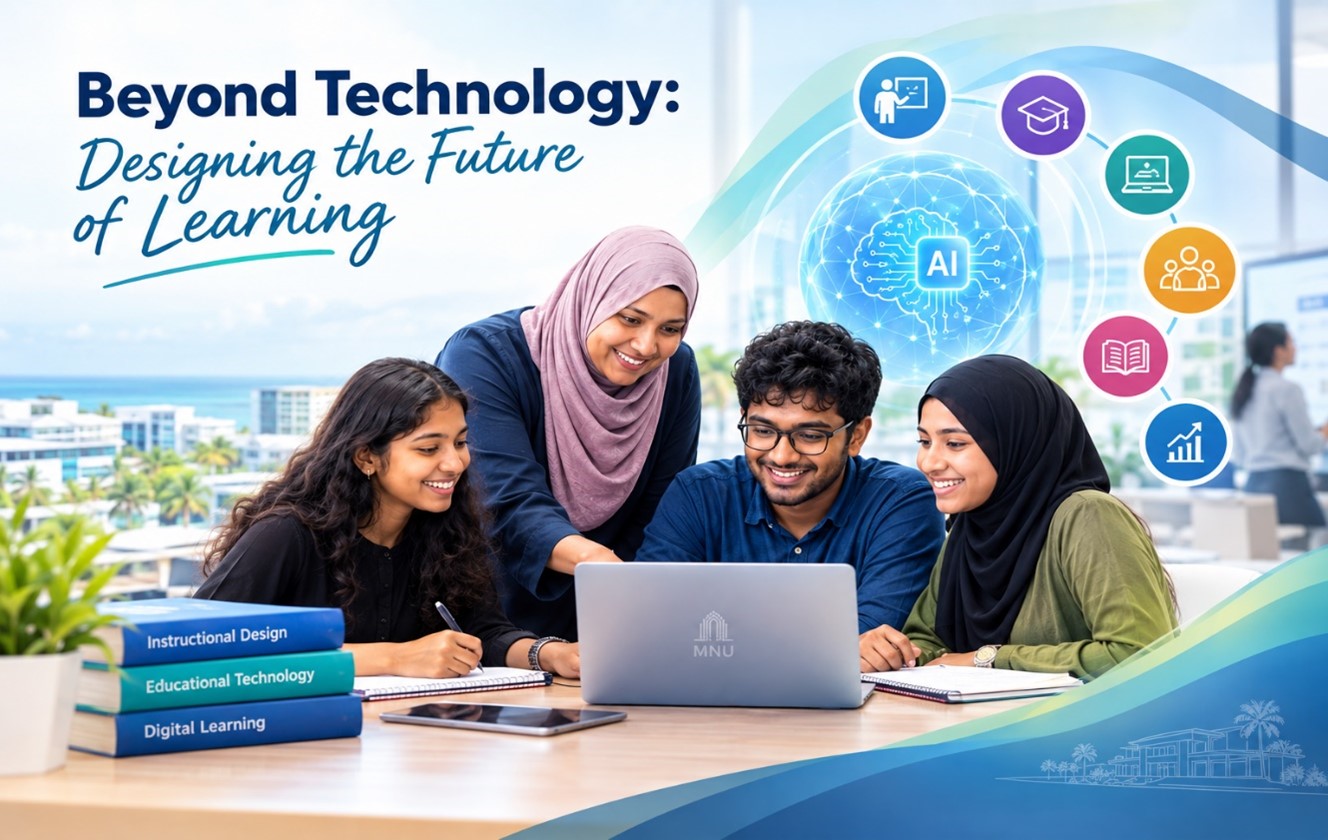
We need to work towards consolidating the bond between technology, pedagogy, instructional design and the learner experience. At CETE, this transformation must reflect four interconnected priorities: preparing educators for emerging technologies, strengthening instructional design, developing engaging learning materials and creating quality digital learning environments.
At the heart of this transformation are our educators who play a pivotal role in utilizing the power of educational technology to provide a better learning experience for our students. Therefore, professional development must go beyond establishing new tools, but it should support educators to recognize how technology can best support meaningful teaching and learning (Harimurti, 2026). Our goal is to empower educators effectively integrate emerging technologies with confidence, purpose and pedagogical awareness.
Technology alone does not establish meaningful learning, but thoughtful instructional design gives it direction. Successful learning experiences commence with clear outcomes, purposeful learning activities, appropriate learning strategies and constructive alignment between teaching and assessment. As learning becomes flexible and technology-enhanced, instructional design becomes necessary to ensure that every digital element contributes towards a successful learning experience (Hussein, 2024). At CETE, we aim to strengthen instructional design practices so that technology enhances pedagogy rather than simply adding unnecessary complexity to it.
The quality of learning materials can influence learners’ understanding and their engagement with a course. Effective digital learning materials should perform beyond presenting information; they should persuade discovery, collaboration, reflection and application. Multimedia, interactive resources and thoughtfully designed activities can make learning more engaging. The objective is to move from simply delivering content to design learning experiences that extend motivation, convince contribution and strengthen understanding.
An effective digital learning environment is not simply a carefully structured online space. It must support learners with clarity, accessibility, consistency and meaningful opportunities to interact and engage with learning content, instructors and peers. In this regard, learning management systems (LMS) such as Moodle can become powerful learning environments when they are purposely designed around learners’ requirements and supported by transparent quality standards. Our emphasis is thus not solely on maintaining digital spaces, but on establishing learning environments that support meaningful, accessible and effective learning.
In essence, the future of education is not defined by how much technology we use, but by how purposefully we use it to enhance teaching and learning. At CETE, our focus is to work with educators in navigating this changing environment, consolidating their competences, supporting purposeful instructional design, developing quality digital learning environments, and encouraging engaging and meaningful learning experiences. Moving forward, our vision is to shape a more advanced, inclusive and learner-centered university, where technology serves purposefully to enhance learning.
References:
Cowling, M., & Birt, J. (2018), “Pedagogy before technology: A design-based research approach to enhancing skills development in paramedic science using mixed reality”. Information, 9(2), 29. https://doi.org/10.3390/info9020029
Harimurti, E. R. (2026). Teacher professional development in the digital era: Challenges and strategies for educational management. Global Education Journal, 4(1), 187–193. https://doi.org/10.59525/gej.1375
Hussein, A. A. (2024). Instructional design for the digital generation: Creating educational models that keep up with the digital transformation. Al-Iraqa Foundation for Culture and Development. https://www.researchgate.net/publication/385214923_Instructional_Design_for_the_Digital_Generation_Creating_Educational_Models_that_Keep_Up_with_the_Digital_Transformation
Rajkumar, S. R., Dan, M., & Hussian Shah, S. (2026). AI and ICT are reshaping higher education in the digital era. Global Education Insights, 2(1), 14. https://doi.org/10.65140/gei202601.14