Editor’s pick for outstanding analysis: This article stands out for its academic rigour and its application of security concepts to small-state security practice and shows potential for driving a rich research agenda on the topic. “Bolstering Maldives’ Maritime Safety and Security through Search and Rescue and Beyond” not only captures the reader’s attention, but also offers an evidence-based analysis of the challenges and policy solutions that are particularly important for strengthening Maldives’ maritime security efforts.
Introduction
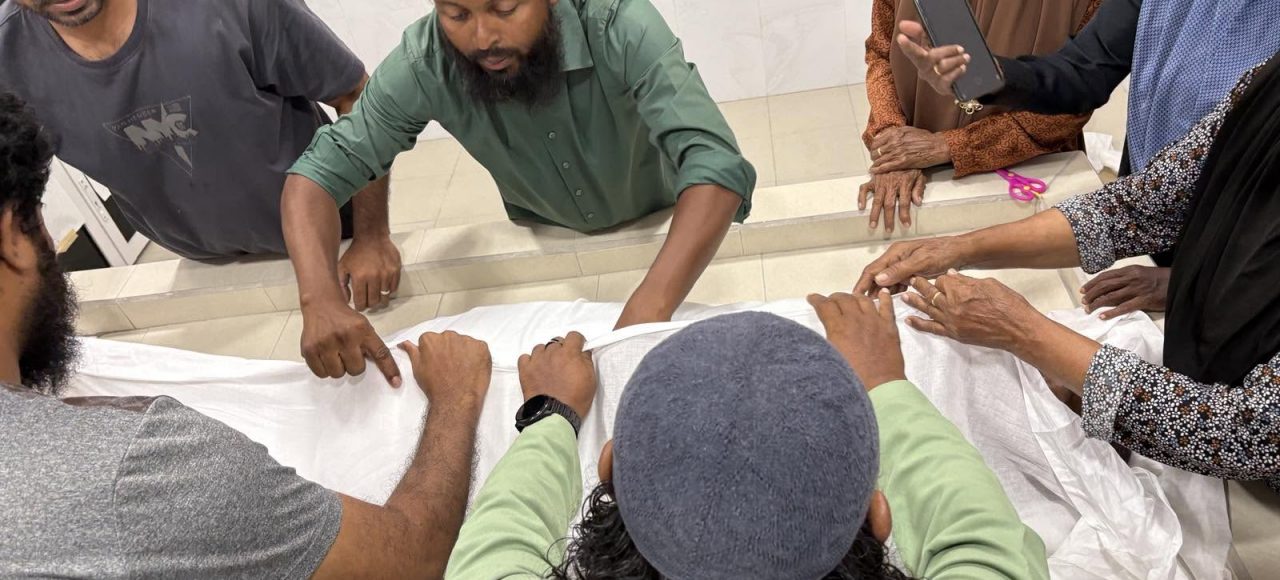
On 5 August 2026, the supply vessel Friend 4 capsized and sank near Ga. Kolamaafushi (a local island) in Maldives. During the incident, the vessel’s captain, an MNDF soldier and a police officer reportedly entered the vessel’s hold to pump out water while the vessel was experiencing rough seas. The three subsequently went missing, while seven other crew members were rescued.
The incident was particularly concerning because it occurred in parallel with several maritime incidents in Maldivian waters. Maldives’ geographical characteristics make such incidents an integral part of national safety and security discourse – i.e., consider that more than 98 per cent of its territory consists of ocean.
Maldives therefore faces an unusual maritime safety challenge. The country has a relatively small national resource base but has responsibility for keeping safe disproportionately a large maritime area. Maritime transportation is essential for connecting communities and transporting food, fuel, and other necessities between islands, and the maritime domain becomes an integral part of national policy and practice.
This article examines why such incidents keep recurring and what can be done to reduce them through building Search and Rescue (SAR) capability. It argues that the problem is best understood as a mismatch between a small state’s limited capacity and the scale of the maritime domain it must secure – i.e., a gap that can be narrowed through faster SAR response and, more importantly, through better prevention.
Small State and Large Ocean Capability Gap
Small states possess more limited financial, technological, military and institutional resources than larger states, remaining exposed to security risks that can exceed their ability to manage independently. The central problem is not only the size of the state, but also the relationship between limited national capabilities and the scale of responsibilities that the state must fulfil.
The problem becomes particularly serious during severe weather. Maritime transportation cannot simply stop whenever weather conditions deteriorate because many Maldivian local islands or commercial resorts depend on sea transport for essential goods and services. However, rough seas, strong winds, heavy rainfall and poor visibility increase the probability of maritime accidents.
Limited SAR assets cannot be deployed simultaneously to every location across the country’s dispersed maritime area.
When several incidents occur simultaneously, the problem becomes even more serious. A Coast Guard vessel responding to one emergency may be unavailable to respond to another incident occurring hundreds of kilometres away. Therefore, the issue is not merely whether Maldives possesses SAR assets, but whether it possesses sufficiently distributed and rapidly deployable assets to respond to multiple incidents across the archipelago.
“Hit Hard, Hit Fast”: The case for speed
The “Hit Hard, Hit Fast” principle is important for SAR in Maldives because time is critical during a maritime emergency. A person in the water can quickly drift away because of wind, waves and currents. A damaged or sinking vessel can also become more dangerous within minutes. Therefore, the faster the SAR response, the greater the chance of saving lives.
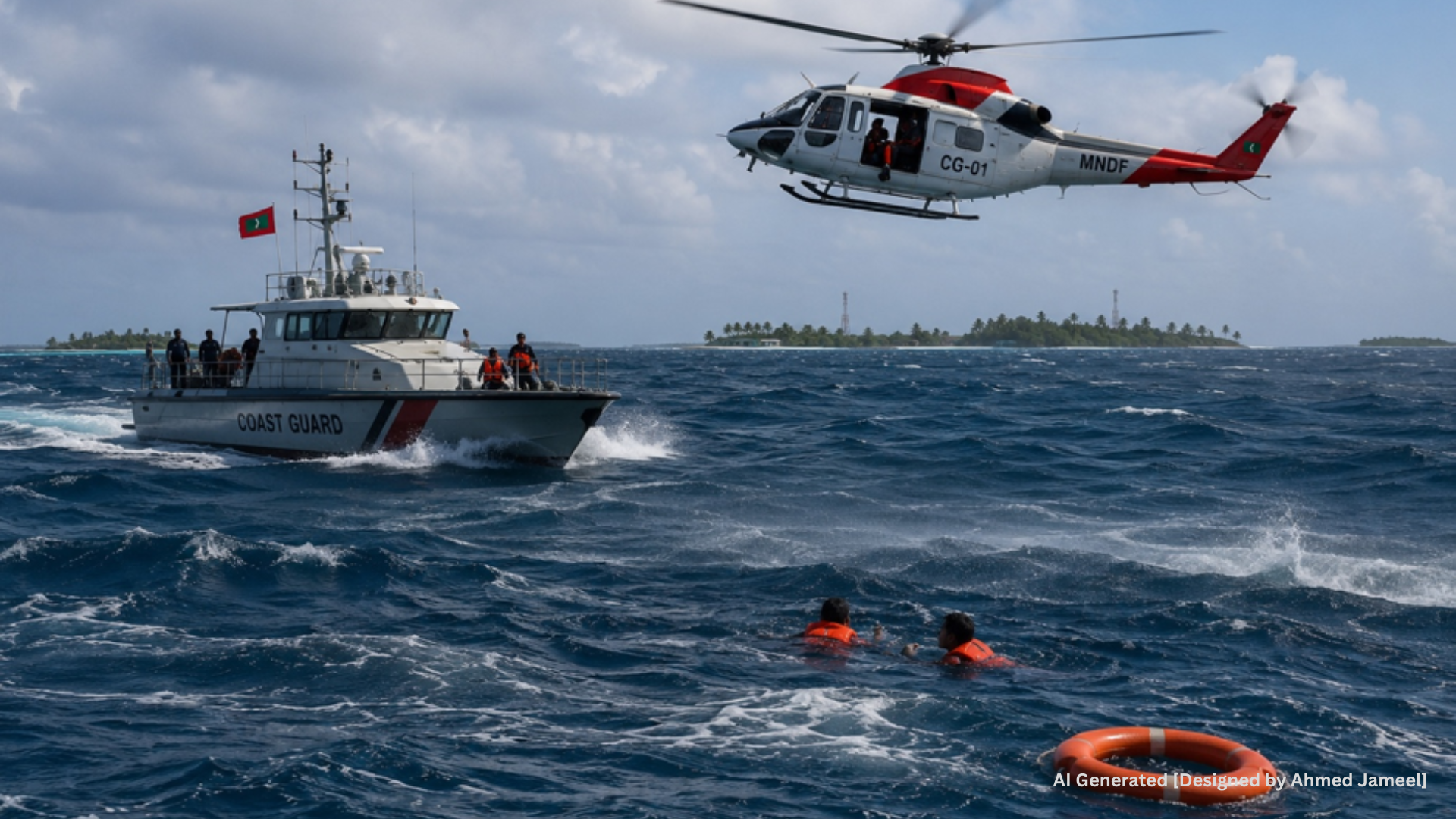
This is especially important for Maldives because of its large maritime area and limited SAR assets. Surface vessels may take a long time to reach an incident, particularly when they must travel between distant atolls during rough weather. Maldives has yet to develop a dedicated, standalone SAR aviation unit; Search and Rescue instead remains one function shared among the MNDF Air core’s broader surveillance responsibilities. This creates an important gap in the country’s ability to respond quickly to incidents across its large maritime area.
Aircraft narrow this gap by reaching incidents faster and covering far larger search areas than surface vessels, while helping locate survivors and direct Coast Guard vessels to their location. Helicopters are particularly valuable, given their ability to operate without airport infrastructure and evacuate casualties rapidly. While MNDF’s drones offer some surveillance and search support, they cannot substitute for casualty evacuation, underscoring the continued strategic importance of dedicated SAR air assets in enabling timely response.
For MNDF Coast Guard, “Hit Hard, Hit Fast” should mean using the right asset as quickly as possible. This requires surface vessels supported by dedicated SAR aircraft. Aircraft can provide rapid initial response, while Coast Guard vessels can carry out rescue and recovery operations. This combination would be particularly beneficial when several incidents take place at the same time.
For Maldives, the ability to reach an incident quickly may be more important than simply increasing the number of SAR vessels.
Reducing Maritime Incidents in Maldives
Although SAR capability is essential, the most effective way to reduce loss of life is to prevent accidents from occurring in the first place. Maldives already has a regulatory framework covering vessel registration, vessel surveys and certification, and the loading and unloading of cargo vessels engaged in inter-atoll transportation.
The Maldives Ministry of Transport’s maritime regulations include the Local Vessel Survey and Certification Regulation and its amendments, local vessel registration regulations and regulations relating to cargo transportation.
The key challenge is ensuring that these regulations are consistently implemented and effectively enforced.
First, vessel owners and operators must ensure that vessels are seaworthy before departure. Essential equipment, including life jackets, communication systems, navigation equipment and bilge pumps, must be operational. Captains should conduct appropriate safety checks before sailing and ensure that crew members understand emergency procedures.
Second, weather conditions must be an essential factor in voyage decisions. Captains should monitor official weather forecasts and warnings before and during voyages. Non-essential travel should be postponed when severe weather is expected. Smaller vessels are particularly vulnerable to rough seas and strong winds and should avoid unnecessary voyages during hazardous conditions.
Third, sailing at night during adverse weather should be avoided wherever possible. Reduced visibility combined with rough seas increases navigational risks and can make emergency response more difficult. Where a voyage is unavoidable, operators should ensure that communication systems, navigation equipment, lighting and emergency equipment are fully operational.
Fourth, stronger enforcement is required. Safety regulations have limited value if vessel operators can ignore them without meaningful consequences. Regular inspections, effective penalties for non-compliance and monitoring of vessels operating between islands can encourage greater compliance. Enforcement should focus particularly on vessels that repeatedly violate safety requirements or operate in conditions beyond their approved capabilities.
Finally, maritime safety awareness should be strengthened among vessel owners, captains, crew members and passengers. Safety campaigns should emphasise weather monitoring, life-jacket use, communication with authorities and early reporting of emergencies. A strong safety culture can reduce the number of situations in which SAR services are required.
Prevention is particularly important for Maldives because every avoidable incident places additional pressure on an already limited SAR system. If several emergencies occur simultaneously, the Coast Guard may face difficult decisions about which incident should receive priority. Therefore, reducing preventable incidents is itself a way of increasing the effective capacity of the national SAR system.
Conclusion
The Friend 4 incident highlights the maritime safety challenges faced by Maldives as a small state responsible for a vast maritime area. “Small State–Large Ocean Capability Gap” highlights the resulting SAR challenges. Reducing maritime accidents requires stronger enforcement of safety regulations, better weather-based voyage decisions, public awareness and improved preparedness. At the same time, the “Hit Hard, Hit Fast” approach requires rapid deployment of the right SAR assets. For MNDF Coast Guard, combining surface vessels with dedicated aviation assets would improve response time, coverage and the ability to save lives at sea.
Author
Lt Col Ahmed Jameel is a serving officer in the Maldives National Defence Force (MNDF), with 20+ years of experience in the maritime domain. He also has a postgraduate degree in International Relations from Salve Regina University, USA. The author acknowledges that the statements, opinions and arguments made are his own and do not reflect the Maldivian Government’s policies and position.